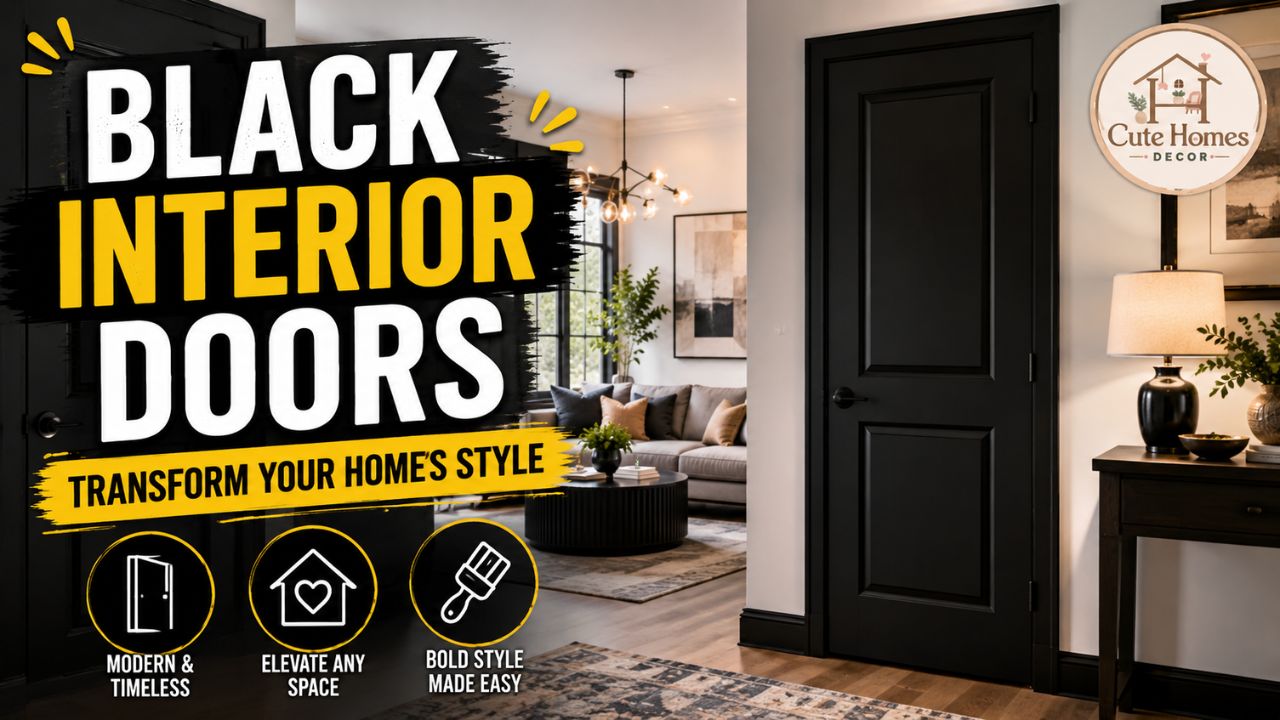

Why Black Interior Doors Are Having a Serious Moment
There’s something undeniably powerful about walking into a home where the doors are black. Not just darkened or charcoal — truly, boldly black. Whether you’ve been scrolling through design accounts lately or just noticed a shift in the homes you admire, black interior doors keep showing up everywhere. And honestly? It’s not hard to see why.
Interior design has been moving away from the all-white, ultra-safe aesthetic for a while now. Homeowners want personality. They want contrast, warmth, and that little jolt of “wow” when guests walk in. Black interior doors deliver exactly that — with almost no structural renovation required.
According to a 2023 Houzz renovation trends report, bold interior color choices — particularly darker doors and trim — surged in popularity, with nearly 45% of surveyed homeowners saying they’d consider painting interior doors a non-neutral color. That number keeps climbing. If you’ve been on the fence, this article will tell you everything you need to know — from choosing the right black door paint to pulling off the transformation flawlessly.

The Design Psychology Behind Black Doors
Before you grab a brush, it helps to understand why black doors work so well in so many homes. It comes down to contrast and visual anchoring.
In interior design, anchor points are features that give a room a visual destination — something the eye lands on intentionally. White walls are beautiful, but without contrast, a space can feel flat or unfinished. Black interior doors act like frames for each room. They define doorways, make hallways feel more intentional, and give the whole floor plan a backbone.
Design psychologists have noted that high-contrast environments tend to feel more decisive and confident. A house with black doors reads as curated rather than default. It signals that someone made a deliberate choice — and that choice has aesthetic weight.
Do Black Doors Work in Small Spaces?
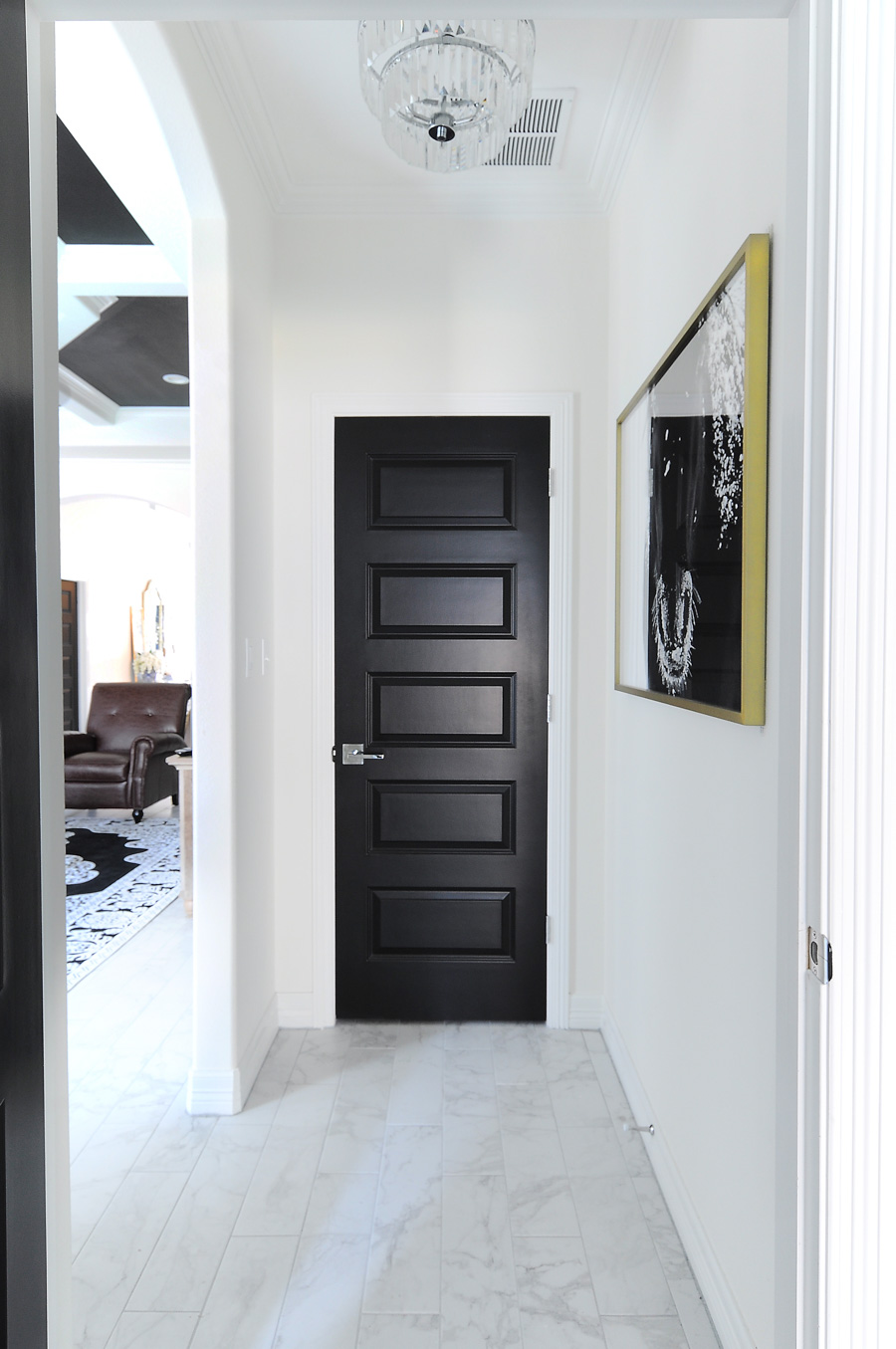
This is the most common question, and the short answer is: yes, if done right. Many homeowners assume that dark interior doors will shrink a room, but the opposite is often true. When paired with white walls, the contrast actually draws the eye outward — making the room’s dimensions feel more defined rather than compressed.
White hallways with black doors are a particularly effective combination. The hallway becomes a gallery-like corridor rather than a forgotten transitional space. Pair it with good lighting and the result is genuinely striking.
Black Doors With White Trim vs. Black Doors With Black Trim
Both work — but they create entirely different vibes.
- Black doors white trim: This is the classic contrast approach. The door gets all the drama while the trim stays clean and bright. It’s the most versatile option, working well in traditional, modern farmhouse, and contemporary homes.
- Black interior doors and trim: Going full monochrome — painting doors and trim black — creates an immersive, moody effect. It feels architectural, almost like a magazine spread. Best suited for homes with large windows and natural light, or in spaces where you want a cocooning effect.
How to Paint Interior Doors Black (Step-by-Step)
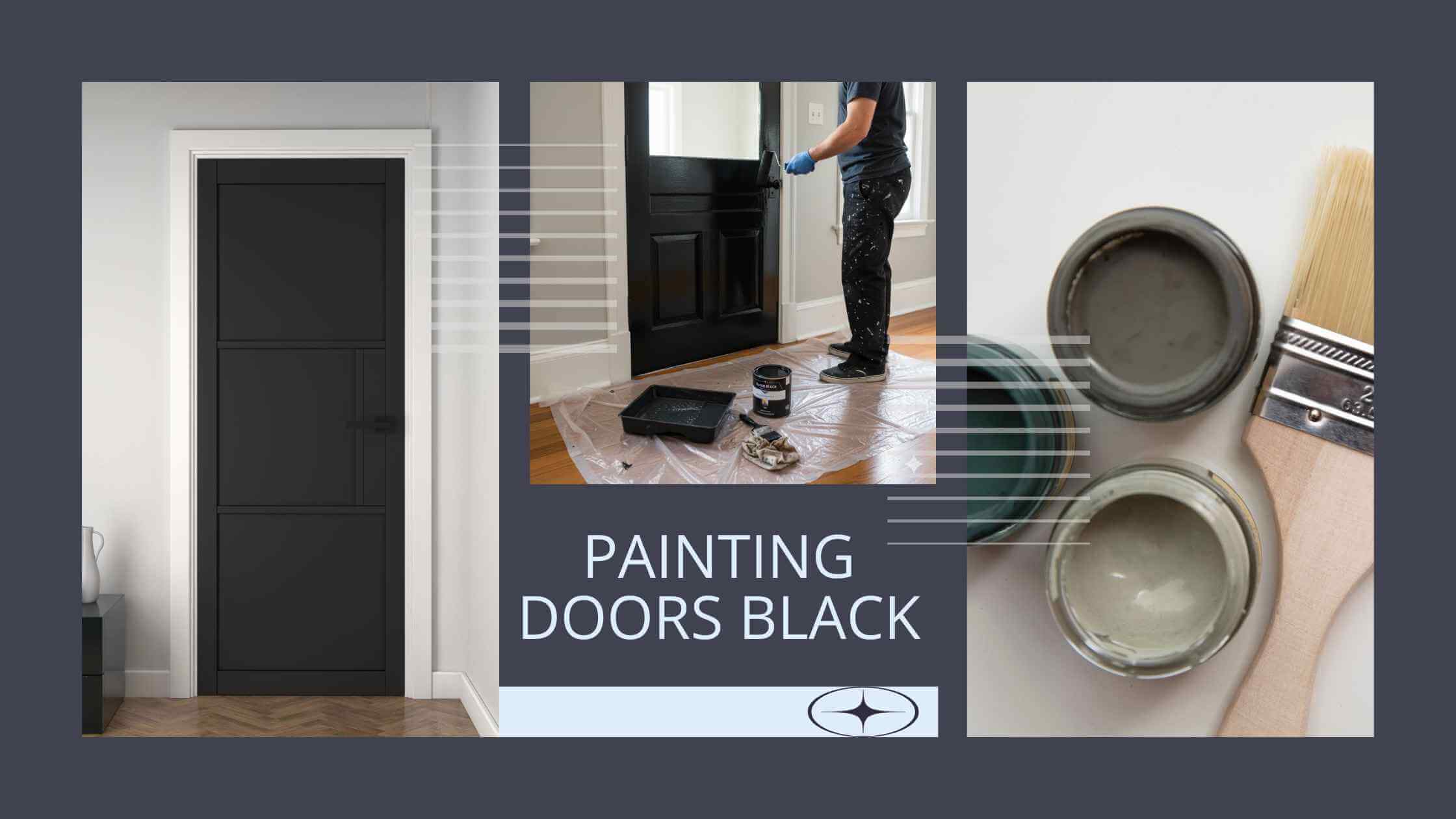
Painting interior doors black is one of the highest-impact, lowest-cost renovations you can do. Most doors take less than a day, and the supplies are affordable. Here’s exactly how to paint interior doors black so you get a professional finish — not a streaky mess.
What You’ll Need
- Black door paint interior (more on choosing this below)
- Medium-grit sandpaper (120–150 grit)
- Tack cloth or damp microfiber cloth
- Primer (if switching from a light to dark color)
- Quality synthetic-bristle brush (for edges and panel detail)
- Small foam roller (for flat surfaces)
- Painter’s tape
- Drop cloth
- Screwdriver (for hardware removal)
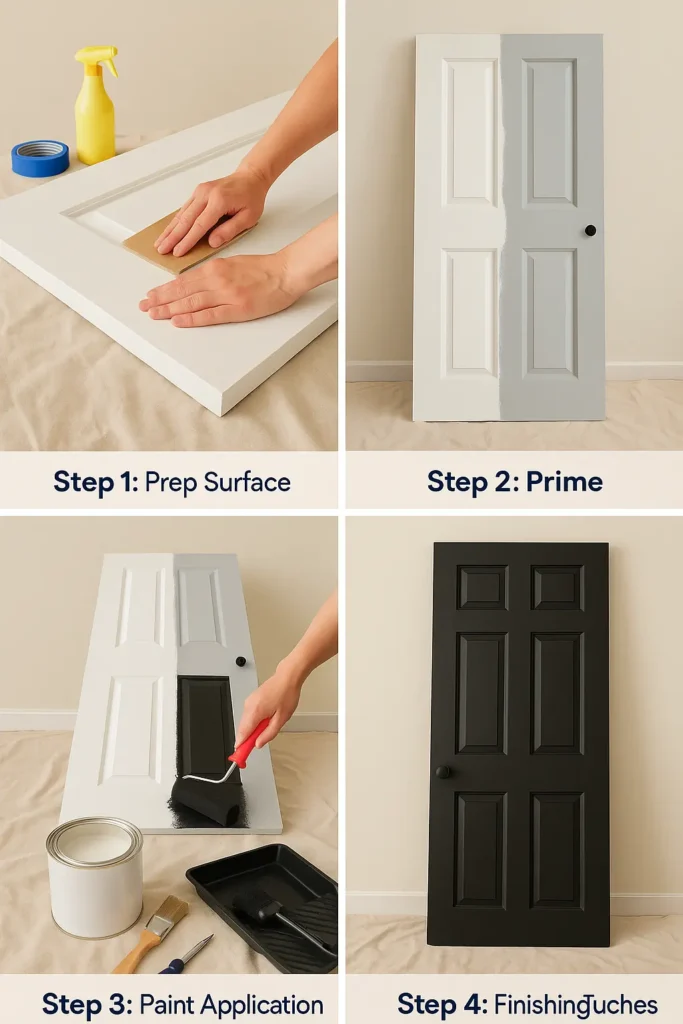
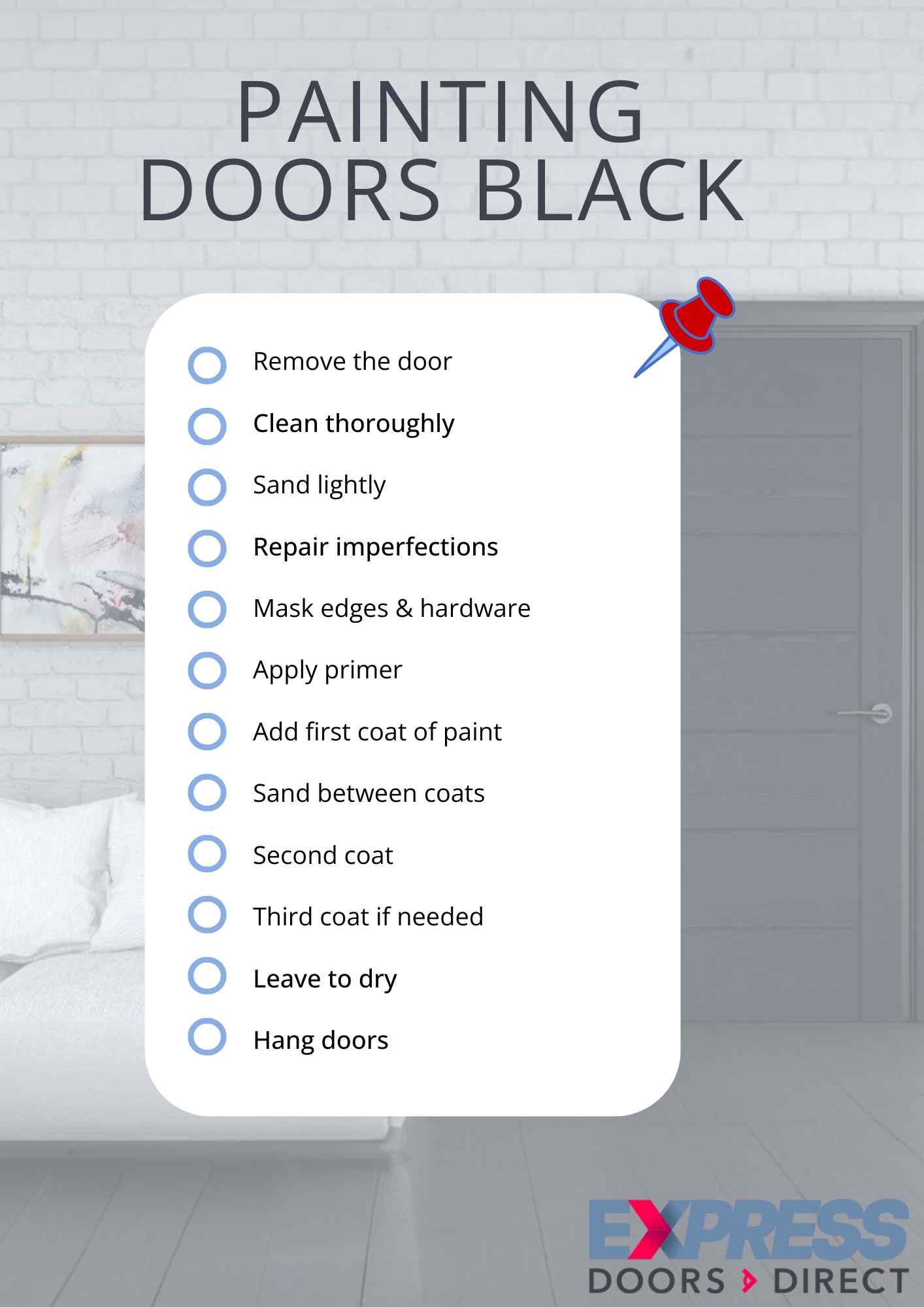
Step 1 — Remove the Door (or Tape Off)
Technically optional, but removing the door from its hinges gives you the cleanest result. Lay it flat across sawhorses. If you’re painting inside doors black in place, use painter’s tape to protect hinges and the surrounding wall.
Step 2 — Clean and Sand
Even if the door looks clean, wipe it down with a degreasing solution. Then lightly sand the entire surface — this gives the new paint something to grip. Wipe away all dust with a tack cloth before proceeding.
Step 3 — Apply Primer
When painting interior doors dark colors, especially going from white or a light color, primer is non-negotiable. Without it, you’ll need far more coats and risk uneven coverage. Use a gray-tinted primer — it bridges the gap between your old light color and the new black door paint, cutting down the number of finish coats required.
Step 4 — Paint in the Right Order (For Panel Doors)
How to paint an interior door properly depends on the door style. For panel doors — the most common type — follow this sequence:
- Recessed panels (use a brush, work into corners)
- Horizontal rails (the cross-pieces between panels)
- Vertical stiles (the long outer edges)
- Door edges
For painting panel doors, using a brush for recessed areas and a foam roller for flat sections gives you the best combination of coverage and smoothness.
Step 5 — Apply Two to Three Coats
Let each coat dry fully (check your paint’s label — typically 2–4 hours). Painting interior doors black usually requires two coats over primer for a solid, rich finish. Don’t rush this. Thin, even coats beat one thick one every time.
Step 6 — When Painting Interior Doors Black, Do You Paint Both Sides?
This is a question that comes up often: when painting interior doors black, do you paint both sides? It depends on what you want. Most designers recommend painting both sides for visual consistency, but some homeowners paint only the side visible from the main living area — leaving the interior of a bedroom door white, for example, so the bedroom doesn’t feel too dark. There’s no rule. Go with what serves the room.
Choosing the Right Black Door Paint
Not all black paints are created equal, and choosing the wrong one can mean chipping, streaking, or a finish that looks great on the can but terrible on the door. Here’s what to look for when selecting black paint for doors.
Finish Options: Matte vs. Satin vs. Semi-Gloss
- Matte black interior doors: Clean, modern, and forgiving — small imperfections in the door surface are less visible. The downside is that matte finishes are harder to wipe down, which matters on frequently-touched black bedroom doors.
- Satin finish: The sweet spot. Slightly reflective, wipeable, durable. Ideal for most interior doors.
- Semi-gloss: Very durable and easy to clean, but highlights every surface imperfection. Best reserved for very smooth, high-quality doors.
Top Paint Color Recommendations
Tricorn Black by Sherwin-Williams (SW 6258) is probably the most referenced tricorn black interior doors recommendation you’ll see online — and for good reason. It’s a true, neutral black without strong blue or green undertones. It reads as clean and confident in almost any light.
Other popular choices include:
- Wrought Iron by Benjamin Moore — slightly warmer, with subtle depth
- Onyx by Benjamin Moore — rich and slightly blue-toned in certain lights
- Black Beauty by Benjamin Moore — deep, pure black with excellent coverage
For black interior door paint, always choose a formula specifically rated for doors and trim — these are harder and more durable than standard wall paint.
What About Black Door Paint for Interior and Exterior Front Doors?
If you’re also considering painting the inside of your front door black, the formula matters more. You’ll want a paint that handles humidity and temperature swings. Look for a hybrid alkyd enamel formulated for both interior and exterior use. The black interior front door with white trim look is very popular for entryways — it creates a dramatic first impression that carries through the whole home.
Stunning Black Door Design Combinations
Now let’s talk about the combinations that actually make interior doors painted black look intentional and beautiful — not just dark.
White Walls Black Doors
This is the most popular pairing, and it earns its reputation. White walls black doors is a timeless, high-contrast combination that works in virtually every architectural style — from farmhouses to mid-century moderns to new construction. The ratio of white to black matters: the white walls do most of the heavy lifting, and the black doors interior act as crisp punctuation.
Black Doors and White Trim Interior
Keeping the trim white while painting the door black creates a beautifully defined frame effect. Black doors with white trim separates the door visually from the wall, making each doorway feel like a considered design feature rather than a functional gap in the wall.
Black Bedroom Doors
The black bedroom door is a particularly satisfying application. Bedrooms benefit from visual grounding, and a black bedroom door adds that sense of solidity and retreat. Paired with soft linen bedding and warm wood furniture, a dark bedroom door creates a sanctuary feel.
Black Pantry Door in White Kitchen
The black pantry door in white kitchen trend has completely taken over kitchen design. A black pantry door against white cabinetry reads as almost sculptural — functional but deliberately beautiful. Many homeowners add black hardware to match, creating a cohesive black door with black handle aesthetic throughout.
Two Tone Interior Doors
Two tone interior doors — black on one side, white on the other — offer a practical compromise for spaces where you want drama in the common areas but lightness in private rooms. It’s a solution that acknowledges both the social and personal functions of a home.
Painting Interior Doors Black: Before and After Reality
One of the reasons this trend spreads so fast is the painting interior doors black before and after effect — it’s genuinely shocking how much a room transforms. Doors that blended invisibly into walls suddenly become architectural features. Hallways go from afterthought to statement.
What many people don’t expect is how much the rest of the room looks better after the doors are black. Suddenly the furniture reads more clearly. Art on the walls pops. The entire color palette feels more intentional. Painted interior doors create a kind of visual organizing principle that the room didn’t have before.
Painting Interior Doors Black vs. Painting Them White
If you’re doing a whole-house repaint and considering your options, here’s an honest comparison:
Painting interior doors white (in a space with colored or textured walls) creates airiness and a sense of continuity with the trim. It’s calming and clean.
Painting interior doors black creates contrast and intentionality. It’s bolder and more likely to prompt someone to say “I love your house.”
Neither is universally better — it depends entirely on your walls, your lighting, and the feeling you’re going for. But painting interior doors dark shades has a dramatically stronger visual impact per effort ratio.
Painting Hallway Doors Black
Painting hallway doors black is often the single most effective room-to-room transformation in a home. Hallways are transitional spaces — they’re rarely designed with as much care as living rooms or bedrooms. But when every door off a hallway is painted black, the hallway suddenly feels designed. It becomes a spine running through the home with purpose and personality.
Painting Bedroom Doors Black
For painting bedroom doors black, consider the door’s relationship to the room it opens into. If the bedroom is filled with light colors and natural textures, a black bedroom door becomes a beautiful anchor. If the bedroom is already dark and moody, the black door becomes part of a cohesive palette.
Special Considerations: Door Frames and Hardware
Choosing to paint interior black doors raises a few questions about what else needs to change — or doesn’t.
What to Do With Door Frames
Painting door frames black alongside the door creates a complete, framed opening. It takes slightly more time but dramatically increases the visual impact. If you’re going for the black interior doors and trim look throughout your home, paint the frames as well. If you prefer black door white trim, leave the frame white and let the door stand alone.
Hardware: To Match or Contrast?
Black doors with black handles is the current trend favorite — it reads as intentional and complete. Matte black lever handles or round knobs in flat black pair perfectly with matte black interior doors. Brushed gold or brass hardware against a black door also works beautifully if you want warmth and contrast. Avoid chrome — it tends to look unplanned against very dark doors.
White Interior Doors With Black Trim
The reverse approach — white interior doors with black trim — is equally striking and slightly more traditional. Here, the door is white (which lightens the room) but the surrounding frame or trim is painted black. This approach is great for homeowners who want visual drama without committing to dark doors throughout the home.
Common Mistakes to Avoid
Painting interior doors black is forgiving if you prepare well, but certain mistakes will undermine your results:
- Skipping primer: Going from white to black without primer creates uneven, blotchy results — expect five coats instead of two.
- Using wall paint: Wall paint doesn’t have the hardness or sheen of interior door paint. It chips and scuffs quickly on high-touch surfaces.
- Painting in high humidity: Doors absorb moisture and swell. Paint applied in humid conditions may peel or crack as the door moves seasonally. Ideal painting conditions are 50–70°F with humidity below 70%.
- Painting the door shut: If paint gets in the latch or along the door edge where it contacts the frame, you’ll have a stuck door. Remove hardware and be careful with edges.
- Not doing test patches: Black internal doors can look very different under different light conditions. Always test a 12×12 inch patch and observe it in morning and evening light before committing.
Should I Paint My Interior Doors Black?
This is the question hovering in the background of all this. The honest answer: should you paint your doors black? Probably yes, if any of the following applies:
- Your home feels visually “flat” or forgettable
- You have white or light-colored walls and want more contrast
- You’re tired of the all-neutral look but don’t want to repaint rooms
- You’re renovating a bathroom, hallway, or bedroom on a tight budget
- You’ve seen pictures of black interior doors and felt a reaction
It’s one of the most reversible, affordable, and high-impact home improvements available. A single door can be completed in a day for under $50 in supplies.
FAQ
What is the best black paint for interior doors?
Tricorn Black by Sherwin-Williams (SW 6258) is widely regarded as the most reliable choice for black interior doors. It’s a neutral, true black without unwanted undertones. Benjamin Moore’s Onyx and Wrought Iron are also excellent, each offering slightly different depths. For finish, choose satin or semi-gloss for durability and easy cleaning.
Do black interior doors make rooms look smaller?
Not necessarily. When black doors are paired with white or light walls, the contrast actually defines the room’s architecture rather than compressing it. White walls black doors is one of the most commonly cited “the room looked bigger after” transformations in interior design. The key is having enough light and keeping walls light.
How many coats of black paint does a door need?
Most painted interior doors in black require two coats over a gray-tinted primer. If you skip primer and are covering a white door, expect three to four coats. Always let each coat dry fully before applying the next for the smoothest result.
Can I paint just one side of an interior door black?
Yes. Many homeowners paint only the side visible from the main living areas, leaving the interior side of a black bedroom door white so the room feels lighter. There’s no rule that both sides must match, though painting both sides creates the most cohesive result.
What color handles look best on black interior doors?
Black doors with black handles — particularly matte black hardware — is the current design favorite. It creates a seamless, intentional look. Brushed brass or unlacquered brass also pairs beautifully, adding warmth to the darkness. Avoid polished chrome, which can look mismatched against deep black door paint.
Is matte or satin finish better for black interior doors?
Satin is the most practical choice for most homes. Matte black interior doors look stunning but are harder to clean and more prone to marking. Satin offers a slight sheen that resists fingerprints and wipes down easily — especially important for black bedroom doors and black pantry doors that get frequent use.
What trim color works best with black interior doors?
White is the gold standard. Black doors white trim is a timeless, high-contrast combination that flatters almost any architectural style. Warm whites and off-whites (like Sherwin-Williams’ Alabaster or Benjamin Moore’s White Dove) tend to look richer alongside black interior doors than cool or bright whites.
How long does it take to paint an interior door black?
One door, done properly, takes about 4–6 hours spread over a day — including prep, priming, two finish coats, and drying time between coats. If you’re painting interior doors throughout a whole house, plan for a weekend project.
Can I paint a door black without removing it?
Yes. Painting a door black in place is completely doable — tape off hinges and hardware, use drop cloths on the floor, and use a brush-and-roller combination for best results. Removing the door gives a cleaner finish, but in-place painting works well for careful painters.
What are the best rooms for black interior doors?
Black interior doors work in virtually every room, but they’re particularly effective in hallways (where they create a defined corridor), kitchens (especially the black pantry door in white kitchen trend), and living areas. Black bedroom doors work beautifully in both minimal and layered interior styles.
Conclusion
Black interior doors are far more than a trend — they’re a design decision that has genuinely changed the way homeowners think about what a door can do. Where once doors were invisible, functional, and forgettable, interior doors painted black become architectural punctuation. They frame, define, anchor, and elevate every room they touch.
The best part? This transformation doesn’t require a contractor, a major budget, or weeks of work. A can of quality black door paint, a weekend, and some patience is all it takes. Whether you start with a single black bedroom door to test the effect, or commit to painting interior doors black throughout your entire home, the before-and-after speaks for itself.
If you’ve been sitting on this idea, consider this your nudge. Pick up a sample pot of Tricorn Black, tape it to your door, and live with it for a day. Chances are, you won’t be picking up white paint anytime soon.