
Have you ever walked into a room and immediately felt something—a calm, a warmth, a sense of being exactly where you needed to be?
Introduction
Have you ever walked into a room and immediately felt something—a calm, a warmth, a sense of being exactly where you needed to be? That feeling doesn’t happen by accident. It’s the result of thoughtful, intentional interior design trends that speak to the way we actually live. And right now, the world of home design is undergoing one of the most exciting transformations we’ve seen in decades.
Whether you’ve been scrolling through Elle Decor for hours looking for your next room refresh or you’re planning a full-scale renovation, understanding interior design trends matters more than ever. Our homes have become our offices, our sanctuaries, our entertainment spaces—and how we design them directly affects how we feel day to day.
This guide breaks down everything happening in the world of interior design trends right now—what’s gaining momentum, what’s quietly fading, and what real design experts are saying about the future of our living spaces. From bold colors to sustainable materials, from curved furniture to layered lighting, consider this your definitive source for the latest interior design trends shaping homes across the globe.
What Are Interior Design Trends and Why Do They Matter?
Before diving into the specifics, it’s worth asking: what are interior design trends, exactly? Simply put, they’re the shared aesthetic directions that influence how designers, homeowners, and brands approach spaces at a given point in time. They emerge from a complex mix of cultural moments, technological shifts, economic conditions, and even global events.
Interior design trends matter because they influence product availability, cost, and what’s actually achievable in a home. When biophilic design—the use of natural elements to connect people with nature—becomes a dominant trend, you start seeing more affordable plant stands, natural fiber rugs, and rattan furniture everywhere. Trends trickle down from high-end design studios to mass-market retailers quickly.
More importantly, understanding current interior design trends helps you make smarter decisions. You won’t just be following what’s fashionable—you’ll understand why something resonates, which helps you decide if it’s genuinely right for your space and lifestyle.
The Biggest Interior Design Trends Dominating 2025
1. Biophilic Design Is No Longer Optional
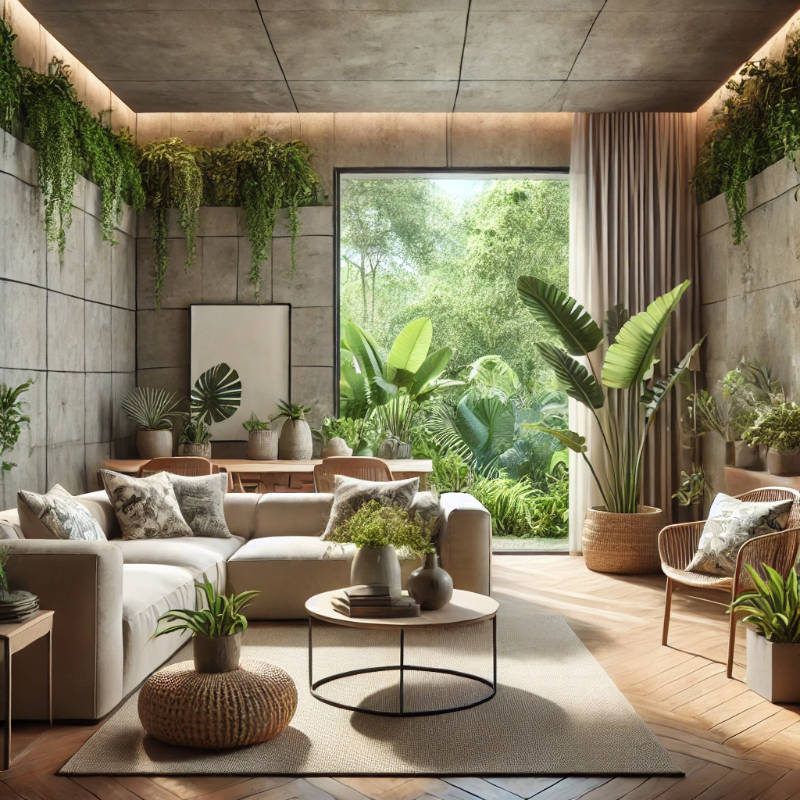
If there’s one interior design trend that has transcended trend status and become a design philosophy, it’s biophilic design. Rooted in the idea that humans have an innate need to connect with nature, this approach incorporates living plants, natural wood, stone textures, water features, and organic shapes into interior spaces.
Home design trends in 2025 are pushing biophilic design even further. We’re seeing living walls in residential kitchens, moss art installations in home offices, and architects designing homes with large unobstructed windows to maximize natural light year-round. According to research by the Human Spaces Global Report, incorporating natural elements into workplaces and homes increases well-being by up to 15% and productivity by 6%—numbers that resonate deeply in a world where so many of us now work from home.
For those looking at new interior design trends through a practical lens, biophilic design doesn’t require a full renovation. Start with a few statement plants, switch synthetic rugs for jute or wool, and replace laminate surfaces with reclaimed wood where possible.
2. Warm Minimalism: Goodbye Cold, Hello Cozy
The stark, cold minimalism of the 2010s—all white walls, chrome fixtures, and bare surfaces—is giving way to something far more livable: warm minimalism. This is one of the top trends in interior design that designers across platforms from Elle Decor to Architectural Digest have championed loudly.
Warm minimalism retains the “less is more” philosophy but introduces rich textures, muted earth tones, and natural materials that make a space feel inviting rather than sterile. Think walls in terracotta, sand, and warm taupe. Think linen sofas and boucle armchairs. Think handmade ceramics and aged brass hardware.
What’s driving this shift is deeply human: after years of disruption and upheaval, people want their homes to feel like a refuge. Trending interior design is responding to that emotional need with spaces that are simultaneously simple and deeply comforting.
3. Maximalism Makes Its Comeback
On the opposite end of the spectrum—and proving that interior design trends never move in just one direction—maximalism is back, and it’s bolder than ever. But this isn’t the cluttered, anything-goes maximalism of decades past. Today’s version is intentional, curated, and deeply personal.
The new maximalism is about telling your story through your space. It’s gallery walls filled with meaningful art and travel mementos. It’s layered rugs, mismatched but harmonious patterns, and bold wallpaper that makes a statement. Publications like Elle Decoration and leading home decor blogs call this “collected maximalism”—where every object has a reason for being there.
Decorating trends in this space are all about personality over perfection. Designers are encouraging clients to stop waiting for their space to look “finished” and instead embrace the living, evolving nature of a home that reflects a real person.
4. Curves and Organic Shapes Take Over
Straight lines and sharp corners are being pushed aside by one of the most visually striking latest home decor trends: curved furniture and organic architectural details. Arched doorways, rounded sofas, kidney-shaped coffee tables, and domed pendant lights are appearing in virtually every home decor trends news roundup published this year.
This shift is partly aesthetic—curved shapes simply photograph beautifully—but it’s also psychological. Soft curves are associated with safety and approachability, while angular forms can feel confrontational. In a world where home should be a place of genuine relaxation, home interior design trends are instinctively gravitating toward the more soothing geometry.
Look to major furniture brands and even elle decor furniture collections to see how this manifests commercially. Brands are investing heavily in curved silhouettes because consumer demand is clear.
5. Sustainable and Conscious Design
Sustainability has officially moved from niche to mainstream in interior design industry trends. Today’s consumers—especially millennials and Gen Z homeowners—are asking serious questions before they buy: Where was this made? What is it made from? Will it last?
This demand is reshaping housewares trends from the ground up. We’re seeing a surge in furniture crafted from reclaimed timber, upholstery made from recycled ocean plastics, and paints formulated without volatile organic compounds. New decorating trends also emphasize buying secondhand and restoring vintage pieces rather than purchasing new.
The most forward-thinking home decor trends aren’t just about aesthetics—they’re about building homes that are genuinely better for the planet. Designers who specialize in sustainable home decor are in high demand, and major retailers are racing to expand their eco-conscious product lines to meet the moment.
6. Statement Ceilings: The Fifth Wall Gets Its Moment
For years, ceilings were painted white and forgotten. Now, the ceiling is one of the most exciting canvases in trending home design. Bold painted ceilings in deep moody hues—forest green, midnight navy, rich burgundy—are among the most talked-about new home design trends in interior circles.
Beyond paint, interior design trends for ceilings include coffered details, exposed wooden beams, dramatic wallpaper, decorative molding, and even hand-painted murals in upscale installations. Designers often describe the ceiling as “the most underutilized surface in any room,” and the current trend cycle is finally correcting that oversight.
If you’re looking for a high-impact, relatively affordable refresh, this is one interior design trend that delivers incredible visual bang for the buck.
7. The Resurgence of Handcrafted and Artisanal Elements
There’s a growing cultural appetite for the imperfect, the handmade, and the one-of-a-kind. Current home decor trends reflect a conscious pushback against the overly polished, mass-produced aesthetic that dominated the last decade.
Handthrown pottery, woven wall hangings, hand-blocked textiles, and bespoke furniture made by local craftspeople are among the décor trends getting the most attention. Interior decorating trends in this space speak to a broader desire for authenticity—a way to make a home feel genuinely unique rather than like a catalog showroom.
Publications tracking home and design trends consistently note that consumers are willing to pay more for pieces with a story, with provenance, with the visible mark of a human hand.
8. Multifunctional Spaces Are Now Non-Negotiable
The way we use our homes has permanently changed, and interior trends are keeping pace. The rigid division between “living room,” “dining room,” and “home office” no longer reflects how most people actually live. Instead, home design news and design studios are focusing on multifunctional spaces that adapt to different needs throughout the day.
Newest design trends in this category include built-in storage that doubles as room dividers, dining tables that convert to workspace setups, and fold-away murphy beds integrated into sophisticated joinery that looks nothing like the awkward wall beds of the past.
This isn’t just about small-space living—even owners of spacious homes are embracing flexibility as a design value. The goal is designer home décor that works as hard as the people living in it.
9. Dark and Moody Interiors: Drama Meets Comfort
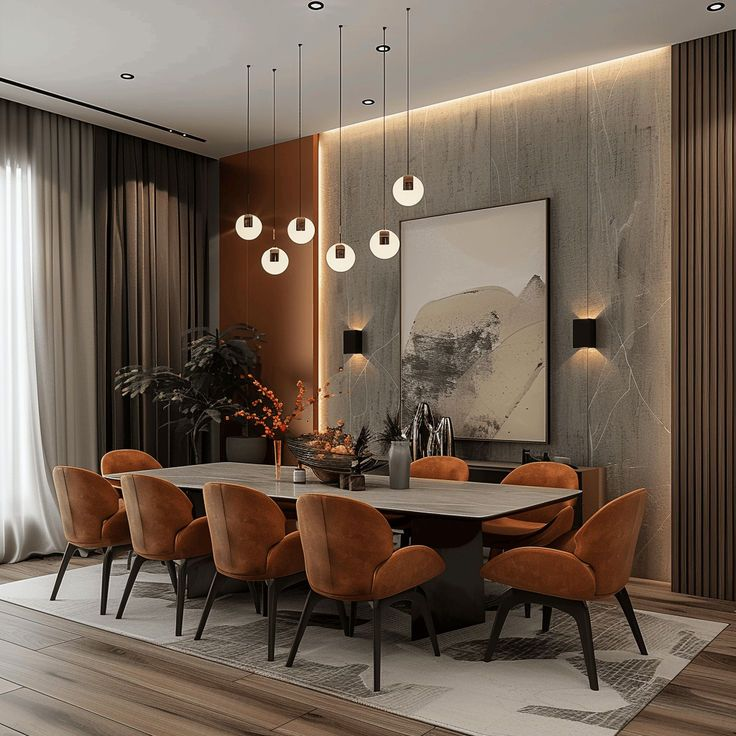
After years of all-white, bright-and-airy dominance, one of the most impactful current interior design trends is the embrace of dark, dramatic interiors. Deep greens, charcoal grays, rich chocolates, and inky blues are appearing in everything from kitchen cabinetry to living room walls.
Home decorating trends in the dark palette space are driven by a desire for depth and drama—spaces that feel like an experience rather than a backdrop. When done well, dark interiors feel extraordinarily cozy and sophisticated. Paired with warm lighting, natural textures, and metallic accents, they create an atmosphere that’s almost theatrical in the best possible sense.
This is a house design trend gaining momentum especially in dining rooms and primary bedrooms, where intimacy and atmosphere are primary design goals.

Color Trends Driving Interior Design Right Now
The Palette of the Year
Color is arguably the fastest way to transform a space, which is why decor trends watchers pay close attention to annual color forecasts from paint companies like Farrow & Ball, Benjamin Moore, and Sherwin-Williams.
In 2025, the latest decorating trends in color are telling a story of warmth, groundedness, and gentle optimism. Clay tones, warm greens, dusty pinks, and earthy terracottas dominate. Cool grays and stark whites are declining. The underlying message from color and design trends experts is that people want their spaces to feel human and organic—not clinical.
Trending decoration in the maximalist camp is also embracing unexpected color pairings: deep teal with burnt orange, cobalt blue with warm beige, mustard yellow with forest green. These combinations feel bold but harmonious when applied with restraint.
What Colors Are Designers Moving Away From?
Latest trends in home decor show a clear retreat from the all-gray palettes that dominated for nearly a decade. The cool, blue-toned grays that once felt so modern now read as dated to design-savvy eyes. Similarly, pure white walls without warmth or texture are becoming less common in spaces featured by leading interior design websites and decoration websites.
How to Identify Reliable Sources for Interior Design Inspiration
Using Design Publications Wisely
Not all interior design website inspiration is created equal. For genuinely authoritative, trend-forward content, look to publications like Elle Decor USA, Architectural Digest, Dezeen, and Dwell. These platforms work with professional designers and have editorial standards that separate them from content farms.
Online interior design magazines like these are particularly valuable because they show you how trends are being applied in real projects—not just mood boards or concept renders. When you see a trending house decor idea in an editorial spread, you can trust it has been tested in a real space.
The Role of Social Media in Trend Cycles
Social media—particularly Pinterest and Instagram—has dramatically accelerated interior design trend cycles. Ideas that would once take years to trickle from high design to mainstream now move in months. This is both exciting and challenging: it means more inspiration is available than ever, but it also means trends burn out faster.
The smart approach, as noted by leading home decor stylists, is to separate trend decor moments—short-term styling choices you can achieve affordably—from structural and investment decisions that should be guided by timeless principles rather than fleeting fashions.
Room-by-Room Breakdown of Latest Interior Design Trends
Kitchen: Where Function Meets Personality
Kitchen design trends in 2025 are rejecting the all-white, handle-less look in favor of cabinetry with character. Shaker-style doors in earthy tones, open shelving displaying home furnishing ideas, and dramatic island pendants are among the new home decor trends transforming kitchen spaces.
Interior home decorating ideas for kitchens also emphasize integrated appliances, waterfall countertops in natural stone or high-quality quartz, and the integration of organic textures through wooden cutting boards, linen tea towels, and terracotta vessels.
Living Room: The Heart of Every Home Trend
The living room remains the most closely watched space in home decorating trend conversations. Current living room trends favor:
- Modular, flexible seating that can be reconfigured for different social scenarios
- Layered lighting with multiple sources at different heights
- Statement rugs in bold patterns or luxurious textures like wool or silk blends
- Built-in shelving that serves as both storage and display
- Curved sofas and lounge chairs as focal points
Bedroom: A Space That Prioritizes Rest
Home modern decor in the bedroom is laser-focused on sleep quality and sensory comfort. Interior decor trends in this space include linen bedding in warm neutrals, blackout curtains in rich fabrics, soft ambient lighting controlled by dimmers, and the elimination of harsh overhead fixtures.
Latest home trends for bedrooms also include the concept of the “wellness bedroom”—a space designed to actively support mental and physical recovery. Air-purifying plants, sound-dampening textiles, and analog clocks replacing smartphone screens on nightstands are all part of this growing movement.
Bathroom: Spa-Like Ambitions in Everyday Spaces
Trending home decor 2023 planted the seeds for what has fully bloomed in 2025: the spa bathroom. New trends in interior design for bathrooms include fluted tiles, freestanding soaking tubs, rainfall showers with large-format stone tiles, and vanity mirrors with integrated warm lighting.
Even in smaller bathrooms, home decorating design ideas are incorporating these luxurious touches in scaled-down forms. A single beautiful piece—a sculptural faucet, a handmade ceramic soap dish, an oversized linen bath mat—can elevate an ordinary bathroom into something that genuinely feels like a retreat.
What the Interior Design Industry Is Saying
Insights From Professional Designers
Professional designers and design industry analysts consistently emphasize a few overarching themes when discussing interior design industry trends in 2025. First: personalization over perfection. The goal is a home that reflects its occupants, not a showroom that impresses strangers.
Second: longevity matters. With growing awareness of latest trends in interior designing toward sustainability, more clients are asking for spaces designed to last decades, not years. This influences material choices, furniture quality, and even color selection.
Third: the line between interior design new trends in residential and commercial space is blurring. Home offices are borrowing from the best of commercial workspace design. Hospitality-inspired bathrooms and restaurant-quality kitchens are no longer reserved for multi-million dollar homes.
The Rise of the DIY Design Era
Home decor blog post ideas that consistently perform well are those that empower people to take design into their own hands. There’s a genuine democratization happening in interior decorating trends, fueled by accessible online tools, affordable quality furniture from a new generation of direct-to-consumer brands, and an explosion of instructional content online.
How to decorate a modern house is one of the most searched design queries globally—and the answer, in 2025, is more accessible than ever. Start with a clear understanding of how you want to feel in each space. Build from there.
FAQ: Interior Design Trends
What are the biggest interior design trends in 2025?
The dominant interior design trends in 2025 include biophilic design, warm minimalism, intentional maximalism, curved furniture, sustainable materials, statement ceilings, artisanal and handcrafted elements, multifunctional spaces, and dark, moody interiors. These trends share a common thread: a focus on creating spaces that are emotionally resonant and deeply personal.
How do I find reliable sources for interior design inspiration?
For credible, professionally curated interior design website inspiration, turn to established publications like Elle Decor, Architectural Digest, Dezeen, and Dwell. These online interior design magazines work with professional designers and editorial teams. For practical decoration website ideas grounded in real-world budgets, design-focused blogs and YouTube channels from certified interior designers are excellent resources.
Are all-white interiors still considered a design trend?
Pure all-white interiors are declining in current interior design trends. While white remains a versatile backdrop, the trend is toward warmer whites and off-whites layered with texture, rather than stark, cool white surfaces. Latest decorating trends clearly favor earth tones and natural hues over clinical whites.
What is warm minimalism and how does it differ from regular minimalism?
Warm minimalism is one of the most significant modern interior design trends, defined by a pared-back, uncluttered aesthetic that replaces cold materials (chrome, glass, stark white) with warm ones (natural wood, linen, terracotta, warm stone). Unlike traditional minimalism, warm minimalism prioritizes tactile comfort and a cozy atmosphere while maintaining simplicity of form.
How can I incorporate interior design trends on a budget?
The most accessible new decorating trends can be adopted without major expenditure. Swapping throw pillows and cushion covers, adding plants, painting an accent wall or ceiling in a trending color, incorporating a statement rug, and updating hardware on kitchen or bathroom cabinets are all budget-friendly ways to engage with current home decor trends.
What are decorating trends that are losing popularity?
According to designers and major publications tracking home decor trends news, the following are fading: all-gray interiors, industrial-style exposed pipe aesthetics without warmth, stark open-plan living without zones or texture, shiny chrome finishes, and overly matchy-matchy furniture sets.
Where can I find the latest interior design trends news?
For home design news and breaking trend coverage, follow the digital editions of Elle Decor USA, Architectural Digest, Dezeen, and The Spruce. Designers and stylists on social platforms also provide real-time insight into latest interior trends as they emerge from trade shows like Salone del Mobile and Design Miami.
Is maximalism really coming back?
Yes—but with more intentionality than ever before. Home decorating trends data and editorial coverage consistently show maximalism gaining ground, particularly among younger homeowners who want spaces that reflect their personality rather than anonymous, interchangeable aesthetics. The key differentiator in today’s maximalism is curation: every object should be chosen deliberately.
Conclusion
Interior design trends are always more than just aesthetics—they’re a mirror of who we are, how we live, and what we value at a particular moment in time. The trends shaping homes in 2025 tell a rich, nuanced story: we want spaces that feel genuinely human, warmly personal, environmentally responsible, and deeply comfortable.
Whether you’re drawn to the earthy serenity of biophilic design, the bold personality of intentional maximalism, or the cozy sophistication of dark and moody palettes, the most important principle remains constant: design your home for you. Trends are a toolkit, not a rulebook.
The best-designed homes aren’t the ones that look like they came straight from a magazine spread—they’re the ones that make the people living in them feel most like themselves. Use these latest interior design trends as inspiration, filter them through your own taste and lifestyle, and you’ll create a space that stands the test of time, regardless of what comes next in the ever-evolving world of interior design.