
Introduction
What does it look like when a building doesn’t just sit on a landscape — but actually becomes part of it? That question sits at the heart of kdarchitects landscape ideas from morph, a design philosophy that has been quietly reshaping how architects and homeowners alike think about the relationship between structure and earth. Whether you’ve been scrolling through portfolios or searching for the next big thing in garden architecture, the work coming out of this particular firm is worth a very long look.
There’s a problem that plagues most construction projects: gardens are treated as afterthoughts. The house goes up, the walls get painted, and then someone drops a few potted plants near the front door and calls it done. The result feels disconnected, lifeless, and frankly a little sad. What the team behind kdarchitects landscape ideas from morph proposes — and consistently delivers — is something categorically different. They argue that form and foliage must be conceived together from the very first sketch.
In this article, we’re going to unpack the design thinking behind this approach, explore how their distinct architecture kdarchistyle shapes everything from commercial facades to private garden retreats, and look at what the so-called “morph” principle actually means in practice.
We’ll also look at the role of designing gardens kdagardenation plays in the broader ecosystem of this firm’s output, touch on some real-world examples, and answer the questions homeowners, developers, and curious readers most frequently ask.
Understanding the Morph Principle in Landscape Architecture
The word “morph” tends to conjure images of science fiction transformations — cells splitting, shapes flowing into new configurations. In landscape architecture, it’s a little more grounded than that, but no less fascinating. At its core, the morph principle is about transition: the careful, deliberate management of the boundary between built environment and natural world.
Most buildings treat this boundary as a hard line. There’s concrete, and then there’s soil. There’s wall, and then there’s garden. The morph approach dissolves that line. Green roofs cascade into planted terraces. Retaining walls double as raised beds. The material palette of the building bleeds naturally into the planting palette, so your eye never quite knows where one ends and the other begins.
Why the Morph Approach Works So Well
There’s genuine research behind this. Studies in environmental psychology consistently show that access to nature — even visual access — measurably reduces stress, improves cognitive focus, and accelerates recovery from illness. When landscape integration is baked into architecture rather than bolted on, occupants benefit continuously.
- Biophilic design studies point to a 6–15% improvement in productivity in offices with integrated greenery.
- Planted facades can reduce a building’s thermal load by up to 30% according to multiple European urban studies.
- Properties with professionally designed landscape integration command 10–20% higher valuations on average.
- Noise reduction in planted buffer zones has been measured at 5–10 decibels in urban contexts.
The morph principle, as practiced through the lens of design kdarchitects morph, takes all of this into account. It’s not just aesthetics. It’s a functional upgrade to the building itself — thermal, acoustic, psychological, and ecological.
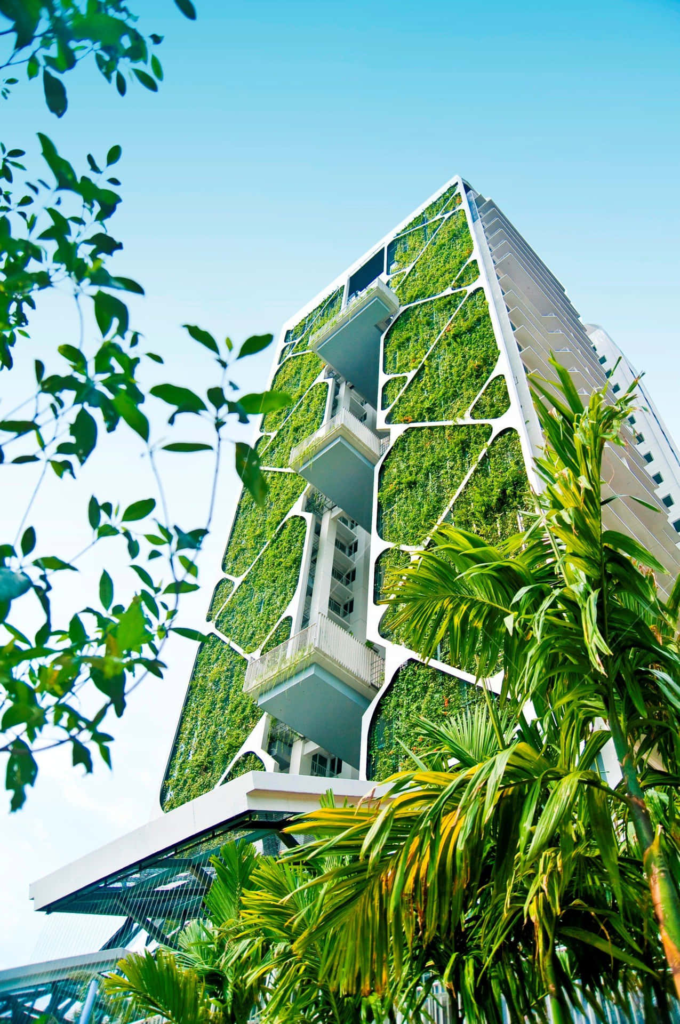
Modern landscape architecture showing the seamless integration of built structure and living environment — a hallmark of the morph design philosophy.
Landscape Integration: Impact at a Glance
| 🌿 Thermal Benefit | Up to 30% Reduced Heat Load |
| 🧠 Productivity Gain | 6–15% Increase with Greenery |
| 🏡 Property Value | 10–20% Premium on Average |
| 🔇 Noise Reduction | 5–10 dB in Planted Buffers |
Key measurable benefits of integrated landscape architecture, as demonstrated across peer-reviewed environmental studies.
KDArchitects and the KDArchistyle: A Signature Visual Language
Every great architecture firm eventually develops a visual language so consistent that you can recognize their work without needing a nameplate. The architecture kdarchistyle is exactly that kind of signature. It’s characterized by generous overhanging eaves, material transitions from rough-hewn stone to smooth render that mirror the texture gradient from wild garden to clipped lawn, and an almost obsessive attention to the threshold.
What makes kdarchistyle building types from kdarchitects distinctive isn’t any single element in isolation. It’s the choreography. The way a stone path seems to disappear into a meadow planting rather than ending abruptly at a border. The way a cantilevered roof creates a microclimate just generous enough to shelter a sitting area without enclosing it.
Residential Designs: Private Homes and Garden Retreats
Residential projects represent the most personal expression of the kdarchistyle building types from kdarchitects portfolio. Here, the brief is almost always the same in essence: create an outdoor space that extends the feeling of home beyond the walls.
For urban homes, the morph principle tends to manifest in vertical dimensions. Walls become trellises. Window boxes grow into full green facades. Basement light wells are transformed into sunken courtyard gardens with atmospheric planting that filters light into the lower floors.
For rural projects, the conversation shifts to the horizontal. The best kdarchitects landscape ideas from morph in rural settings answer this by designing gardens that make you forget where the designed ends and the wild begins.
Commercial and Civic Projects
Commercial architecture operates under different constraints, yet some of the most exciting applications of morphic landscape thinking happen at scale. The research is unambiguous: green space within commercial buildings increases retention and improves brand perception. Kdarchistyle building types from kdarchitects are built to deliver exactly that.
Roger Morph and the Design Intelligence Behind KDArchitects
No discussion of this firm’s philosophy is complete without acknowledging the intellectual influence of kdarchitects roger morph — the design thinking that treats a building not as a static object dropped into a landscape, but as a participant in an ongoing ecological conversation.
The central insight is deceptively simple: buildings have a responsibility to the land they occupy. Not just a legal one, but a moral and aesthetic one. A building that ignores its landscape is a building that’s only half-finished.
How Morph Thinking Changes the Design Process
The kdarchitects roger morph approach rejects the conventional practice of bringing landscape architects in after the building design is settled. Landscape is in the room from day one — or it isn’t done properly at all.
This changes everything. The orientation of the building changes to capture morning light in the kitchen garden and afternoon light on the terrace. The levels of the ground floor are designed in relation to the natural topography rather than in spite of it. Drainage strategies double as water features.
“The garden is not a room outside the house. It is the house, extended into the living world.”
This perspective transforms the design brief in ways that clients often find revelatory. It means asking not just “how many bedrooms?” but “how does this family want to inhabit their land?” It means thinking about seasonal change — the garden in January as much as in July.
Designing Gardens KDAgardenation: A Framework for Living Spaces
The concept of designing gardens kdagardenation is one of the more distinctive elements of this firm’s approach. It is a framework for thinking about the layers of a garden and how they interact over time.
Think of it as compositional thinking applied to horticulture. Just as a piece of music has melody, harmony, and rhythm working simultaneously, a well-designed garden has structure, texture, and seasonality working in concert. Miss one layer and the whole composition loses something.
The Three Layers of the KDAgardenation Framework
Layer One: Structural Bones
This is the architecture of the garden itself — the walls, paths, water features, specimen trees, and large evergreen shrubs that give the space its form. This layer ensures the garden looks purposeful even in the depths of winter. It is the layer most homeowners underinvest in, because structural elements tend to be more expensive and less immediately rewarding than flowers.
Layer Two: Seasonal Texture
The mid-layer of designing gardens kdagardenation is about creating interest that shifts through the year. Perennials that flush and fade in succession. Ornamental grasses that catch winter frost. Bulbs that push through in early spring. This layer is where skilled horticulturalists earn their keep.
Layer Three: Ephemeral Detail
The final layer is the most fleeting — annual plantings, seasonal pots, deliberate positioning of cut flower beds for picking. This is the layer that allows a garden to respond to a family’s life as it changes, adding personality and flexibility to the more permanent layers beneath it.
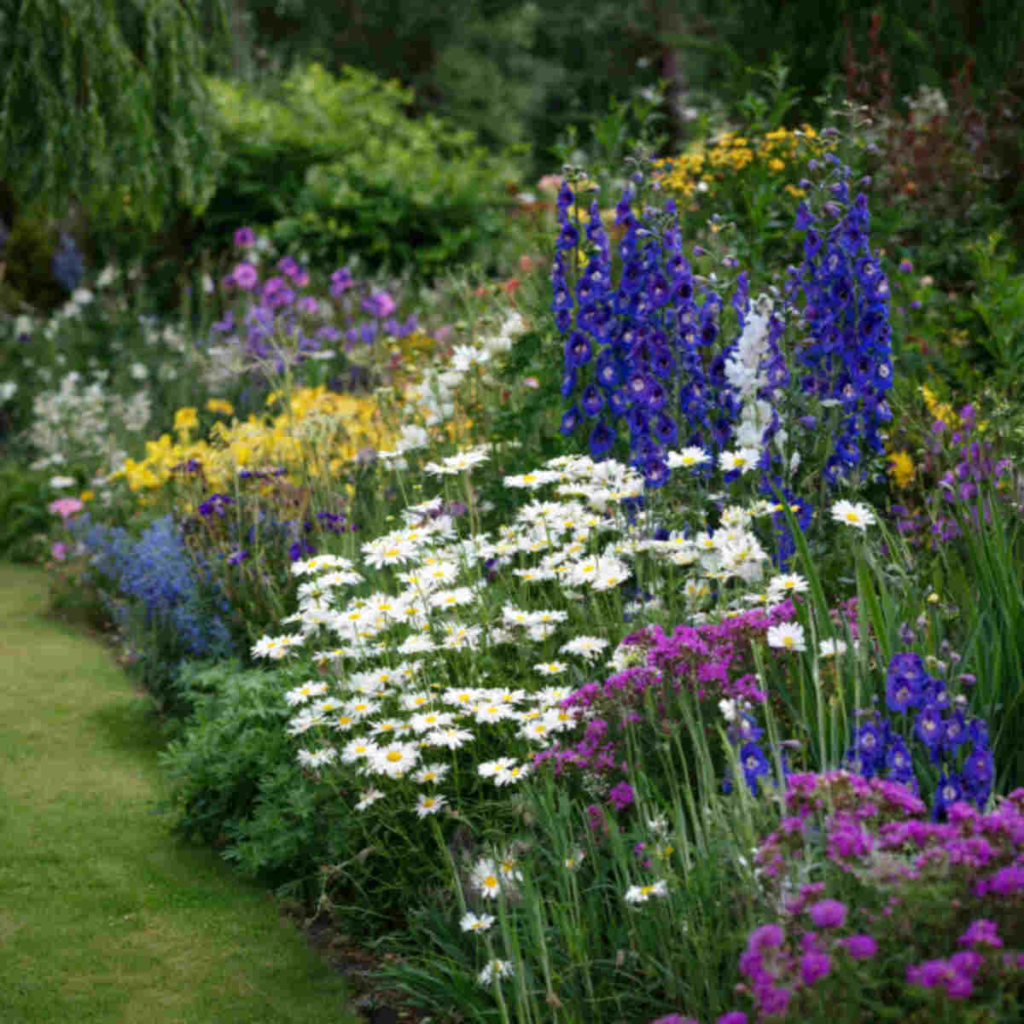
A professionally layered garden demonstrating the structural, textural, and ephemeral layers described in the KDAgardenation framework — where design depth meets seasonal change.
Visiting KDArchitects Online: What to Expect at www.kdarchitects.net
For anyone wanting to explore this work in depth, the firm’s online home at www. kdarchitects .net is an excellent starting point. The portfolio is organized by project type and scale, with case studies that show design evolution from sketch to site.
The site accessible at ww.kdarchitects.net also features a resource section with articles, essays, and practical guides on topics ranging from soil preparation to biodiversity net gain requirements. Searching kdarchitectsnet will bring up the practice’s digital presence directly.
Getting in Touch and Starting a Project
The enquiry process is straightforward. The practice works on projects at a range of scales — from single-garden redesigns to large-scale masterplanning commissions. Initial consultations focus on understanding the site’s existing conditions before any design thinking begins. Fees are structured transparently, with different service levels available depending on how involved the client wants the practice to be.
The Practical Side: How to Apply KDArchitects Landscape Ideas from Morph at Home
You don’t need to commission a full architectural project to apply the principles behind kdarchitects landscape ideas from morph to your own outdoor space. The thinking is scalable — equally useful on a 10-square-metre city terrace as on a five-acre rural estate.
Start With Your Boundaries
The first thing to examine is what marks the edge of your space. Fences, walls, and hedges are not just functional barriers — they’re the architectural frame of the garden picture. Paint a timber fence a deep charcoal or forest green; plant a mixed native hedge; build a low stone wall where previously there was only chain link. These changes cost less than most planting schemes and make every other element look better immediately.
Create a Ground Plane That Tells a Story
In design kdarchitects morph projects, the ground plane is always carefully considered — not just as a practical surface to walk on but as a compositional element. Even a simple re-thinking of a path can transform the feel of a small garden entirely.
Think in Seasons, Not Just Summers
The designing gardens kdagardenation approach insists on year-round interest. Include something structural that reads well in winter, something that delivers early spring interest, and something that keeps going deep into autumn.
- Winter interest: Acer griseum (paperbark maple), Betula jacquemontii (Himalayan birch), Stipa tenuissima
- Early spring: Narcissus bulbs, Hellebores, Epimedium
- Summer peak: Geranium Rozanne, Salvia nemorosa, Knautia macedonica
- Autumn into winter: Aster × frikartii, Sedum spectabile, Rosa moyesii (hips)
Water as Architecture
The morph principle, as interpreted through the architecture kdarchistyle lens, treats water as a structural element rather than a decorative one. A narrow rill running along the edge of a terrace. A sunken pond positioned to reflect a key architectural feature. These create specific experiential effects, anchoring a space and giving it a quality of place.
► Ready to Transform Your Outdoor Space?
Explore the full portfolio and start your own design conversation today at www.kdarchitects.net
Common Mistakes in Landscape Design (And How Morph Thinking Fixes Them)
Mistake 1: Treating the Garden as a Room Decoration
Gardens are not static backdrops. They live, die, grow, shed, and respond to weather. Designing a garden as if it were a piece of furniture will always disappoint. The morph approach designs for a garden’s life over ten, twenty, fifty years — asking what it looks like when the trees mature, how the planting evolves as the soil microbiome develops.
Mistake 2: Ignoring the Microclimate
Every garden has microclimates — pockets that are wetter, drier, shadier, or more exposed. Getting planting wrong in relation to microclimate is the single biggest reason gardens fail. The design kdarchitects morph philosophy begins with a careful site analysis that maps these conditions before a single plant is specified.
Mistake 3: Under-designing the Night Garden
Exterior lighting is one of the most transformative and neglected elements of landscape design. Done well, a lit garden at night is genuinely more beautiful than it is by day. This is a consistent feature of the architecture kdarchistyle, and one that clients consistently cite as the element that most surprises them when a project is complete.
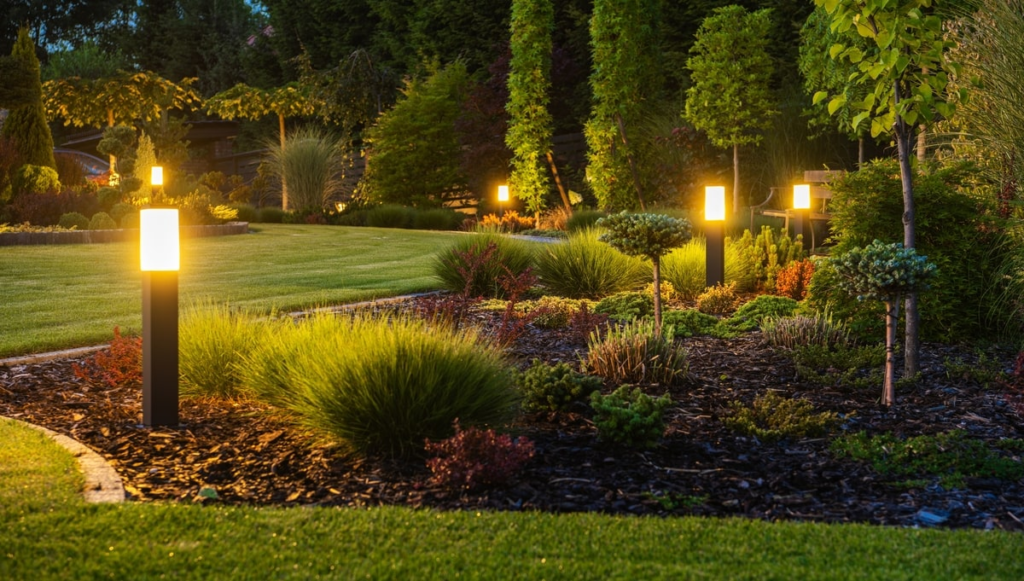
Architectural garden lighting transforms an outdoor space at dusk — one of the most often overlooked but highest-impact elements of considered landscape design.
Sustainability and the Future of Morphic Landscape Design
The kdarchitects landscape ideas from morph approach has always been inherently ecological, but the urgency of that ecological thinking has sharpened considerably in recent years. Biodiversity net gain requirements are now embedded in planning law in many jurisdictions. Water efficiency is increasingly legislated.
Native Planting and Ecological Function
One of the clearest expressions of sustainability in designing gardens kdagardenation practice is the shift toward native and near-native planting. Research from the Royal Horticultural Society consistently shows that even small gardens planted with native species support dramatically higher insect diversity, which cascades into higher bird diversity and a more resilient local ecosystem.
Rain and Resource Management
Modern landscape design treats rain as a resource, not a problem. Rain gardens, swales, permeable paving, and water storage cisterns integrated into the designed landscape can dramatically reduce reliance on mains water while reducing flood risk. These are solutions that the kdarchistyle building types from kdarchitects portfolio demonstrates at every scale.
Frequently Asked Questions
What are KDArchitects landscape ideas from morph, exactly?
KDArchitects landscape ideas from morph refers to a design methodology that treats buildings and their surrounding landscapes as a single integrated system. The “morph” principle describes the deliberate dissolution of the boundary between built form and natural environment — creating spaces that flow from interior to exterior, from architecture to garden, without abrupt transitions.
What is KDArchistyle and how does it differ from other architectural styles?
Architecture kdarchistyle is a signature visual language characterized by material continuity between buildings and landscapes, generous threshold spaces, and a preference for materials that weather gracefully alongside living planting. It differs from other contemporary styles in its insistence on designing building and garden simultaneously.
What building types does KDArchitects work with?
KDArchistyle building types from kdarchitects range from private residential homes to commercial office campuses, civic buildings, schools, and mixed-use developments. The morph principle is applied differently at each scale, but the commitment to landscape integration remains consistent throughout.
What does KDAgardenation mean in practical terms?
Designing gardens kdagardenation refers to a layered approach that considers structural bones, seasonal texture, and ephemeral detail as three distinct but interdependent compositional layers. In practical terms, it means selecting plants and hard landscaping not just for a single moment but for how they perform together across all seasons.
Where can I see the full KDArchitects portfolio?
The most comprehensive collection of the firm’s work is available at www. kdarchitects .net. The site also accessible via ww.kdarchitects.net features detailed case studies and a resource section. Searching kdarchitectsnet will bring up the practice’s digital presence directly.
How much does a landscape architecture project typically cost?
Costs vary enormously depending on scale, site complexity, and the level of service required. A design-only engagement for a residential garden can start at a few thousand pounds or dollars, while full-service masterplanning will be significantly higher. The initial consultation is the best way to get a realistic sense of costs for your specific project.
Is the morph design approach suitable for small urban gardens?
Absolutely. Some of the most compelling applications of design kdarchitects morph thinking occur in constrained urban settings where every square metre counts. Vertical greening, courtyard planting, and creative boundary treatments can completely transform a small space. The principles scale down elegantly.
What is the best first step when planning a landscape redesign?
Before choosing plants or materials, spend time observing your site across different conditions. Understanding how your site actually behaves is the foundation of the kdarchitects landscape ideas from morph approach. Professional site analysis can accelerate this process significantly and prevent costly mistakes.
Conclusion
There’s a reason that the most memorable built environments in the world treat building and landscape as inseparable. It’s not an aesthetic preference. It’s a recognition that human wellbeing, ecological health, and the long-term success of a place all depend on that integration being done thoughtfully and with real skill.
The work coming out of this practice — accessible through kdarchitectsnet and the broader digital presence — represents a serious and genuinely useful contribution to this tradition. Whether you’re a homeowner with a neglected plot or a developer trying to future-proof a scheme, the principles behind kdarchitects landscape ideas from morph offer something worth sitting with.
The best gardens, like the best buildings, don’t announce themselves. They simply make you feel, without quite knowing why, that you are in exactly the right place.