
There’s a particular kind of quiet that settles over you when you’re holding a piece of sea glass up to the light, turning it over, wondering what bottle or window it used to be. That small, curious pause is exactly the feeling behind arts thunderonthegulf crafts — a corner of the maker world where coastal living, hands-on creativity, and everyday materials come together into something you can actually hold.
If you’ve ever stood on a beach and thought, I wish I could bring this feeling home with me, you already understand the appeal. This isn’t about being a professional artist or owning expensive supplies. It’s about turning driftwood, shells, sea glass, and a little bit of patience into something that means something to you.
In this guide, we’ll walk through what arts crafts thunderonthegulf actually involves, why crafting matters more than most people realize, the specific projects you can try this weekend, and how a resource like www.thunderonthegulf.com fits into the wider world of coastal-inspired making. By the end, you’ll have a real plan — not just inspiration, but an actual starting point.
What Arts Thunderonthegulf Crafts Actually Means
At its core, arts thunderonthegulf crafts refers to the growing community of hobbyists, families, and hands-on creators who draw inspiration from Gulf Coast life — its beaches, its colors, its slower rhythm — and translate that into handmade projects. Think driftwood picture frames, sea glass jewelry, painted shells, woven coastal wall hangings, and reclaimed wood signs.
It sits at the intersection of two ideas that have always gone together: art and craft. Art is generally understood as creative work made primarily for expression or aesthetic value — a painting, a sculpture, a photograph. Craft usually refers to skilled handmade work that often serves a function as well as a look — a woven basket, a ceramic mug, a knitted scarf. Art thunderonthegulf crafts blends both: pieces that look beautiful and serve a purpose in your home.
Sites like thunderonthegulf.com have built out entire categories around this idea, covering everything from paper crafts and seasonal projects to furniture-with-storage builds, alongside their other lifestyle content on gardening, fishing, and outdoor living. It’s less a single event and more an ongoing collection — new project ideas added regularly, aimed at people who want practical, doable creative activities rather than abstract art theory.
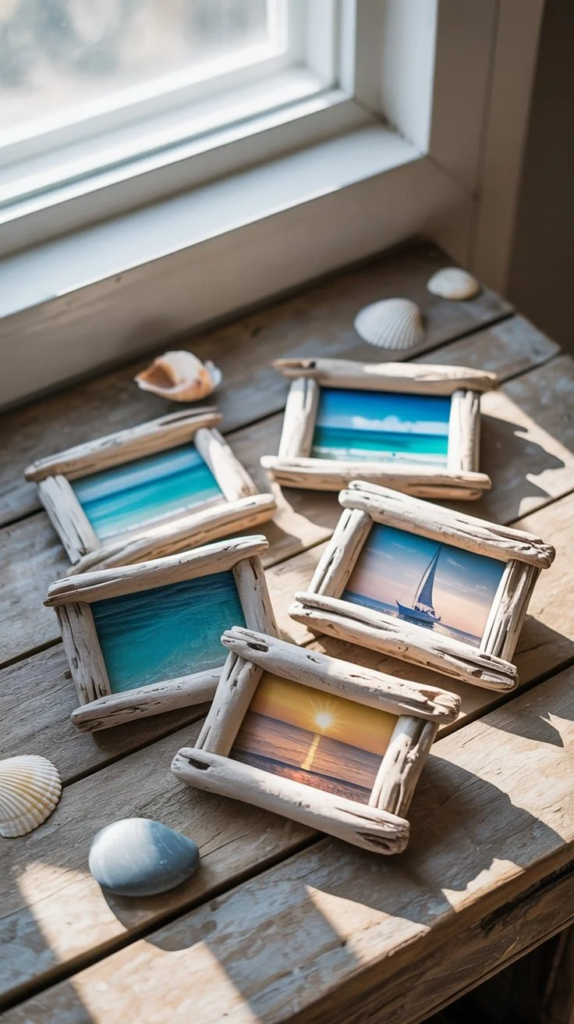
A driftwood picture frame is one of the most popular entry points into arts thunderonthegulf crafts — rustic, low-cost, and forgiving for beginners.
Why Coastal Crafting Specifically Resonates
There’s something about coastal materials that makes crafting feel less intimidating. You’re not staring at a blank canvas wondering where to start — you’re holding a piece of driftwood that already has a shape, a texture, a history. The material does some of the creative work for you. That’s a big part of why fun craft thunderonthegulf projects appeal to total beginners and experienced makers alike: the barrier to entry is low, but the results still feel personal and finished.
The Real Benefits of Crafting (Backed by Research)
It would be easy to treat crafting as just a way to fill time, but there’s a genuine, well-documented case for why picking up a craft project is good for you — not just decoratively, but mentally.
A 2016 study published in The British Journal of Occupational Therapy found that knitting, specifically, was associated with calmness and improved mood among the more than 3,500 participants surveyed, with frequency of knitting linked to better cognitive function. Separately, research on “flow state” — the deep, focused absorption you feel when fully engaged in a task — has repeatedly identified repetitive, skill-based hobbies like crafting as one of the more accessible ways for ordinary people to reach that state without needing elite-level skill.
Occupational therapists have also pointed to crafting’s role in stress regulation. The repetitive, rhythmic motions involved in many craft activities — sanding wood, sorting shells, threading beads — can lower cortisol and ease anxious thinking, similar to other mindfulness-based practices. This is part of why art thunderonthegulf crafts communities so often describe crafting as “meditative” rather than just “fun.” It genuinely engages a different part of your attention than scrolling a phone or watching television does.
There’s also a social dimension worth mentioning. Group crafting — whether that’s a family project at the kitchen table or a casual gathering of friends — has been linked in social psychology research to increased feelings of connection and reduced loneliness, because shared, low-pressure creative tasks tend to lower social anxiety compared to pure conversation alone. It’s easier to open up to someone when your hands are busy and the stakes are low.
Getting Started: What You Actually Need
One of the most common reasons people put off trying arts crafts thunderonthegulf projects is the assumption that they need a fully stocked craft room. They don’t. Here’s a realistic starter list:
- Basic adhesives – washable craft glue, a hot glue gun, and clear-drying multipurpose glue
- Paint – acrylic paint in a handful of versatile colors (white, sandy beige, ocean blue, soft coral)
- Natural materials – shells, sea glass, driftwood, smooth stones (collected for free if you’re near a coastline, or purchased inexpensively online)
- Basic tools – sandpaper, a small saw or wood file, fine-tip brushes, jewelry pliers if you’re making accessories
- Connecting materials – twine, jute rope, fishing line, jump rings, and picture-frame hardware
That’s genuinely most of it. The materials cost is low specifically because so much of the inspiration comes from things you can gather yourself rather than buy.
Popular Project Ideas Within Arts Thunderonthegulf Crafts
This is the part most people actually want — real projects, not just theory. Below are some of the most approachable and consistently popular ideas in this space, organized by skill level.
Beginner-Friendly Projects
- Sea glass and shell wind chimes – Drill small holes in flat shells and pieces of sea glass, then string them at varying lengths from a driftwood branch. No experience needed, and the sound alone makes it satisfying.
- Painted rock art – Smooth, flat stones become canvases for simple wave patterns, sunsets, or single words. A clear sealant keeps the paint from chipping outdoors.
- Sand jar layering – Layering different colored sands (you can dye plain sand with chalk or food coloring) into a clear jar creates a striped, almost geological-looking decorative piece.
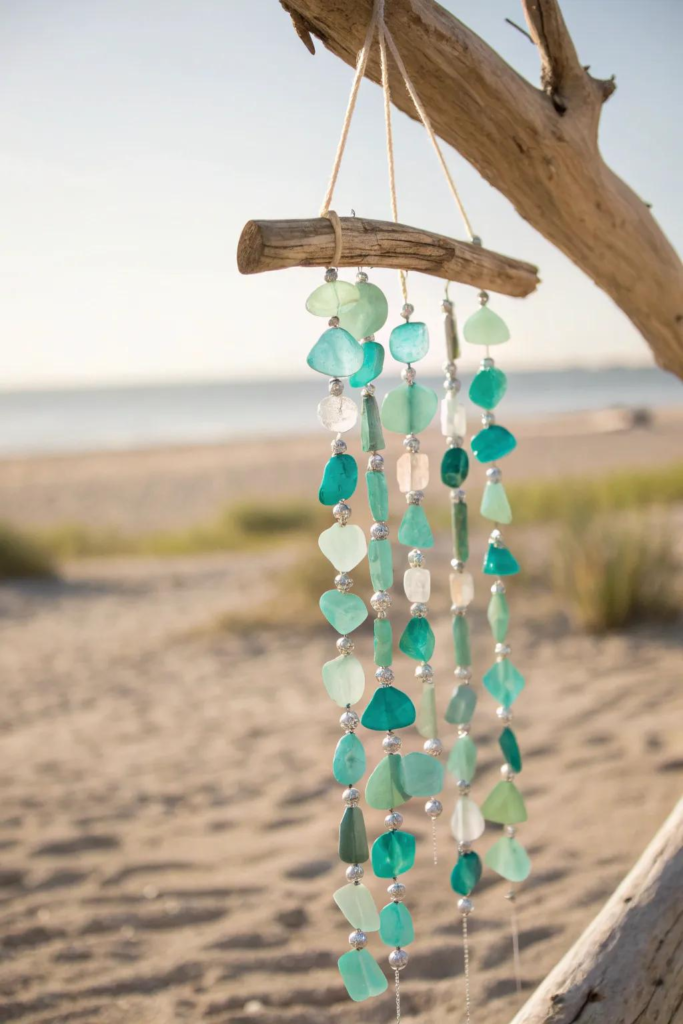
Sea glass and shell wind chimes are a favorite fun craft thunderonthegulf project — simple to assemble, and each piece sounds a little different.
Intermediate Projects
- Driftwood picture frames – Sand and arrange pieces of driftwood around a basic frame, securing with strong adhesive. This is one of the most requested fun crafts thunderonthegulf projects because the finished product looks intentionally rustic rather than thrown together.
- Woven coastal wall hangings – Using jute, cotton rope, and a simple wooden dowel, you can create a macramé-style hanging that incorporates shells or sea glass at the base.
- Reclaimed wood signs – Sanded wood, stenciled lettering, and a weatherproof finish turn scrap wood into porch-ready signage.
More Advanced Projects
- Sea glass jewelry – Drilling glass requires a steady hand and the right drill bit (diamond-tipped, used with water to prevent cracking), but the payoff is wearable, one-of-a-kind pieces.
- Driftwood furniture accents – Small side tables or lamp bases built around larger driftwood pieces take more planning and tool work but produce genuine furniture, not just décor.
- Mixed-media coastal canvases – Combining paint, sand texture, and small embedded shells into a single canvas piece blends traditional painting with sculptural craft.
Solving the Most Common Crafting Problems
Most people don’t abandon a craft hobby because they dislike it — they abandon it because of a handful of recurring frustrations. Here’s how to deal with the ones that come up most.
“I don’t have time.”
Pick projects with natural stopping points. Sea glass wind chimes, painted rocks, and sand jars can each be finished in under an hour. Save multi-day projects like furniture builds for when you genuinely have a free weekend, rather than letting an ambitious project become the reason nothing gets started at all.
“My finished piece doesn’t look like the inspiration photo.”
This is almost universal, and it’s worth normalizing. Handmade coastal pieces are supposed to look a little imperfect — the appeal of art thunderonthegulf craft work is its individuality, not factory-level precision. Slight asymmetry in a driftwood frame or uneven shell placement on a wind chime reads as authenticity, not failure.
“I can’t get the materials.”
If you’re not near a coast, most craft retailers and online marketplaces sell pre-cleaned shells, sea glass, and driftwood pieces by the bag, often for less than the cost of a single takeout meal. It removes the foraging step but keeps every other part of the project the same.
“Kids lose interest halfway through.”
Shorter, sensory-heavy projects work best for younger children — think sand jars, shell sorting and gluing, or simple rock painting. Save the multi-step builds (frames, wind chimes) for when you can do most of the technical work and let kids handle the decorative finishing.
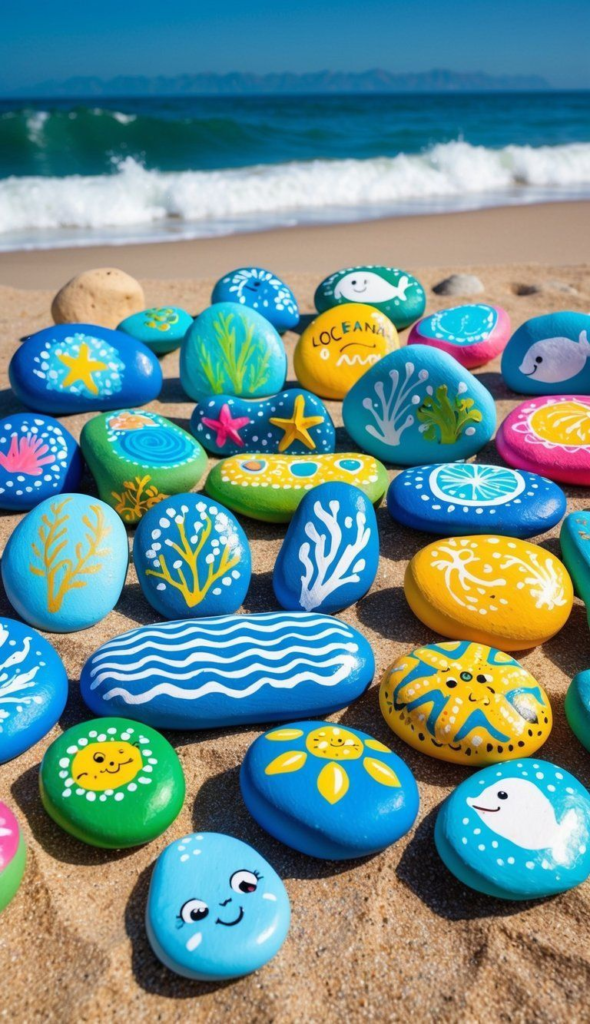
Painted rocks are an ideal low-cost, low-pressure project for kids and beginners exploring art thunderonthegulf crafts for the first time.
Where to Find Ideas and Inspiration
If you want a steady stream of new project ideas rather than figuring everything out from scratch, a few resources are worth bookmarking. Thunderonthegulf.com maintains an ongoing arts and crafts section covering seasonal projects, kid-friendly activities, and home organization ideas like dedicated craft tables with storage — useful if you’re trying to build out a permanent creative space rather than clearing the dining table every time.
The site offers thunderonthegulf.com visitors a mix of practical tutorials and lifestyle content, which fits naturally if your interest in crafting overlaps with broader coastal living — gardening, outdoor cooking, or fishing, for instance. For people who want one bookmark that covers multiple hobbies rather than a single-purpose craft blog, that combination is part of the appeal.
It’s also worth following a few general crafting and DIY communities online, since coastal-inspired projects frequently get shared across home decor and lifestyle platforms, giving you a wider pool of variations on the same core ideas.
Turning a Hobby Into Something More
Some people start with a single wind chime and end up with a small side business. If that’s a direction you’re curious about, a few patterns show up consistently among makers who’ve made the jump successfully:
- Start with one signature item rather than trying to sell ten different product types at once.
- Photograph in natural light, ideally outdoors, since coastal-themed pieces photograph far better with genuine sunlight than with indoor studio lighting.
- Price for your materials and time, not just materials. Handmade work consistently undersells when makers forget to value their own hours.
- Lean into the story. A piece made from sea glass actually collected on a specific beach sells differently than a generic description — buyers respond to provenance.
You don’t need to monetize anything to enjoy fun crafts thunderonthegulf style projects, but it’s a realistic path if your hobby starts generating more finished pieces than your own walls can hold.
Frequently Asked Questions
What is arts thunderonthegulf crafts?
It refers to a style of coastal-inspired handmade art and craft projects — things like driftwood frames, sea glass jewelry, and shell-based décor — popularized by lifestyle and DIY resources covering Gulf Coast-themed creativity.
Do I need to live near the coast to try these projects?
No. While foraging your own shells, driftwood, and sea glass adds a personal element, all of these materials are widely available through craft stores and online retailers if you don’t have beach access.
What’s the cheapest way to start?
Painted rock art and sand jar layering are the lowest-cost entry points, often requiring only paint, glue, and containers you may already have at home.
Are these crafts safe for children?
Most beginner projects — shell gluing, rock painting, sand layering — are safe and genuinely enjoyable for children, with adult supervision recommended for any cutting, drilling, or hot glue use.
How long does a typical project take?
Beginner projects usually take 30 minutes to an hour. Intermediate projects like driftwood frames or woven wall hangings can take a few hours, often spread across one sitting. Advanced furniture or jewelry projects may take several sessions.
Where can I find more project ideas?
Resources like www.thunderonthegulf.com regularly publish new craft tutorials, alongside broader coastal lifestyle content, making them a useful ongoing source rather than a one-time read.
Can crafting actually reduce stress?
Yes. Research on repetitive, skill-based hobbies has linked them to lower anxiety and improved mood, largely because they encourage sustained, focused attention similar to other mindfulness practices.
What tools are essential for sea glass jewelry?
A diamond-tipped drill bit used with water (to prevent cracking the glass), jewelry pliers, and jump rings or wire are the core essentials beyond the sea glass itself.
Is it possible to sell handmade coastal crafts?
Yes, many makers do. Success tends to come from a clear signature product, good natural-light photography, fair pricing that accounts for time as well as materials, and a genuine story behind the materials used.
How do I keep driftwood or shell pieces from deteriorating over time?
Keep finished pieces out of direct, prolonged sunlight to prevent fading, dust gently rather than scrubbing, and reseal wood pieces occasionally with a weatherproof finish if they’re displayed outdoors.
Final Thoughts
What makes arts thunderonthegulf crafts worth your time isn’t really about the finished object — it’s the hour you spend sanding a piece of driftwood until it feels right in your hands, or the satisfaction of finally getting a piece of sea glass to sit just where you wanted it on a frame. That’s a different kind of reward than most of what fills our days.
You don’t need talent you don’t already have, and you don’t need a beach outside your front door. You need a little time, a handful of inexpensive materials, and the willingness to let your first attempt be imperfect. Start with something small this week — a painted rock, a simple shell jar — and see whether it pulls you in the way it pulls so many others. There’s a decent chance it will.