
There’s something quietly magical about walking into a room and seeing a gorgeous floral display on the table — full, lush, perfectly arranged — only to realize those flowers are never going to drop a single petal. If you’ve been curious about diy artificial flower arrangements but thought they required a professional touch or an expensive florist, think again. With a little patience, the right tools, and the tips in this guide, you can create stunning artificial flower arrangements that fool even the sharpest eyes.
The truth is, fake flower arrangements diy have come a long way from the stiff plastic roses of decades past. Today’s silk flower arrangements and high-quality faux floral blooms look remarkably close to the real thing — and they’re far more forgiving to work with. Whether you want a simple centerpiece for your dining room table, a gorgeous display for a wedding, or even diy funeral centerpieces that feel heartfelt and dignified, artificial flowers open up a world of creative possibilities that fresh flowers simply can’t match.
In this guide, you’ll learn exactly how to make artificial flower arrangements from scratch — even if you’ve never held a pair of floral shears in your life. We’ll walk through supplies, techniques, styling tricks, and ideas for every occasion. Let’s get started.
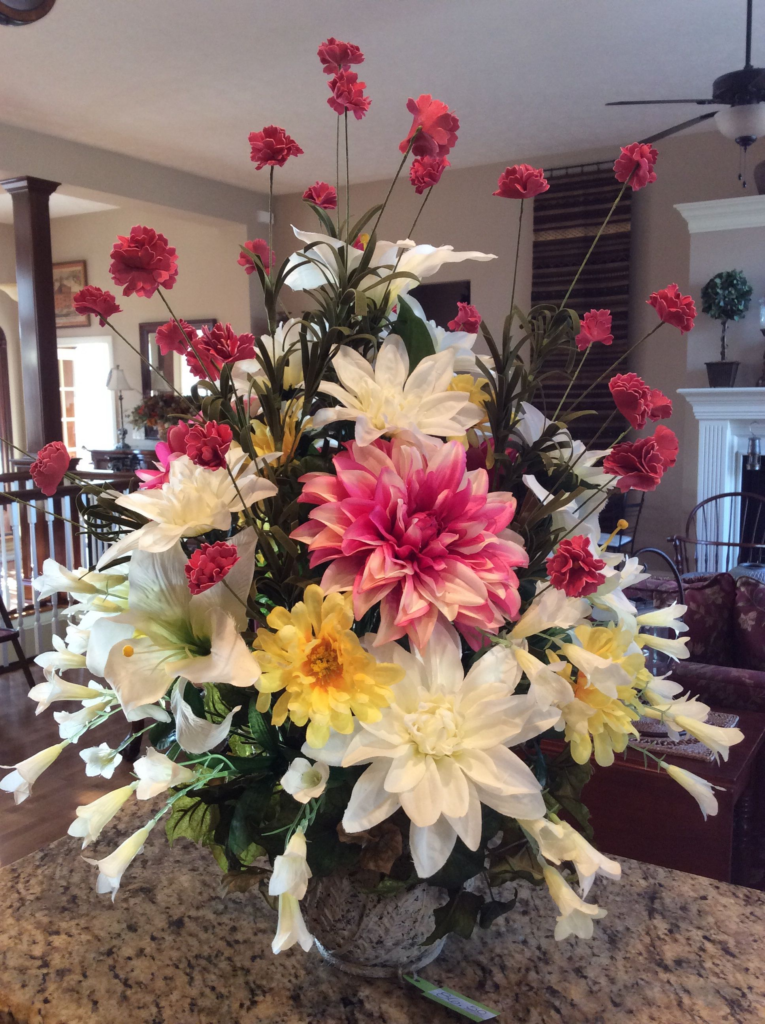
Stunning diy artificial flower arrangements can look every bit as gorgeous as fresh blooms — without the wilting or the cost.
Why Choose DIY Artificial Flower Arrangements?
Before diving into the how-to, it’s worth understanding why so many people — from seasoned interior decorators to complete beginners — are turning to faux flower arrangements and decorating with artificial flowers as their go-to approach for home and event décor.
They Last Forever (Literally)
Fresh flowers are beautiful but fleeting. A fresh flower centerpiece might look gorgeous for five days, then droop and die. A well-made artificial flower arrangement can look just as stunning for years. You invest time once and enjoy the results indefinitely — perfect for flower arrangements for tables you want to keep looking great season after season.
They’re Budget-Friendly
When you consider the cost of fresh flowers over time, diy faux flower arrangements make strong financial sense. High-quality silk stems can be purchased for a fraction of the cost of fresh arrangements, especially when planning events. Think about diy wedding flower arrangements — the savings compared to hiring a florist for fresh blooms can be substantial, sometimes thousands of dollars.
Allergy-Free and Low-Maintenance
For people with pollen allergies, artificial floral arrangements are a genuine game-changer. There’s no pollen, no mess, no need to change the water, and no worry about flowers wilting before your party even begins. Decorating with faux flowers means you get all the visual warmth of florals without any of the maintenance headaches.
Endless Creative Control
With fresh flowers, you’re limited to what’s in season and what your local market carries. With diy fake flowers, you can mix any bloom, any color, any season, any time. Want a hydrangea and rose centerpiece in January? No problem. A tropical arrangement in winter? Done. The creative freedom is genuinely unmatched.
| Did You Know? According to a survey by the Society of American Florists, nearly 65% of people who purchase artificial flowers say the primary reason is longevity — they want their arrangements to last. High-quality silk and polyester flowers have also improved dramatically in photorealism, making “how to make fake flowers look real” easier than ever before. |
What You’ll Need: Supplies for DIY Artificial Flower Arrangements
Getting your supplies right is half the battle when it comes to making artificial flower arrangements. Here’s what actually matters — and what you can skip.
Essential Supplies
- Artificial/silk flower stems (your chosen varieties)
- Floral foam or dry foam blocks
- Wire cutters or sharp scissors
- A vase, container, or urn
- Floral tape (green or brown)
- Hot glue gun + glue sticks
- Filler greenery stems (eucalyptus, ferns, ivy)
- Decorative moss or gravel (to cover foam)
- Floral wire (22-gauge is versatile)
- Spray paint (optional, for customizing containers)
Choosing Your Artificial Flowers
The single biggest factor in whether your diy fake flower arrangements look convincing is the quality of your flowers. Cheap plastic blooms with shiny, uniform petals will always look artificial. Look instead for silk flowers or high-quality polyester varieties with realistic petal veining, subtle color variation, and natural-looking stems. When arranging fake flowers, mixing different flower types — roses, peonies, eucalyptus, hydrangeas — creates the kind of layered depth that real arrangements have.
Choosing the Right Vase or Container
For how to make artificial flower arrangements in a vase, the container matters more than people realize. Clear glass vases are stunning but require you to fill them convincingly (pebbles, water-gel beads, or branches work well). Opaque ceramic urns or wooden boxes are more forgiving. For diy faux floral centerpieces, low, wide containers tend to work better for table settings where you don’t want to block eye contact across the table.
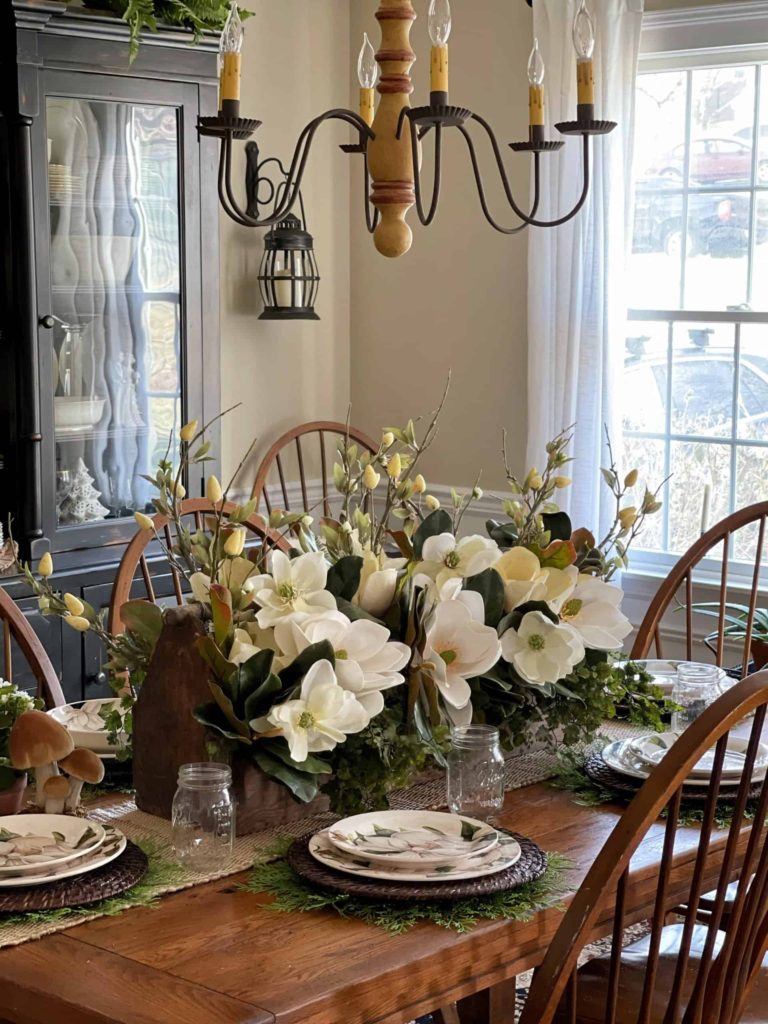
A beautifully styled fake flower centerpiece diy on a dining table — proof that faux can look completely real.
| Pro Tip When shopping for diy fake flowers, buy a few extra stems. It’s far better to have too many than too few — and the extras can fill out sparse spots or be saved for future projects. Aim for about 20–30% more stems than you think you’ll need. |
Step-by-Step Artificial Flower Arranging for Beginners
Ready to actually make something beautiful? This step by step artificial flower arranging for beginners walkthrough covers everything from preparing your container to adding the final finishing touches.
Step 1 — Prepare Your Container and Foam
Start by cutting your floral foam to fit snugly inside your container. This is the foundation of how to make a floral arrangement using foam — the foam holds every stem in place, so it needs to fit well. Cut it slightly larger than the opening so it wedges in without shifting.
Step 2 — Establish Your Height and Structure
For how to make a tall artificial flower arrangement, start with your tallest stems — these set the overall scale. A classic design rule is to make your tallest point 1.5 to 2 times the height of your container. Insert these central stems first, then work outward and downward to build the shape. For a simple flower arrangement, a classic dome or sphere shape is the most forgiving and flattering.
Step 3 — Add Focal Flowers
Your focal flowers are the stars of the show — typically larger blooms like roses, peonies, or sunflowers. When how to arrange artificial flowers comes to focal placement, think in odd numbers (3, 5, 7 blooms) and distribute them at varying heights. Never line them up in a row — stagger them for a natural, organic look. This is the core technique behind beautiful silk flower arrangement ideas.
Step 4 — Fill with Secondary Flowers
Secondary flowers (smaller blooms like baby’s breath, spray roses, or ranunculus) fill the gaps between your focal flowers and add richness. This is where beginner artificial flower arrangements diy often go wrong — people don’t use enough filler and the arrangement looks sparse. Don’t be shy. Pack it in.
Step 5 — Add Greenery and Texture
Greenery is what makes a faux floral centerpiece look truly real. Eucalyptus, ferns, ivy, and dusty miller add natural movement and break up the monotony of flowers-only arrangements. Tuck greenery in around the base of blooms, let it drape over the edge of the container, and use it to hide any foam that’s peeking through.
Step 6 — Finishing Touches
Step back, take a look. Rotate your arrangement. Fill any obvious gaps. Gently bend wire stems (most artificial stems have inner wire) to give petals and leaves a natural droop. Cover exposed foam at the base with decorative moss, pebbles, or preserved leaves. And that’s your simple flower arrangement — complete!
How to Make Fake Flowers Look Real: 8 Secrets the Pros Use
This is the question everyone wants answered: how to make fake flowers look real. The gap between a convincing arrangement and an obviously artificial one almost always comes down to a handful of specific techniques that most beginners don’t know about.
1. Bend and Shape Every Single Stem
Real flowers don’t grow in rigid, straight lines — and your artificial ones shouldn’t look like they do either. Every time you place a stem, bend it slightly at the wire. Angle petals. Let leaves curve. This simple act of gentle shaping transforms stiff-looking diy floral arrangements into something that breathes and moves. When how to arrange fake flowers is the goal, this is the most impactful single technique.
2. Vary Your Stem Heights Dramatically
One of the biggest giveaways that an arrangement is artificial is when all the flowers sit at exactly the same height. Real flower arrangements have natural variation — some blooms sit high, some nestle lower, some peek out from behind. When creating simple flower arrangement ideas, deliberately cut stems to very different lengths before inserting them.
3. Use a Steamer to Soften Petals
A handheld garment steamer is one of the best-kept secrets in home diy artificial flower arrangements. A brief pass of steam relaxes synthetic petals, making them droop, curve, and fall far more naturally. Hold the steamer about 6 inches from the bloom and gently reshape the petals with your fingers while they’re still warm.
4. Mix Faux and Dried Elements
Combining artificial flowers with real dried elements — preserved eucalyptus, dried pampas grass, dried orange slices — grounds the arrangement in reality. The textures and imperfections of natural dried materials make the entire arrangement look more authentic, and it’s one of the smartest fake flower decor ideas going.
5. Avoid Matching Color Sets
Pre-packaged artificial flower arrangement bundles that all match perfectly can look overly coordinated and artificial. Real gardens and florists mix slightly different shades of the same color. When arranging fake flowers, shop for individual stems and deliberately mix slightly varied tones.
6. Mind Your Container
The container says a lot about the arrangement. A vintage brass urn, a rustic terracotta pot, or a clear glass vase filled with faux water gel beads all lend authenticity to your artificial flower display. Cheap plastic containers undercut even the best quality stems. Invest in good vessels.
7. Use Real Greenery as Accents
If you truly want your diy faux flowers to pass as real, consider adding a few sprigs of actual fresh or dried real greenery. Even a few real eucalyptus branches alongside artificial blooms transforms the entire arrangement’s credibility.
8. Add Fragrance
The only thing artificial flower decoration ideas can’t replicate on their own is scent. A tiny drop of floral essential oil on the foam, or a subtle room spray nearby, engages the sense of smell in a way that makes people genuinely believe the flowers are real.
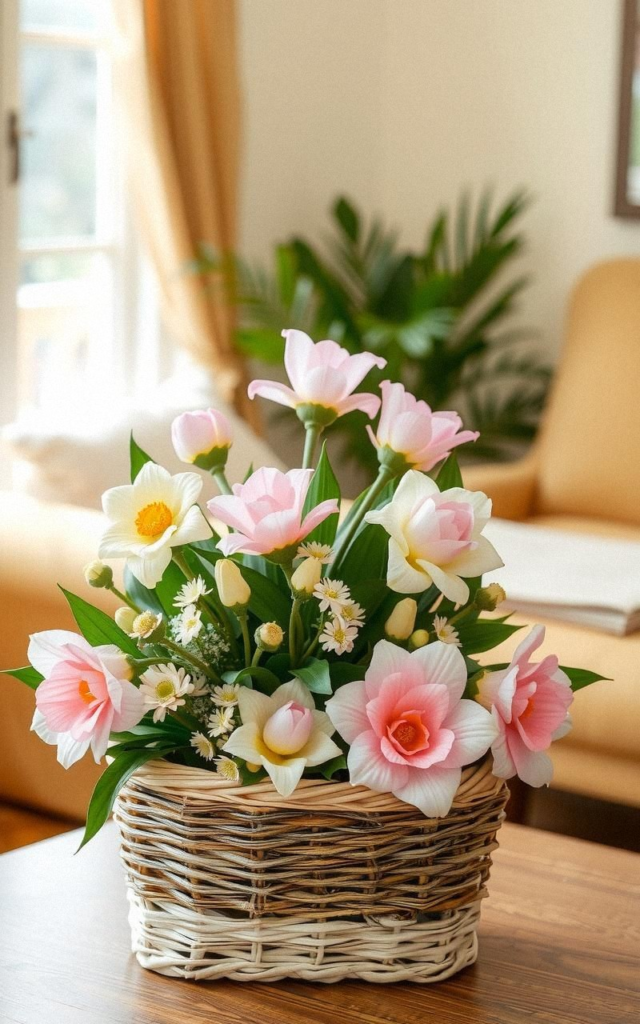
Learning how to make silk flower arrangements step by step gives you skills you’ll use for every project — from table displays to wedding décor.
QUICK-REFERENCE: DIY ARTIFICIAL FLOWER ARRANGEMENT TIPS
| QUICK-REFERENCE INFOGRAPHIC | DIY Artificial Flower Arrangement Tips |
| Cut Stems at Angles Angled cuts allow stems to sit more naturally in foam and vases. | Steam to Soften Petals Use a garment steamer to relax petals into natural curves. |
| Layer Greenery Tuck eucalyptus and ferns throughout for realistic depth. | Vary Heights Dramatically Never place all blooms at the same level — stagger them. |
| Mix Shades, Not Sets Use 2–3 tones of each color, not perfectly matched sets. | Quality Containers A beautiful vessel elevates any arrangement instantly. |
DIY Fake Flower Centerpieces: Ideas for Every Occasion
One of the biggest reasons people turn to diy flower arrangement ideas with artificial flowers is versatility. The same basic skills apply whether you’re making a simple flower centerpiece for your kitchen island or elaborate diy wedding flower centerpieces for 20 tables.
Simple Table Centerpieces for Everyday Use
For simple flower arrangements for tables in your dining room or living room, keep it relaxed and unfussy. A low, wide bowl with a dome of garden flowers creates warmth without demanding too much attention. Silk flower centerpieces work particularly well here because they hold up beautifully even in warm, dry rooms. For a dining room flower arrangement, consider the sightline — low enough that guests can see each other across the table is always the right call.
How to Make Wedding Centerpieces with Artificial Flowers
Planning a wedding with artificial flowers? Smart thinking. How to make wedding centerpieces with artificial flowers follows the same basic steps as any arrangement, but scale and polish matter more. For artificial wedding centerpieces that look luxurious, mix large focal blooms with abundant greenery and delicate filler. A classic white rose centerpiece in a mercury glass vessel reads as completely elegant. And because they’re artificial, you can make all your diy wedding floral arrangements weeks before the wedding without any stress about freshness.
Large Artificial Flower Arrangements for Impact
Sometimes you want something dramatic — a large artificial flower arrangement that fills a corner, anchors an entryway, or creates a focal point for a party. For scale, use a tall floor vase (18–24 inches) and build upward with tall branches, dramatic stems like orchids or amaryllis, and then fill with medium and smaller blooms. Large artificial flower centerpieces work brilliantly in hotels, office lobbies, and event venues precisely because they require zero maintenance.
DIY Funeral Centerpieces and Sympathy Arrangements
Diy funeral centerpieces call for a softer, more restrained approach. White, cream, soft lavender, and blush tones are traditional and comforting. Lilies, white roses, and soft greenery create arrangements that feel dignified and peaceful. Simple funeral centerpieces made with artificial flowers are increasingly popular because they can be kept as lasting memorial tributes long after the service — something fresh flowers cannot offer.
Small and Minimalist Arrangements
Not every diy small flower arrangements project needs to be elaborate. Sometimes a single stem in a bud vase, or three small stems in a row of tiny bottles, creates more impact than an overworked centerpiece. Simple faux floral arrangements with minimal stems often look the most sophisticated — and they’re perfect when you’re short on time or stems.
Artificial Flower Decoration Ideas for Your Home
Once you’ve mastered the basics of how to make fake flower arrangements, the question becomes: where should you put them? Artificial flower decoration ideas for home go far beyond the dining table. Here’s a room-by-room breakdown.
Living Room
The living room is the natural home for a statement artificial flower arrangement. A large, lush arrangement on a console table, coffee table, or fireplace mantel creates immediate visual warmth. Try a faux flower centerpiece with eucalyptus, white roses, and soft pampas grass for a style that works from spring through winter. For flower decor that reads as upscale, stick to a tight color palette — two or three complementary tones maximum.
Dining Room
Scale matters in the dining room. Floral table arrangements for dining should be low enough to preserve sight lines. Consider a long, low arrangement running the length of the table — a style called a garland centerpiece — using small groupings of blooms connected by trailing greenery.
Bedroom
A soft, romantic arrangement of pale roses, lavender, and wispy greenery on a bedside table or dresser transforms a bedroom into something more intimate. Small faux floral arrangements work especially well here — a single rose in a bud vase by the window is quietly lovely.
Bathroom
Fresh flowers struggle in humid bathroom environments. Artificial ones don’t. A small silk flower arrangement on a bathroom shelf adds spa-like elegance that persists through steamy conditions that would wilt real flowers within days.
Entryway
First impressions matter, and a beautiful large artificial flower arrangement in your entryway sets the tone for your entire home. An altar flower arrangement style — tall, formal, abundant — works wonderfully in an entryway, especially in a classic urn or pedestal vase.
Advanced Tips for Making Artificial Flower Arrangements Like a Pro
The Triangle Rule
Professional florists often think in triangles. When placing blooms, imagine connecting them creates triangular shapes at different levels. This distributes visual weight evenly and gives floral arrangements a sense of dynamic balance. It’s one of those artificial flower arranging tips for beginners that sounds abstract until you try it — then it clicks immediately.
Color Theory in Floral Design
For diy floral arrangement ideas that feel cohesive, use basic color theory. Monochromatic arrangements feel elegant and sophisticated. Complementary color schemes feel bold and energetic. Analogous schemes (adjacent colors — pink, coral, peach) feel harmonious and warm. Understanding this helps you make intentional choices when creating flower arrangement diy projects.
Working with Foam vs. Without Foam
Some containers don’t suit foam — particularly ones where the interior is visible, like clear glass. For how to make artificial flower arrangements in a vase without foam, use a combination of crinkled chicken wire, decorative pebbles, or water gel beads to hold stems in place. These alternatives are especially relevant for shallow vase flower arrangements, where traditional foam is too thick to work with.
Creating a Flower Ball Centerpiece
Flower ball centerpieces diy involve covering a foam sphere completely with blooms to create a perfect orb of flowers. They’re popular for weddings and events, and the visual impact is extraordinary. Use a hot glue gun and work in sections, covering the entire sphere with tight-packed blooms. Diy flower ball centerpieces look spectacular with all-white roses or a mix of pastels.
What to Do with Fake Flowers You Already Have
If you have existing fake flower crafts or old artificial stems lying around, they don’t need to go to waste. What to do with fake flowers — other than arranging them — includes using them to make wreaths, garlands, hair accessories, gift wrapping accents, and wall installations. Even slightly dated stems can find new life with a little spray paint and creativity.
Popular DIY Artificial Flower Arrangement Styles and Ideas
White Silk Flower Arrangements
White silk flower arrangements are timeless. An all-white arrangement — white roses, white hydrangeas, white peonies, with silver-green eucalyptus — is classic, elegant, and works in virtually any interior style. For white rose centerpiece ideas, a simple cylindrical glass vase filled with white gel beads and packed with white garden roses is perennially beautiful.
Hydrangea-Forward Arrangements
Hydrangeas are one of the most popular choices for diy fake flower centerpieces because their large, rounded bloom heads create instant fullness. A hydrangea and rose centerpiece — combining three large hydrangea heads with several roses and soft greenery — is a classic that works for dining tables, wedding tables, and home décor alike.
Rustic and Bohemian Arrangements
For a more relaxed, earthy aesthetic, mix wildflower-style blooms — dried-look cotton stems, artichokes, wheat, and garden flowers — in a terracotta pot or wooden crate. These diy floral centerpieces lean into the natural imperfection of the arrangements and benefit from the inclusion of actual dried elements mixed with artificial ones.
Tropical and Exotic Arrangements
Large tropical leaves combined with dramatic tropical flowers (orchids, anthuriums, protea) create statement arrangements that work well in contemporary, minimalist spaces. These unique floral centerpieces tend to lean toward fewer, more dramatic stems rather than the packed-full approach of traditional European-style floral design.
Seasonal and Holiday Arrangements
Artificial flower arrangement ideas for holidays are practically limitless. Autumn arrangements with sunflowers and burnt orange roses. Winter arrangements with frosted pine and white roses. Spring arrangements with tulips and cherry blossom branches. The ability to switch out your diy flowers by season while reusing the same containers is one of the greatest practical advantages of going artificial.
Frequently Asked Questions
How do I make my fake flower arrangement look more expensive?
Focus on three things: quality stems, a beautiful container, and generous volume. Choose silk or high-quality polyester flowers over plastic, invest in a well-made vase or vessel, and don’t be sparse — full arrangements read as more luxurious than sparse ones. Mixing silk flower arrangement ideas with quality greenery and varying stem heights also dramatically elevates the look.
What is the best way to secure artificial flowers in a vase?
For opaque containers, floral foam is the most reliable method. Cut it to fit snugly and secure with waterproof floral tape. For clear vases, use water gel beads, decorative pebbles, crinkled chicken wire, or clear floral adhesive. Hot glue is a last resort for stems that simply won’t stay put. This is a common challenge in how to make artificial flower arrangements in a vase.
How do I clean artificial flower arrangements?
Dust is the main enemy of artificial flower arrangements. A can of compressed air is very effective for removing dust without damaging petals. A soft paintbrush works for gentle dusting. Silk flowers can often be gently wiped with a slightly damp cloth, or held briefly over steam. Avoid soaking or submerging arrangements unless the stems are specifically marked as washable.
What are the best flowers for beginner DIY arrangements?
For beginner artificial flower arrangements diy, start with roses, hydrangeas, and eucalyptus. These three stem types are forgiving, widely available, and look convincing in artificial form. Roses provide focal interest, hydrangeas create instant fullness, and eucalyptus adds the greenery and natural movement that makes the whole arrangement believable.
Can I make DIY wedding flower arrangements with artificial flowers?
Absolutely — and many couples prefer it. DIY wedding flower arrangements with artificial flowers let you prepare weeks in advance, eliminate concerns about wilting, and save significantly on florist costs. How to make wedding centerpieces with artificial flowers follows the same basic techniques as any arrangement, just scaled up. Focus on quality stems, cohesive color palettes, and polished containers for the best results.
How many stems do I need for a basic centerpiece?
For a simple flower centerpiece in a medium container (6–8 inches wide), plan on 5–7 focal flower stems, 8–10 filler flower stems, and 6–8 greenery stems. This is a good starting framework for how to make floral centerpieces that look full without being overwhelming. Always have extra stems on hand — you’ll almost always use them.
Are there arrangement styles that work better for artificial flowers than fresh?
Yes — larger, more structured arrangements tend to work particularly well with artificial flowers because the wire stems hold their position indefinitely. Large artificial flower arrangements, formal pedestal displays, and overhead suspended arrangements (like flower ball centerpieces) all suit artificial flowers better than fresh, which wilt and lose structural integrity.
What’s the difference between silk flowers and artificial flowers?
‘Silk flowers’ technically refers to flowers made from woven silk fabric — the finest and most realistic variety. In common usage, the term is often applied to any high-quality artificial flower, including polyester and other fabric varieties. For most DIY silk flower arrangements projects, high-quality polyester alternatives offer excellent realism at a more accessible price point.
How do I make a centerpiece without floral foam?
For how to make a flower centerpiece without foam, try filling your container with decorative stones or pebbles to a depth of 2–3 inches, then inserting stems between them. Water gel crystals work beautifully in clear vases. A tightly crumpled ball of chicken wire hidden inside the container is another professional technique. For lightweight arrangements, a cross-hatch of clear tape across the mouth of the vase can support stems effectively.
Final Thoughts on DIY Artificial Flower Arrangements
Creating beautiful diy artificial flower arrangements is one of those crafts that rewards patience and practice in the most satisfying way. What starts as a slightly tentative first attempt — fidgeting with foam and adjusting stems — quickly becomes intuitive, even meditative. And the payoff is tangible: a room that feels warmer, a table that feels more inviting, an event that feels more considered.
The fundamentals are simple: good quality stems, proper foam preparation, varied heights, generous greenery, and attention to the little details. Whether you’re creating simple faux floral arrangements for your kitchen table, elaborate diy wedding flower arrangements for a celebration, or heartfelt diy funeral centerpieces for a memorial, the same core principles apply.
Most importantly — don’t overthink it. The best diy flower arrangement is one you actually make. Start with a few stems, a simple container, and a willingness to experiment. You’ll be surprised how quickly you find your creative stride.
Start Your First Arrangement Today — Shop Faux Florals