

Introduction
Walk into almost any home, and one of the first design details you notice—often without realizing it—is the ceiling. From subtle smooth finishes to dramatic swirl patterns, ceiling texture types can completely change how a room feels. Some textures make a room look modern and clean, while others add warmth, character, or help hide imperfections.
Whether you are remodeling an older home, building a new space, or simply trying to choose between a smooth finish and a textured ceiling, understanding the many styles available can save time, money, and frustration. Today’s homeowners are exploring everything from modern ceiling texture styles to classic stucco ceiling texture finishes and decorative drywall designs.
The right ceiling finish affects lighting, acoustics, maintenance, and even resale value. That’s why designers, contractors, and homeowners spend so much time comparing types of ceiling texture, ceiling texture patterns, and modern finishing options before making a decision.
Understanding Ceiling Texture Types
A ceiling texture is a decorative or functional finish applied to a ceiling surface. It may be created using drywall mud, plaster, paint additives, rollers, brushes, or specialized spraying equipment. Different textures can conceal flaws, reduce echo, create visual depth, or complement interior design styles.
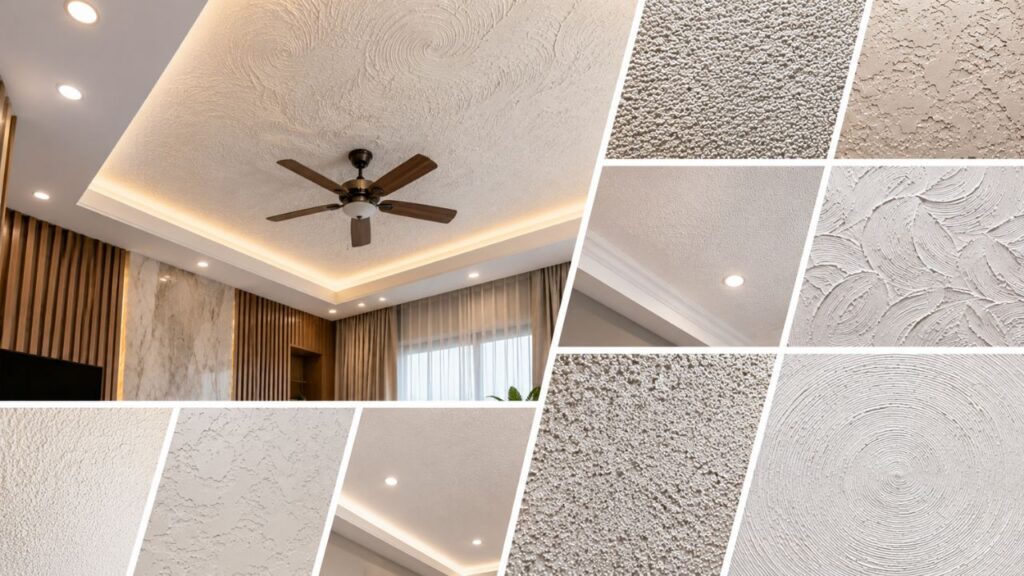
Some homes feature lightweight textures, while others include dramatic raised patterns. The most popular ceiling textures today include smooth finishes, knockdown patterns, orange peel, skip trowel, swirl designs, and modern hand-applied finishes.
Why Textured Ceilings Are Popular
There are several reasons homeowners choose textured ceilings over flat surfaces:
- Hide drywall seams and imperfections
- Improve acoustics in larger rooms
- Add visual interest to plain spaces
- Reduce glare from lighting
- Complement rustic, modern, or traditional interiors
- Create decorative architectural effects
Many people searching for ceiling texture ideas are also looking for practical solutions. For example, textured surfaces often disguise cracks better than smooth drywall.
Common Ceiling Texture Materials
The material used determines the final appearance and durability of a ceiling. Popular ceiling finishes materials include:
- Drywall compound
- Joint compound
- Plaster
- Stucco
- Acoustic spray
- Texture paint
- Sand additives
- Decorative ceiling panels
Modern builders often use drywall-based finishes because they are affordable and easy to repair.

Popular Ceiling Texture Types for Homes
Smooth Finish Ceiling
A smooth or non textured ceiling creates a sleek, contemporary appearance. It works especially well in minimalist homes and luxury interiors.
Advantages include:
- Clean modern look
- Easy repainting
- Better for contemporary architecture
- Reflects light evenly
However, smooth ceilings require perfectly finished drywall because flaws become more visible.
Orange Peel Texture
The classic orange peel texture resembles the skin of an orange. It is one of the most common drywall ceiling texture types used in modern homes.
When comparing orange peel vs popcorn ceiling, orange peel offers a more subtle appearance and is easier to maintain. Many homeowners now prefer orange peel because it feels updated without looking overly decorative.
Orange Peel Pros
- Affordable application
- Hides minor drywall flaws
- Modern appearance
- Easier cleaning than popcorn texture
Knockdown Ceiling Texture
Knockdown is among the most requested modern drywall texture types. Contractors spray joint compound onto the ceiling and flatten it slightly with a trowel.
Homeowners comparing types of knockdown texture usually encounter:
- Splatter knockdown
- Skip trowel knockdown
- Spanish knockdown
- Heavy knockdown
- Fine knockdown
Many people researching knock down ceiling vs smooth prefer knockdown because it balances elegance with practicality.
Popcorn Ceiling Texture
The famous popcorn finish became extremely popular from the 1950s through the 1980s. These textured surfaces are still found in millions of homes.
Different types of popcorn ceiling include:
- Fine popcorn texture
- Medium popcorn texture
- Heavy popcorn texture
- Acoustic popcorn texture
When homeowners debate popcorn ceiling vs textured ceiling, they are usually comparing older acoustic popcorn surfaces with modern knockdown or orange peel finishes.
Popcorn Ceiling Advantages
- Excellent sound absorption
- Conceals imperfections
- Quick application
- Budget-friendly
Popcorn Ceiling Drawbacks
- Difficult to clean
- Harder to repair
- Can look outdated
- May contain asbestos in older homes
Today, many renovators search for popcorn ceiling alternatives like knockdown or smooth finishes.
Skip Trowel Texture
Skip trowel textures create Mediterranean-style movement across the ceiling surface. This artistic style remains one of the best ceiling texture styles for rustic and handcrafted interiors.
Swirl Ceiling Texture
Swirl patterns are decorative finishes created using brushes or rollers in circular motions.
Popular variations include:
- Sand swirl texture
- Half circle ceiling texture
- Circle texture ceiling
- Flower pattern ceiling texture
- Starburst ceiling texture
Some homeowners ask, “Are swirl ceilings outdated?” The answer depends on the design style. Traditional homes still benefit from elegant swirl patterns, while minimalist spaces typically prefer smooth finishes.
Stipple Ceiling Texture
A stipple texture ceiling uses stippling brushes to create raised artistic designs.
Popular stomp ceiling texture patterns include:
- Crow’s foot
- Rosebud
- Sunburst
- Brush slap
- Slap brush knockdown
These finishes are commonly seen in traditional residential interiors.
Modern Ceiling Texture Trends
Today’s homeowners are leaning toward lighter, cleaner textures rather than dramatic heavy finishes. The most requested modern ceiling textures include:
- Light orange peel
- Imperfect smooth texture ceiling
- Fine knockdown texture
- Smooth plaster finish
- Lightly textured ceiling
- Hand-troweled modern finishes
Many designers believe the most popular ceiling textures 2023 and beyond are subtle finishes that blend elegance with practicality.
What Ceiling Texture Is Popular Now?
The answer depends on home style and location. However, these are considered the best modern options:
- Smooth finish
- Light knockdown
- Orange peel
- Skip trowel
- Fine sand swirl
Homeowners asking what ceiling texture is popular now are usually searching for finishes that look clean but still hide drywall flaws.
Different Ceiling Finishes and Styles
Beyond texture alone, there are many types of ceiling finishes used in modern construction.
Flat Ceiling Finishes
A flat ceiling texture provides a clean appearance with minimal visual distraction. These are common in contemporary homes.
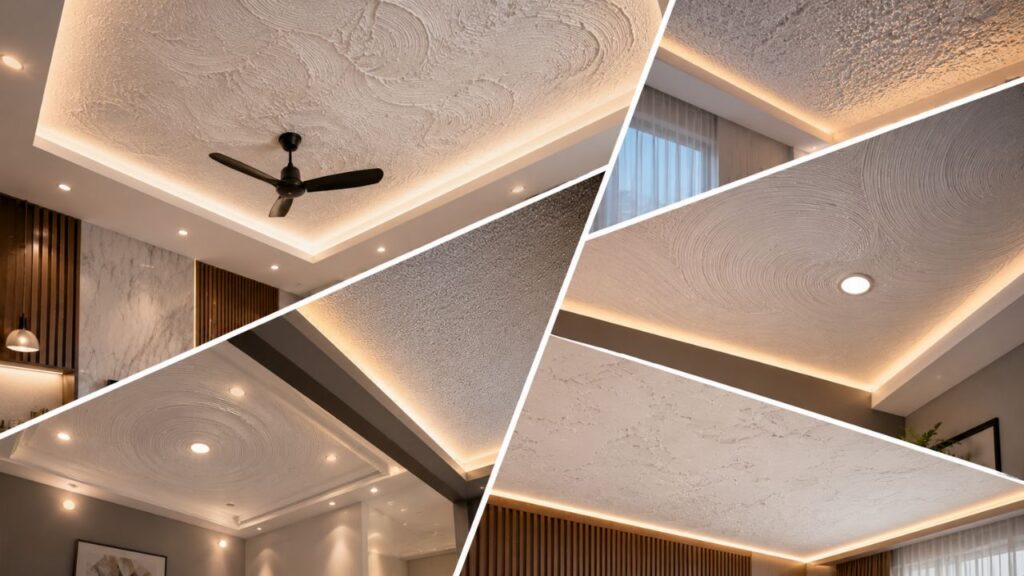
Decorative Plaster Ceilings
A plaster textured ceiling offers depth and craftsmanship. Traditional plaster techniques remain popular in luxury homes.
Common plaster ceiling texture patterns include:
- Venetian plaster
- Trowel swirl
- Lace plaster texture
- Sculpted ceiling designs
- Decorative stucco patterns
Ceiling Paint Texture Types
Some ceilings use paint additives rather than drywall mud.
Popular ceiling paint texture types include:
- Sand paint texture
- Roll-on texture
- Speckled texture
- Brush texture
- Textured paint ceiling finishes
Ceiling Texture Roller Patterns
DIY homeowners often prefer roller-based textures because they are easier to apply.
Popular roller styles include:
- Comb patterns
- Floral stamps
- Swirl rollers
- Stipple rollers
- Geometric texture rollers
Drywall Ceiling Texture Types
Most modern homes rely on drywall for ceiling construction. The variety of drywall ceiling textures available makes it easy to customize interiors.
Common Drywall Ceiling Finishes
The most common drywall ceiling finishes include:
- Level 5 smooth finish
- Orange peel texture
- Knockdown finish
- Popcorn texture
- Skip trowel finish
- Sand texture ceiling
- Lace ceiling texture
Builders frequently compare sheetrock texture types because drywall texture selection affects labor costs and appearance.
Modern Drywall Ceiling Design Ideas
Popular drywall ceiling design ideas include:
- Recessed lighting with smooth finishes
- Geometric textured patterns
- Tray ceilings with light textures
- Accent ceiling panels
- Layered ceiling architecture styles
Modern interiors increasingly combine lighting with texture for dramatic effects.
Ceiling Texture Ideas by Room
Living Room Ceiling Ideas
Living rooms benefit from elegant and balanced finishes. Popular choices include:
- Light knockdown texture
- Smooth ceilings with recessed lighting
- Decorative plaster swirl
- Modern drywall ceiling design
A stylish living room ceiling design can make the entire space feel larger.
Bedroom Ceiling Types
Bedrooms usually look best with softer textures.
Recommended finishes:
- Smooth finish
- Light orange peel
- Fine sand swirl
- Subtle stipple texture
Bathroom Ceiling Texture
Bathrooms require moisture-resistant finishes.
Best choices include:
- Orange peel
- Smooth painted drywall
- Mold-resistant textured paint
- Fine knockdown finish
Kitchen Ceiling Finishes
Kitchens often use smoother surfaces because they are easier to clean.
Ceiling Texture Techniques and Application Methods
Understanding ceiling texture techniques helps homeowners choose between DIY and professional installation.
Spray Texture Method
Used for:
- Popcorn texture
- Orange peel
- Splatter finishes
Hand-Applied Texture
Used for:
- Skip trowel
- Venetian plaster
- Artistic swirl patterns
- Decorative ceiling plaster
Roller Texture Application
Popular among DIY enthusiasts searching for easy ceiling texture ideas.
How to Texture a Ceiling
Many homeowners want to learn how to texture a ceiling themselves.
Basic process:
- Repair ceiling damage
- Prime the surface
- Mix drywall compound
- Apply texture using sprayer, roller, or brush
- Allow drying time
- Paint if needed
When researching how to texture drywall ceiling or how to texture ceilings, beginners should practice on scrap drywall first.
Best Ceiling Texture to Hide Imperfections
If your ceiling has visible seams or cracks, certain textures work better than others.
The best ceiling texture to hide imperfections includes:
- Heavy knockdown
- Popcorn texture
- Stipple finishes
- Skip trowel texture
- Sand swirl texture
Smooth ceilings reveal flaws more easily.
Ceiling Materials and Construction Options
There are many types of ceiling materials used in residential construction.
Popular Ceiling Materials
- Drywall
- Plaster
- Wood panels
- Metal panels
- PVC ceiling boards
- Acoustic tiles
- Decorative gypsum boards
Homeowners exploring ceiling material options should consider durability, moisture resistance, maintenance, and style.
Types of Ceiling Boards
Common ceiling board types include:
- Gypsum board
- Fiberboard
- Acoustic ceiling panels
- Cement board
- PVC ceiling panels
Different Types of Ceilings in Homes
There are many architectural types of ceilings beyond texture alone.
Flat Ceilings
The most common residential style.
Tray Ceilings
Feature recessed center sections.
Vaulted Ceilings
Create dramatic height and openness.
Coffered Ceilings
Use recessed square or rectangular panels.
Cathedral Ceilings
Follow the roofline for vertical drama.
Beam Ceilings
Expose structural or decorative beams.
These types of ceilings in homes dramatically affect lighting and room proportions.
Popcorn Ceiling vs Modern Textures
One of the biggest debates in home remodeling is popcorn ceiling vs orange peel or popcorn versus smooth finishes.
Popcorn Ceiling vs Knockdown
When comparing popcorn ceiling vs knockdown, knockdown usually wins for modern appeal.
Orange Peel vs Popcorn
The orange peel vs popcorn debate often comes down to maintenance and aesthetics.
Orange peel offers:
- Cleaner appearance
- Easier repainting
- More modern design
- Less dust buildup
Textured Ceiling vs Popcorn
Modern textured ceilings typically feature subtler patterns than traditional popcorn finishes.
Ceiling Texture Design Trends for Modern Homes
Current ceiling texture design trends emphasize subtle elegance.
Popular design directions include:
- Soft matte finishes
- Architectural lighting integration
- Decorative plaster accents
- Layered drywall ceiling patterns
- Minimalist smooth textures
The rise of modern ceiling texture design reflects growing demand for cleaner interiors.
Ceiling Texture Names and Styles
Common ceiling texture names homeowners encounter include:
- Orange peel
- Knockdown
- Skip trowel
- Popcorn
- Stipple
- Swirl
- Sand texture
- Lace texture
- Tree bark texture
- Comb texture
- Splatter texture
Each style creates a different mood and architectural effect.
Ceiling Texture Maintenance Tips
Maintaining textured surfaces requires proper cleaning methods.
Cleaning Textured Ceilings
- Dust using microfiber tools
- Avoid soaking popcorn textures
- Use low-pressure vacuum attachments
- Spot-clean stains carefully
Repairing Ceiling Texture
Small repairs require matching the existing pattern carefully.
Professional repair is often recommended for:
- Popcorn ceilings
- Decorative plaster textures
- Swirl patterns
- Heavy stipple finishes
Ceiling Texture Ideas for Contemporary Homes
Modern homeowners searching for texture ceiling ideas usually want something stylish yet timeless.
Popular contemporary options include:
- Light knockdown ceilings
- Smooth white ceilings
- Modern textured plaster
- Subtle geometric textures
- Sand-finish ceilings
- Sculpted ceiling details
Minimalist interiors often pair smooth ceilings with statement lighting.
Frequently Asked Questions
What is the most popular ceiling texture today?
Light knockdown and smooth finishes are currently the most popular choices because they provide a modern appearance while still hiding imperfections.
Are textured ceilings still in style?
Yes. Modern textured ceilings remain popular, especially subtle finishes like orange peel and light knockdown.
What is the easiest ceiling texture to apply?
Orange peel and roller-applied textures are considered some of the easiest DIY ceiling textures.
Should I texture my ceiling or leave it smooth?
If your ceiling has imperfections, texture is often the better choice. Smooth finishes work best on perfectly installed drywall.
What ceiling texture hides flaws best?
Heavy knockdown, stipple, and popcorn textures are excellent for hiding drywall seams and minor cracks.
Is popcorn ceiling outdated?
Traditional popcorn ceilings are less popular today, but modern fine popcorn finishes are still used in some applications.
Can textured ceilings increase home value?
A clean, modern ceiling finish can improve visual appeal and make interiors feel more updated.
What texture works best for modern homes?
Smooth ceilings, fine orange peel, and subtle knockdown finishes are among the best modern options.
Conclusion
Choosing the right ceiling finish is about balancing beauty, maintenance, lighting, and architectural style. Whether you prefer a sleek smooth finish, artistic plaster texture, or subtle knockdown design, there are endless ceiling texture types available for every kind of home.
Today’s interiors favor lighter, cleaner textures that enhance natural light while still adding personality. From classic swirl patterns to modern drywall finishes, textured ceilings continue to evolve with changing design trends.
Before selecting a finish, consider the room’s purpose, lighting, ceiling condition, and long-term maintenance needs. With the right texture, even a simple ceiling can become one of the most visually impressive features in your home.