

Most people don’t fall in love with a house. They fall in love with the version of it they can picture — warm light pooling across the floor, a couch that actually invites you to sit down, walls that finally feel like yours instead of the last owner’s. Closing that gap between the house you have and the house you picture is exactly what good decoration tips decoradhouse by decoratoradvice are built for, and you genuinely don’t need a designer’s budget or a gutted kitchen to get there.
Here’s the thing nobody tells you when you move in: a home doesn’t become “finished” on its own. It takes a series of small, deliberate decisions — a paint color, a light bulb temperature, where you let a sofa sit in a room — that add up to a space that feels calm instead of chaotic. Research on environmental psychology has repeatedly linked cluttered, poorly lit interiors to higher reported stress, while organized, well-lit spaces tend to support better focus and mood. In other words, decorating well isn’t vanity. It’s a quality-of-life decision.
That’s exactly why this guide exists. Think of it as a practical, no-fluff walkthrough of decoradhouse thinking — the kind of room-by-room, budget-aware advice that decoratoradvice has built a reputation on. Whether you’re renting a small apartment, planning a full gut renovation, or just trying to figure out how to decorate my house decoradhouse style without hiring a professional, you’ll find concrete, doable steps below.
We’ll cover color and lighting fundamentals, budget-friendly renovation strategies, room-by-room upgrade ideas, small-space tricks, and the most common decorating mistakes that quietly sabotage even well-intentioned projects. By the end, you’ll have a clear, realistic plan instead of a Pinterest board full of ideas you’re not sure how to execute.
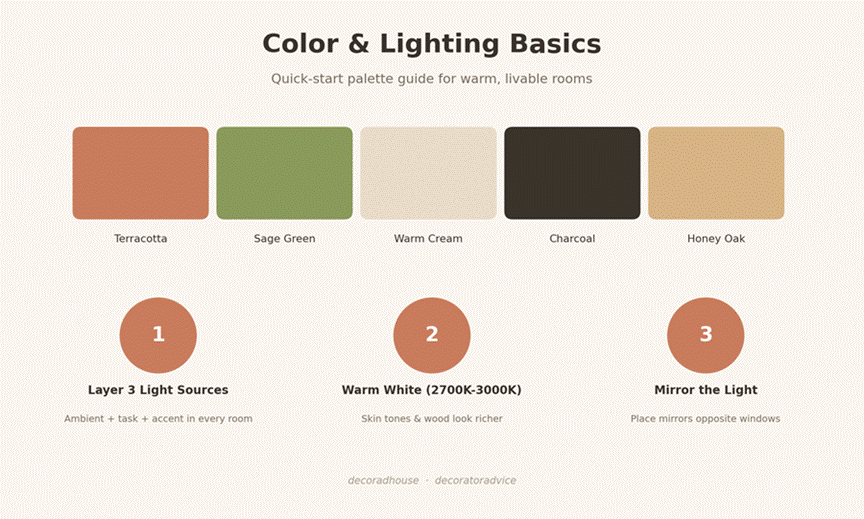
Color and lighting palette guide for home decor
Why Decoration Tips Decoradhouse From Decoratoradvice Actually Matter
It’s tempting to treat decorating as the “fun extra” you get to after the real work of homeownership is done. But the data tells a different story. Appraisers and real estate agents consistently note that cosmetic condition — paint, flooring, lighting, and general upkeep — influences buyer perception of a home’s value well before any structural feature gets evaluated. A home that looks cared for is read by the brain as being cared for, structurally and otherwise, even when that’s not strictly logical.
There’s also a daily-life argument that matters more than resale value. You spend more waking hours inside your home than almost anywhere else. A 2011 study from the Princeton University Neuroscience Institute found that visual clutter in your environment competes for your brain’s attention, making it harder to focus and process information efficiently. Translate that into plain language: a messy, undecorated, visually chaotic room isn’t just unpleasant to look at — it’s quietly taxing your brain every time you’re in it.
This is the philosophy behind every set of decoradhouse renovation tips from decoratoradvice: small, intentional changes compound. You don’t need to renovate every room at once. You need a sequence that makes each change worth the effort.
There’s a practical reason so many homeowners search for decoration tips decoradhouse from decoratoradvice specifically rather than generic design advice: most general decorating content assumes an unlimited budget and a blank slate. Real homes rarely offer either. You’re usually working around existing furniture, a layout you didn’t choose, and a budget that also has to cover groceries. Good advice accounts for that reality instead of ignoring it.
Decor Tips Decoradhouse: Where To Start
If you’re staring at a room with no idea where to begin, start with three things in this order: light, color, layout. Most people instinctively reach for furniture shopping first, which is usually backwards — you end up buying pieces that fight the room instead of working with it.
Here are foundational decor tips decoradhouse recommends before you spend a single dollar on furniture:
- Audit your light sources. Most rooms rely on a single overhead fixture, which creates flat, unflattering light. Aim for at least three light sources per room: ambient (overhead), task (reading lamp, under-cabinet light), and accent (a small lamp or LED strip that adds warmth to a corner).
- Pick warm bulbs. Bulbs rated 2700K–3000K mimic candlelight and make wood tones, skin tones, and warm paint colors look richer. Cooler bulbs (4000K+) tend to feel clinical in living spaces, even though they’re great for kitchens and bathrooms where task visibility matters more.
- Choose one anchor color, then build around it. Whether it’s a deep green sofa, a terracotta accent wall, or a patterned rug, let one element set the palette and pull two or three supporting neutrals from it.
- Map the layout before buying anything. Measure your room and sketch furniture placement, even roughly on paper. Floating furniture slightly off the walls (rather than pushing everything flush against them) almost always makes a room feel larger and more intentional.
This sequence works because it respects how a room is actually experienced — through light and color first, objects second.
Renovation Tips Decoradhouse From Decoratoradvice For Every Budget
Renovation tends to sound bigger and scarier than it needs to be. Not every upgrade requires a contractor, a permit, or a four-figure budget. The most useful renovation tips decoradhouse offers are scaled by effort and cost, so you can match the project to what you actually have available — money, time, or both. This is one area where solid decoration tips decoradhouse from decoratoradvice content earns its keep: it tells you which projects are worth the disruption and which ones aren’t.
Low-Cost, High-Impact Renovation Moves
If your budget is tight, prioritize the changes that touch the most square footage for the least money:
- Paint. It remains the single highest return-on-effort change available. A gallon of quality paint typically covers 350–400 square feet, and a full-room repaint is one of the few projects most homeowners can finish in a weekend.
- Swap hardware. New cabinet pulls, door handles, and light switch plates cost very little individually but change the perceived “age” of a kitchen or bathroom dramatically.
- Reseal or refinish grout and caulk. Dingy grout lines make even a clean bathroom look neglected. A few hours with a grout pen or fresh caulk line resets the whole room visually.
- Replace dated light fixtures. This is one of the fastest ways to modernize a space without touching drywall or plumbing.
Mid-Range Renovation Tips And Tricks Decoradhouse Recommends
Once you’re ready to invest a bit more, the next tier of renovation tips and tricks decoradhouse focuses on functional upgrades that also improve daily life:
- Refacing kitchen cabinets instead of replacing them entirely, which preserves the existing layout while updating the look.
- Adding a tile backsplash, which protects walls and adds visual texture without a full kitchen teardown.
- Refinishing hardwood floors rather than replacing them, often at a fraction of new flooring cost.
- Upgrading bathroom fixtures (faucet, showerhead, mirror) as a cohesive set rather than piecemeal over years.
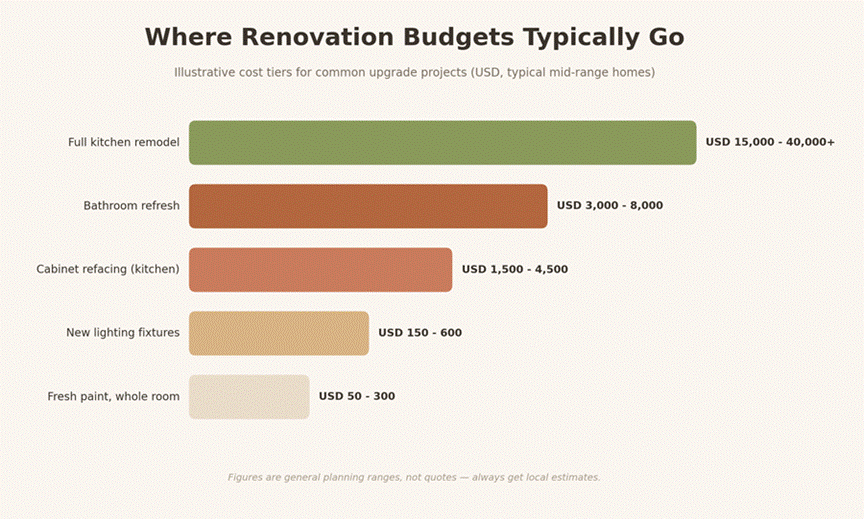
Typical renovation budget ranges by project type
Industry cost-versus-value reports — the kind published annually by major remodeling publications — consistently show that smaller, targeted updates like a minor kitchen remodel or garage door replacement tend to recoup a notably higher percentage of their cost at resale than large-scale additions. The takeaway isn’t “never do big projects.” It’s “know which projects are worth doing for your specific goals,” whether that’s resale value or simply enjoying your space more.
Decoradhouse Upgrade Tips By Decoratoradvice For Modern Homes
Once the basics are sorted, the next layer is about modernizing function, not just appearance. These decoradhouse upgrade tips by decoratoradvice focus on the two rooms that influence resale value and daily satisfaction the most: kitchens and bathrooms.
Kitchen Upgrades Decoradhouse Suggests
The kitchen is the most-used room in most homes, which means small inefficiencies get felt constantly. Practical upgrades decoradhouse recommends for kitchens include:
- Installing under-cabinet lighting to eliminate shadowed counter space.
- Replacing a single-basin sink with a deeper, more functional option if your current one feels cramped.
- Adding open shelving sparingly — just one section — to break up heavy upper cabinetry visually.
- Upgrading to a matte or brushed-finish faucet, which tends to show water spots less than polished chrome.
Bathroom Upgrades Decoradhouse Recommends
Bathrooms benefit enormously from upgrades that are easy to overlook:
- A frameless mirror instead of a builder-grade framed one instantly modernizes the room.
- Better ventilation (a quieter, higher-CFM exhaust fan) reduces moisture damage and mildew long-term, which protects your renovation investment.
- Heated towel bars or simple radiant floor mats, in colder climates, add a noticeable comfort upgrade for relatively low installation cost.
Home Upgrade Tips Decoradhouse: Room By Room
Beyond kitchens and bathrooms, here’s how solid home upgrade tips decoradhouse style break down by remaining room:
Living Room — Anchor the seating arrangement around a focal point — a fireplace, a media wall, or even a well-placed window — rather than letting the TV dictate furniture placement by default. Add a large area rug sized to fit under at least the front legs of your seating; undersized rugs are one of the most common layout mistakes in living rooms.
Bedroom — Invest in a quality headboard or wall treatment behind the bed; it’s the single largest visual element in most bedrooms and sets the tone for the whole room. Blackout curtains, even inexpensive ones, measurably improve sleep quality by reducing early-morning light exposure, according to sleep hygiene research from multiple sleep medicine organizations.
Outdoor Space — A simple combination of weather-resistant furniture, string lighting, and a couple of large planters can transform an underused patio or balcony into genuinely usable square footage — often for a few hundred dollars total. Even renters can apply this version of home upgrade tips decoradhouse content recommends, since most outdoor furniture and lighting setups require no permanent installation at all.
Putting It Together: A Whole-Home Approach
The rooms above don’t exist in isolation, and treating them that way is exactly how homes end up feeling disjointed. A useful exercise before buying anything: walk through your home and note which two or three colors already repeat naturally — in your flooring, existing furniture you’re keeping, or even artwork you love. That’s your starting palette. Every set of decoration tips decoradhouse from decoratoradvice publishes works from this same principle: consistency across rooms reads as intentional design, even when individual pieces were bought years apart and from completely different stores.
Upgrading Tips Decoradhouse For Small Spaces And Apartments
Smaller homes and rental apartments come with their own constraints: limited square footage, and often, limits on what you’re allowed to permanently change. The good news is that upgrading tips decoradhouse for small spaces don’t require structural changes at all.
Use Vertical Space Deliberately
Floor space is finite, but wall space is usually underused. Tall, narrow bookshelves, wall-mounted desks, and hanging storage free up floor area while adding visual height, which makes ceilings feel taller than they are.
Choose Multi-Functional Furniture
A storage ottoman, a daybed that doubles as seating, or an extendable dining table all reduce the number of pieces a small room needs to feel complete.
Lean On Removable Upgrades
For renters specifically, peel-and-stick wallpaper, tension curtain rods, and adhesive tile decals deliver real visual change without violating a lease. These are some of the most requested upgrading tips decoradhouse content covers, precisely because they solve the “I don’t own this space” problem.
Mirror Placement For Perceived Space
A well-placed mirror, especially one reflecting a window or light source, can make a small room read as significantly larger without adding a single square foot.
Common Decorating Mistakes (And How To Fix Them)
Even motivated homeowners repeat the same handful of mistakes. Recognizing them early saves money and frustration.
Mistake 1: Decorating Room By Room In Isolation
It’s common to fully finish one room, move to the next, and end up with a home that feels like several different design styles stitched together. The fix: settle on a core palette of two to three colors and one material language (wood tones, metal finishes) before starting any single room, then apply it consistently.
Mistake 2: Undersized Rugs And Art
A rug too small for its furniture grouping, or art hung too high, are two of the most common spatial errors in home decorating. As a general rule, art should be hung so its center sits at roughly eye level (about 57–60 inches from the floor), and rugs should be large enough that at least the front legs of major furniture pieces sit on them.
Mistake 3: Ignoring Scale
Oversized furniture in a small room — or tiny accessories in a large one — throws off the entire sense of proportion. Before buying anything large, measure both the item and the space, accounting for walkways and door swings.
Mistake 4: Renovating Without A Sequence
Jumping straight to cosmetic upgrades before addressing function (poor lighting, awkward layout, storage shortages) often means redoing work later. Following structured renovation tips decoradhouse in the right order — function first, then finish — prevents this entirely.
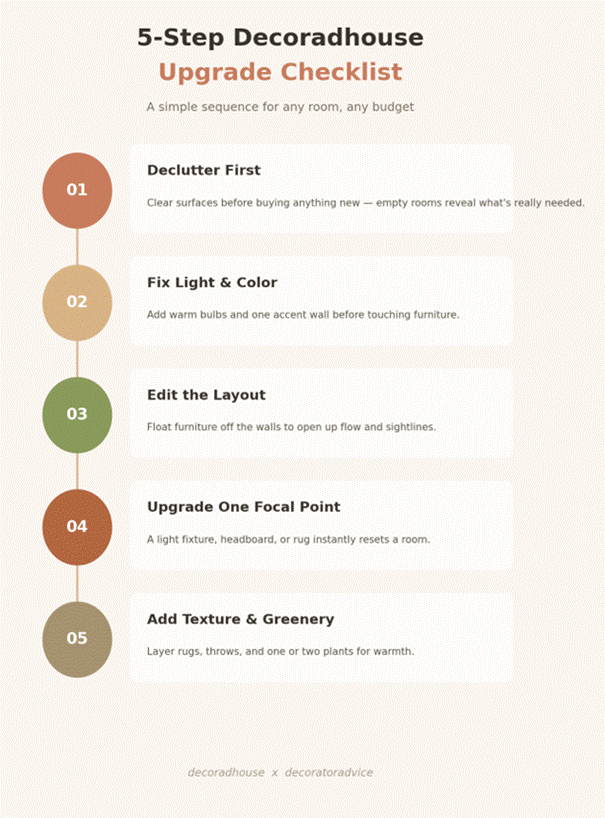
Five-step decoradhouse upgrade checklist infographic
Planning Your Budget Realistically
Before starting any project, it helps to separate “needs” from “wants” in writing. A simple two-column list — must-fix items (safety, function, damage) versus nice-to-have upgrades (aesthetic preferences) — keeps spending grounded in priorities rather than momentum. Most successful decoration tips decoradhouse from decoratoradvice projects share one trait: a written budget with a 10–15% contingency built in for unexpected costs, since almost every renovation, no matter how small, uncovers at least one surprise once walls or floors are opened up.
It’s also worth tackling projects in the order that protects your investment: structural and functional issues (leaks, electrical, ventilation) before cosmetic ones (paint, decor, furniture). A beautifully decorated room sitting on top of an unresolved moisture problem isn’t really finished — it’s postponed. Keep coming back to that sequencing principle, and any decoration tips decoradhouse from decoratoradvice checklist you follow will hold up over time, not just for one weekend project.
Frequently Asked Questions
What are the best decoration tips decoradhouse from decoratoradvice recommends for beginners?
Start with light and color before furniture. Audit your current light sources, switch to warm-toned bulbs, and choose one anchor color for the room. These foundational decoration tips decoradhouse from decoratoradvice shares consistently produce the most visible improvement for the least cost.
How do I decorate my house decoradhouse style on a tight budget?
Focus on paint, lighting, and hardware swaps first. These three changes affect the most visual area for the least money, and they’re fully reversible if your taste changes later, which makes them low-risk starting points.
What’s the difference between decorating and renovating?
Decorating typically refers to surface-level, reversible changes — paint, furniture, textiles, lighting. Renovation involves structural or fixed changes — plumbing, electrical, layout, cabinetry. Most homes benefit from a mix of both, sequenced with renovation first and decoration second.
Are DIY renovation tips and tricks decoradhouse shares safe for plumbing and electrical work?
Cosmetic and surface-level projects (paint, hardware, shelving, light fixture swaps using existing wiring) are generally safe for confident DIYers. Anything involving new electrical circuits, gas lines, or structural walls should go through a licensed professional, both for safety and for code compliance.
How much should I budget for a small home upgrade?
It depends heavily on scope, but cosmetic refreshes (paint, fixtures, hardware) for an average room often fall in the few-hundred-dollar range, while functional upgrades (cabinet refacing, flooring refinishing) typically run into the low thousands. Getting at least two local quotes before committing to mid-range or larger projects is standard practice.
What upgrades decoradhouse style add the most resale value?
Industry cost-versus-value research consistently points to kitchen and bathroom refreshes, fresh paint throughout, and improved curb appeal (landscaping, entry door, exterior lighting) as the upgrades most likely to translate into resale value relative to their cost.
How often should I update my home’s decor?
There’s no fixed timeline, but a useful checkpoint is every 5–7 years for major elements (furniture, flooring) and as needed for low-cost refreshes (paint, textiles, accessories) whenever a space starts to feel dated or no longer functions well for your routine.
Can renovation tips decoradhouse style work for rented apartments?
Yes — many of the most effective tips are entirely removable: peel-and-stick materials, tension rods, plug-in lighting, and furniture-based layout changes. Always check your lease for specific restrictions before making even temporary modifications.
Final Thoughts
A home doesn’t need to be expensive to feel right — it needs to be intentional. The throughline across every section above, whether it’s a five-dollar bulb swap or a full kitchen refacing, is sequence: fix function, then light, then color, then layout, then finishing touches. Follow that order and almost any budget stretches further than expected. That’s really the whole idea behind decoration tips decoradhouse from decoratoradvice: not a single dramatic transformation, but a series of grounded, doable decisions that add up over weeks and months. Whatever stage your space is at right now, the path forward is simply the next small, deliberate decision — and that’s really all good decorating ever was.