
There’s a particular kind of double-take people do the first time they see a grain bin house sitting on a quiet stretch of farmland—round, silver, a little futuristic, and somehow completely at home next to a barn that’s been there for a hundred years. It looks like someone took a piece of farm equipment and just… decided to live in it. Which, honestly, is exactly what happened, and it’s become one of the more interesting corners of the alternative housing movement.
If you’ve spent any time scrolling through tiny home content or rural property listings, you’ve probably stumbled across these curved, corrugated steel homes and wondered whether they’re a passing trend or an actually smart way to build. The short answer: it’s a bit of both, depending on how you approach it. The longer answer involves real numbers, real construction challenges, and a few lessons learned the hard way by people who tried it before you.
This guide walks through what it actually takes to turn a steel grain storage structure into a livable home—the costs, the planning, the kits versus DIY debate, and the stuff nobody tells you until you’re knee-deep in insulation calculations.
What Is a Grain Bin House, Exactly?
A grain bin house is a home built from a repurposed or purpose-bought grain bin—the same corrugated steel cylindrical structures farmers use to store wheat, corn, or soybeans. Instead of holding grain, the structure gets reinforced, insulated, plumbed, wired, and finished out as living space. Some people call them grain bin homes, others say silo house or grainbin house, and you’ll also hear the broader term bin houses used for anything built from agricultural storage structures, including actual concrete or steel silos.
It’s worth pausing on a small but important distinction. A true silo is usually a taller, narrower structure (often used for silage or cement), while a grain bin is shorter, wider, and was built for dry grain storage. In casual conversation, and in most of what you’ll read online, the terms get used almost interchangeably—grain bin silo house is a phrase you’ll see a lot, even though technically a bin and a silo aren’t the same thing. For housing purposes, grain bins tend to be the more practical choice because their proportions—wide and not too tall—translate better into usable floor space.
The appeal isn’t hard to understand. These structures are inherently strong (they’re engineered to hold tons of grain), naturally circular (which creates interesting interior geometry), relatively affordable to acquire, and visually distinctive in a way that a standard stick-built house just isn’t.
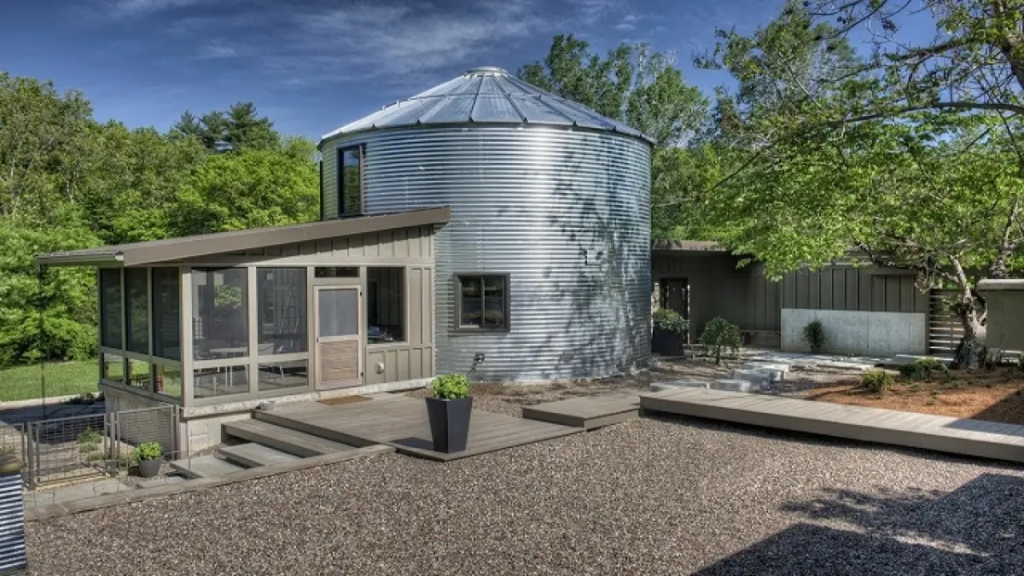
Converted grain bin house exterior with corrugated steel walls and modern windows
Why People Are Choosing Grain Bin Homes Over Traditional Builds
The current wave of interest in grain bin homes isn’t random. It’s tied to a few overlapping trends: rising lumber and construction costs, growing interest in compact and sustainable living, and a renewed appreciation for agricultural architecture as something more than utilitarian.
Steel, unlike wood-framed construction, doesn’t warp, rot, or attract termites. A grain bin’s curved roof sheds snow and rain efficiently, and the structure itself is engineered to handle wind loads that would worry a conventional pole barn. For rural buyers already living near grain operations, sourcing a used bin locally can also be dramatically cheaper than trucking in lumber.
There’s also a simpler reason: these homes just look different. In a market saturated with shipping container conversions and barndominiums, a round steel home has a visual identity that’s hard to replicate any other way.
Common Reasons Buyers Choose This Route
- Lower material costs compared to conventional new construction in many regions
- Fast structural assembly once the bin and foundation are ready
- Strong resistance to wind, fire spread, and pest damage
- A distinctive aesthetic that works well for guest houses, studios, or full-time residences
- Compatibility with off-grid systems like solar and rainwater catchment
How to Build a Grain Bin House: The Real Process
If you’re researching how to build a grain bin house, it helps to think of the project in five overlapping phases rather than a single linear checklist. Skipping ahead—say, buying a bin before sorting out your foundation plan—is one of the most common (and expensive) mistakes first-time builders make.
Step 1: Source the Bin
You can buy a new bin from an agricultural supplier, purchase a used one from a farm liquidation or classified listing, or go with a manufacturer that sells structures specifically designed for residential conversion. Used bins are cheaper but often need cleaning, rust treatment, and reinforcement. New bins cost more upfront but arrive in known condition with manufacturer specs you can hand directly to an engineer.
Step 2: Plan the Foundation
Grain bins were never engineered to sit on dirt floors indefinitely as living spaces, so a poured concrete slab or frost-protected shallow foundation is standard. This is also when you decide on plumbing rough-ins, since trenching after the bin is anchored is far more difficult.
Step 3: Cut Openings and Reinforce
Doors and windows don’t exist on a stock grain bin, so openings have to be cut into the corrugated steel and reinforced with steel framing to maintain structural integrity. This is one part of the build where hiring a structural engineer or experienced grain bin house builders team pays for itself—cut in the wrong spot and you can compromise the wall’s load-bearing capacity.
Step 4: Insulate and Frame the Interior
Bare steel walls conduct heat and cold aggressively, so spray foam or rigid foam insulation is applied to the interior before any framing goes in. Most builders then construct a secondary interior frame for running electrical, plumbing, and drywall or wood paneling.
Step 5: Finish Systems and Interior
Electrical, HVAC (often a ductless mini-split system, since traditional ductwork is awkward in curved spaces), plumbing, and interior finishes come last. Many owners add a loft level to take advantage of the bin’s height, especially in taller models.
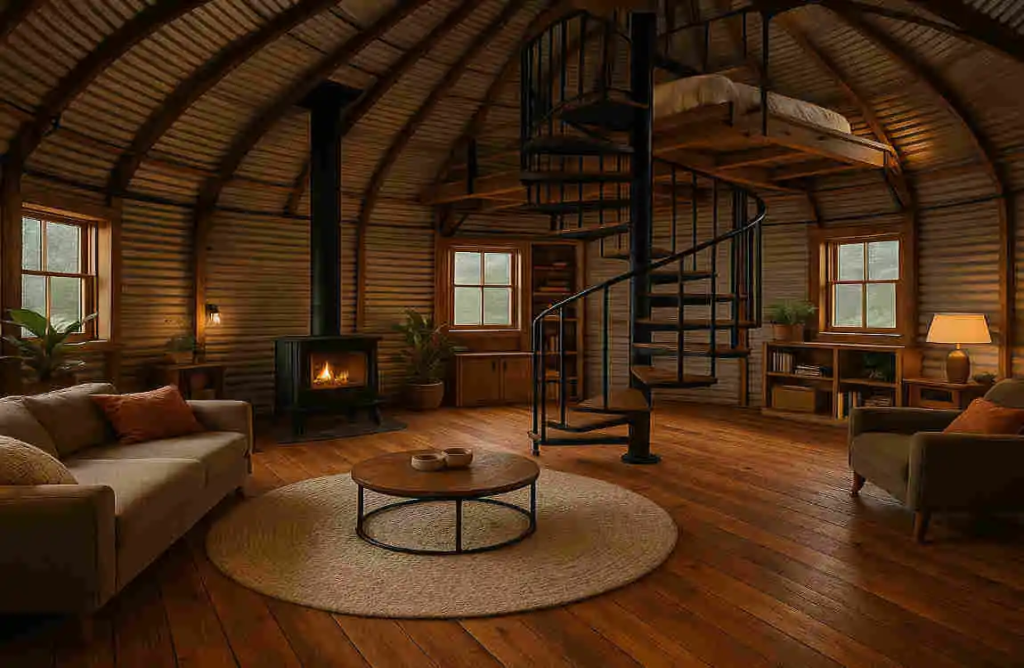
Interior of a small grain bin house with curved walls, loft area, and natural wood finishes
Grain Bin House Plans and Floor Plan Considerations
Good grain bin house plans account for one challenge that traditional house plans never have to deal with: a perfectly circular footprint. Furniture placement, plumbing runs, and even staircases all behave differently in a round space than in a rectangular one.
Most grain bin house floor plans fall into a few general layouts:
- Single-level open concept — kitchen, living, and sleeping areas arranged in wedge-shaped zones around a central point, common in bins under 24 feet in diameter
- Loft-style layout — a sleeping loft above a main living area, taking advantage of taller bins (this is especially popular for a small grain bin house used as a guest cottage or short-term rental)
- Multi-bin connected layout — two or more bins joined by a covered walkway or shared structure, often used when a family wants separate living and sleeping bins
When reviewing inside grain bin house plans, pay attention to how the designer handled the curve. Built-in furniture, curved shelving, and angled walls near the perimeter tend to work better than trying to force standard rectangular furniture against a round wall.
Typical Square Footage by Bin Diameter
| Bin Diameter | Approximate Usable Floor Space | Best Suited For |
| 18 ft | 250–300 sq ft | Studio, office, guest space |
| 24 ft | 450–480 sq ft | Small one-bedroom home |
| 30 ft | 700–750 sq ft | One to two-bedroom home |
| 36 ft+ | 1,000+ sq ft | Full-size family home, multi-room |
Silo House Cost and Grain Bin House Cost: What to Actually Expect
This is the question almost everyone is really asking, so let’s get specific. Silo house cost and grain bin house cost vary enormously depending on whether you’re buying new or used, doing the labor yourself, and how finished you want the interior to be.
As a rough national average, expect the following ranges:
- Bin or silo structure only (used): $3,000–$15,000 depending on size and condition
- Bin or silo structure only (new): $10,000–$40,000+
- Foundation and site prep: $5,000–$20,000
- Full interior build-out (insulation, framing, electrical, plumbing, finishes): $40–$120 per square foot
- Total project cost for a finished small home (around 500–700 sq ft): typically $60,000–$150,000
So when people ask how much does it cost to build a silo house, the honest answer is: it depends almost entirely on finish level. A bare-bones weekend cabin with minimal plumbing can come in well under $50,000. A fully finished, code-compliant, year-round residence with a real kitchen and bathroom will land much closer to—or above—what a small conventional home would cost.
It’s also worth answering a related but slightly different question: how much does it cost to build a grain bin itself, separate from converting it into a home. A new agricultural-grade bin in common residential sizes (18 to 30 feet in diameter) typically runs $8,000 to $35,000 before any conversion work begins, depending on steel gauge, roof style, and capacity.
Where Costs Commonly Run Over Budget
- Cutting and reinforcing window and door openings (frequently underestimated)
- Spray foam insulation, which costs more than fiberglass but performs significantly better in a metal structure
- Custom plumbing runs to accommodate the curved walls
- Permitting and engineering review, which varies a lot by county and is sometimes skipped illegally by DIY builders, creating problems at resale
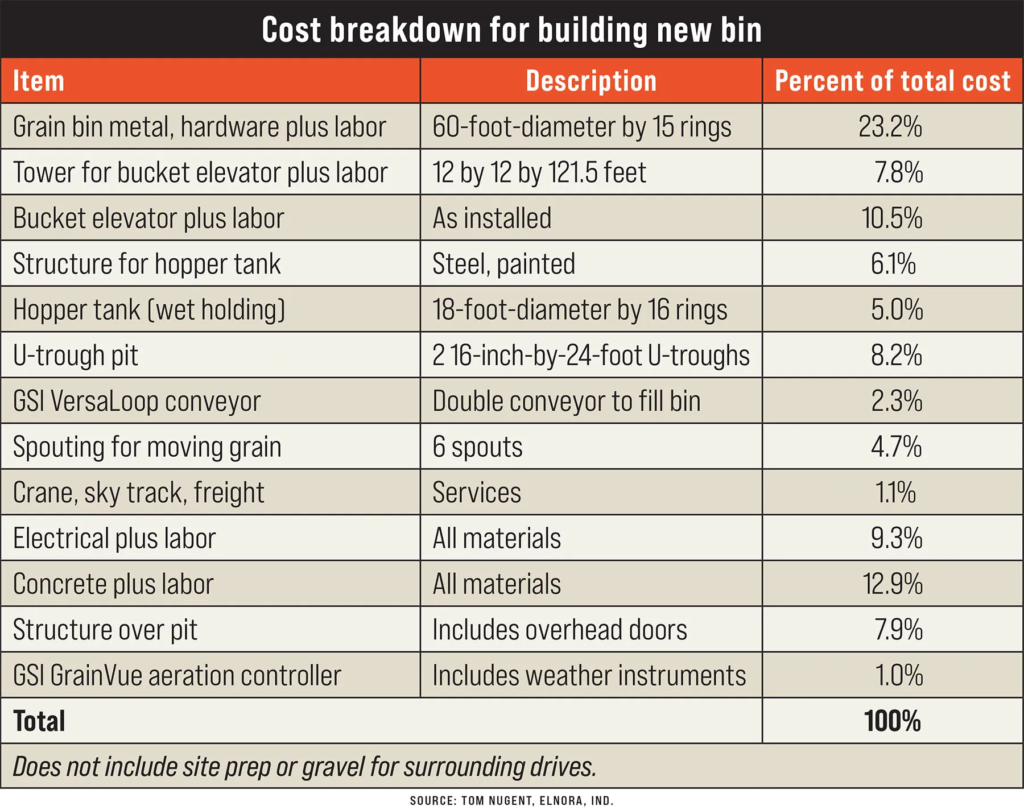
Grain bin house cost breakdown by category—bin structure, foundation, insulation, and interior finishing
Grain Silo House Kits vs. DIY: Which Makes More Sense?
There are two main paths into this kind of build, and the right one depends heavily on your skill level, timeline, and budget.
Going With a Kit
Grain silo house kits and grain bin home kits have become more common as demand has grown. A silo house kit or grain bin house kit typically includes the structural shell, pre-cut openings, and sometimes basic insulation and framing components, all engineered and sold as a package. This route is appealing because it removes a lot of the structural guesswork—someone has already calculated the load-bearing implications of your door placement.
The tradeoff is cost. Kits are almost always more expensive than sourcing a used bin and doing the structural work independently, but they save significant time and reduce the risk of a costly engineering mistake.
Going Fully DIY
DIY silo house plans appeal to people with construction experience, more time than money, or a strong desire to control every decision. This path can save tens of thousands of dollars, but it demands real competence in structural framing, electrical, and plumbing—or the willingness to hire subcontractors for those specific pieces while doing the rest yourself.
If you’re researching how to build a grain silo home from scratch using reclaimed materials, budget extra time for sourcing, since used bins in good structural condition aren’t always easy to find on short notice, especially in regions without a strong grain farming presence.
Quick Comparison
| Factor | Kit Route | Full DIY Route |
| Upfront cost | Higher | Lower |
| Time to completion | Faster | Slower |
| Structural risk | Lower (pre-engineered) | Higher (self-managed) |
| Customization | More limited | Fully flexible |
| Skill required | Moderate | High |
Working With Grain Bin House Builders
Hiring experienced grain bin house builders isn’t just about convenience—it’s about avoiding mistakes that are expensive or dangerous to fix later. Because this is still a niche building category, not every general contractor has relevant experience, so it’s worth specifically asking potential builders about prior bin or silo conversion projects, not just general metal building work.
A few questions worth asking before hiring:
- Have you structurally reinforced cut openings in corrugated steel before?
- How do you handle insulation in a curved metal structure to avoid condensation issues?
- Can you provide engineering documentation for permitting in this county?
- What’s your experience with mini-split or alternative HVAC systems in round floor plans?
Condensation, in particular, is an issue that catches a lot of first-time builders off guard. Steel is a poor insulator on its own, and without a proper vapor barrier and insulation strategy, moisture can build up inside the walls, leading to mold and rust from the inside out. This is one of the most common quality differences between an amateur conversion and one done by someone who actually understands the material.
Small Grain Bin House Interior Design Ideas
A small grain bin house interior has constraints that actually push toward better design discipline. Because every square foot matters more in a circular footprint than in a rectangular one, successful interiors tend to lean on a few repeated strategies.
Built-in seating along the curved perimeter wall is one of the most common solutions, since it follows the building’s natural shape instead of fighting it. Lofted sleeping areas free up the ground floor for living space, and they take advantage of the height many bins offer near the roofline. Light-colored wood paneling on interior walls helps offset the industrial feel of the exterior steel, and skylights or roof vents—often adapted from the bin’s original venting hardware—bring in natural light without requiring additional wall cuts.
Multi-functional furniture, like a dining table that folds into a desk or a sofa with built-in storage, tends to matter more here than in a standard home simply because there’s less square footage to dedicate to single-purpose furniture.
Permits, Zoning, and Practical Considerations
Before falling in love with a particular set of grain bin home plans, it’s worth checking local zoning regulations, because rules around agricultural-structure conversions vary widely by county and state. Some jurisdictions treat a converted grain bin as a standard residential structure once it meets code; others classify it differently, which can affect everything from insurance to resale value.
A few practical questions to sort out early:
- Does your county require a specific minimum square footage for a permitted residence?
- Will your converted structure need to meet the same insulation (R-value) standards as conventional homes?
- Are there setback requirements that affect where the bin can be placed on your property?
- Will your homeowner’s insurance carrier even insure a structure like this, and if so, under what classification?
Skipping this step is one of the most common regrets among people who’ve already completed a build, since retrofitting permits after construction is far more painful than securing them beforehand.
FAQs
How long does it take to build a grain bin house?
Timeline varies widely, but a straightforward conversion using a kit and a small crew often takes three to six months from foundation to move-in. A fully custom DIY build, especially one done part-time on weekends, can stretch to a year or more.
Can a grain bin house survive harsh winters?
Yes, with proper insulation. Corrugated steel alone offers almost no thermal resistance, but spray foam insulation combined with an interior frame and finish layer can bring a grain bin house up to performance levels comparable with conventional homes in cold climates.
Is it legal to live in a grain bin house?
In most areas, yes, as long as the structure meets local building codes and is properly permitted as a residential dwelling. Regulations differ significantly by county, so checking with local zoning and building departments before purchasing materials is essential.
What size grain bin is best for a full-time home?
Bins in the 24 to 30-foot diameter range tend to offer the best balance of usable square footage and manageable construction complexity for a full-time one or two-bedroom residence. Smaller bins around 18 feet work well for studios or guest spaces rather than primary residences.
How does a grain bin house handle extreme weather like high winds?
Grain bins are engineered to withstand significant wind loads since their original purpose required protecting stored grain from weather damage. That inherent strength is one of the structural advantages of this housing style, though any cut openings need professional reinforcement to maintain that resistance.
Do grain bin houses hold their value for resale?
Resale value depends heavily on build quality, permitting status, and local market familiarity with this housing type. A properly permitted, well-finished conversion in a region where alternative housing is popular can hold value reasonably well, while an unpermitted or poorly insulated build may struggle to attract conventional buyers or financing.
Can you finance a grain bin house with a traditional mortgage?
This is often more complicated than financing a conventional home, since many lenders are unfamiliar with this structure type and may classify it as nonstandard construction. Some buyers use construction loans, personal loans, or cash, while others work with smaller local or regional lenders more familiar with alternative builds in their area.
What’s the difference between a grain bin house and a silo house?
Technically, a grain bin is shorter and wider, designed for dry grain storage, while a true silo is taller and narrower, often used for silage or industrial materials. In casual usage, both terms get applied to similar residential conversions, but the proportions of an actual silo make it somewhat less practical for typical floor plans.
Final Thoughts
Building a home from a structure that was never meant to house people takes a certain kind of patience, and a willingness to solve problems nobody else in your life has dealt with before. But for the right person—someone drawn to the idea of round walls, steel durability, and a build that doesn’t look like everything else on the block—a converted grain bin can become a genuinely comfortable, distinctive place to live. The numbers work for plenty of people, the structures hold up well over time, and the design challenges, while real, tend to be solvable with the right planning and the right team. If you’re weighing this against a more conventional build, the honest advice is the same advice that applies to any unconventional housing project: get the foundation and permitting right first, budget generously for the parts you can’t see once the walls go up, and don’t skip the engineering just because the structure looks simple from the outside.