
Have you ever walked into someone’s home and instantly felt that warm, magnetic pull—like the space was telling a story you wanted to read? That feeling doesn’t happen by accident. It happens when a home has a clearly defined, intentional style. Taking an interior design style quiz might feel like a fun five-minute distraction, but it can genuinely be one of the smartest things you do before spending a single dollar on furniture, paint, or décor.
Whether you’re moving into a new apartment, refreshing a tired room, or finally tackling that living room you’ve never loved, knowing what is my interior design style is the foundational question that unlocks everything else. Without that clarity, you end up with mismatched pieces, buyer’s remorse, and a space that feels “almost right” but never quite there.
In this guide, we’re going beyond the basic quiz. We’ll walk you through the most popular interior design styles, what each one really means for your day-to-day life, how to decode your results, and how to actually apply your style in the real world—on any budget.
Why Taking an Interior Design Style Quiz Is More Useful Than You Think
Most people assume they know their style. “I like modern things,” they say—and then spend three years buying rustic farmhouse décor because it looked good on Pinterest. The truth is, our taste is more complex than we give it credit for, and the gap between what we think we like and what we actually live well in can be surprisingly wide.
A well-designed interior design quiz acts like a mirror. It asks you not just what looks beautiful, but what feels like home. Do you want your living room to feel like a zen retreat or a cozy library? Do you gravitate toward clean white walls or textured gallery walls filled with art? These choices reveal more than aesthetics—they reveal how you want to feel in your space every day.
Research in environmental psychology consistently shows that people feel more relaxed, creative, and productive in spaces that reflect their personality. A study published in the Journal of Environmental Psychology found that personalized spaces reduce cortisol levels (the stress hormone) more effectively than neutral, generic ones. That’s not a small thing. Your home décor is directly tied to your mental well-being.
So when you sit down to take an interior design quiz, you’re not wasting time. You’re doing research—the most personal kind.
What Is My Interior Design Style? The 10 Most Popular Styles Explained
Before you dive into a home style quiz, it helps to have a working vocabulary of the styles you might discover. Here are the ten most common interior design aesthetics, broken down in plain language.
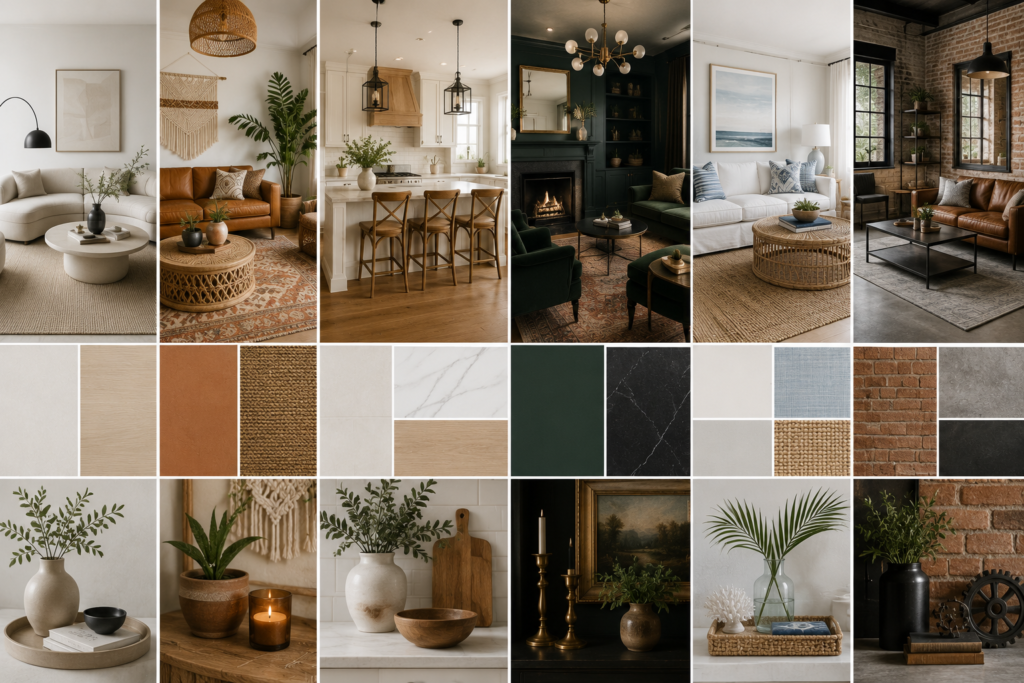
Interior design styles moodboard showing multiple room aesthetics side by side
Modern and Contemporary
Often used interchangeably (though designers will tell you they’re different), modern and contemporary styles share a love of clean lines, neutral color palettes, and uncluttered spaces. If your interior design quiz results lean modern, you’re drawn to function over decoration, sleek surfaces, and the philosophy that “less is more.” Think open floor plans, minimal accessories, and statement furniture pieces in bold but simple forms.
Contemporary style, by contrast, is always evolving—it reflects what’s trending right now, which means it can blend elements of other styles with more fluidity.
Minimalist
Minimalism takes “less is more” to its logical extreme. If your aesthetic test keeps pointing you toward bare surfaces, monochrome palettes, and the feeling that every object should earn its place, you might be a minimalist at heart. This style is deeply popular in urban apartments where space is limited, but it also has strong cultural roots in Japanese wabi-sabi and Scandinavian design philosophy.
The challenge? True minimalism requires discipline. It’s not just about owning fewer things—it’s about choosing things that genuinely matter.
Bohemian (Boho)
Rich textiles, layered patterns, global influences, plants everywhere, and an overall sense of collected-over-time warmth—that’s Bohemian style. A home decor style quiz that asks you to choose between a streamlined white sofa and a worn velvet chesterfield piled with throw pillows will quickly reveal if boho is your calling.
Bohemian interiors celebrate individuality over uniformity. No two boho spaces look alike, which makes this style incredibly personal and expressive. If your room aesthetic quiz results show Boho, embrace the “more is more” energy.
Scandinavian
If you love the warmth of natural wood, cozy textiles (hello, hygge), and interiors that feel calm without being cold, Scandinavian design is likely your match. Nordic design prioritizes quality materials, natural light, and a gentle connection to the outdoors. Colors tend to stay soft—whites, grays, warm creams, and muted sage greens.
What sets Scandinavian apart from minimalism is that it’s never stark. It’s minimal, but always livable and warm.
Industrial
Exposed brick, raw concrete, metal fixtures, open ductwork, and a general reverence for the beauty in “unfinished” materials—industrial style draws its aesthetic from converted warehouses and urban lofts. If your design style quiz result lands on industrial, you appreciate the honest character of materials showing their true nature.
Industrial spaces often mix rough textures with softer elements—a leather sofa, vintage Edison bulbs, aged wood—to keep the look from feeling cold.
Farmhouse (and Modern Farmhouse)
Shiplap walls, barn doors, apron-front sinks, neutral linens, and a reverence for the handmade—farmhouse style has dominated the home décor conversation for years, and for good reason. It feels lived-in, welcoming, and warmly nostalgic without being fussy.
Modern farmhouse updates the look with cleaner lines and a less rustic, more refined palette—usually black and white with natural wood accents. If your what is my interior design style quiz reveals farmhouse tendencies, you probably value comfort and charm over perfection.
Mid-Century Modern
The 1950s and 60s never really went out of style—at least not in interior design. Mid-century modern is defined by organic forms, tapered legs, bold color pops against neutral backgrounds, and a general optimism about design’s ability to improve daily life. Think Eames chairs, walnut sideboards, and sunburst clocks.
If your interior design test results point to mid-century modern, you have an appreciation for design history and a love of pieces that feel both retro and timeless simultaneously.
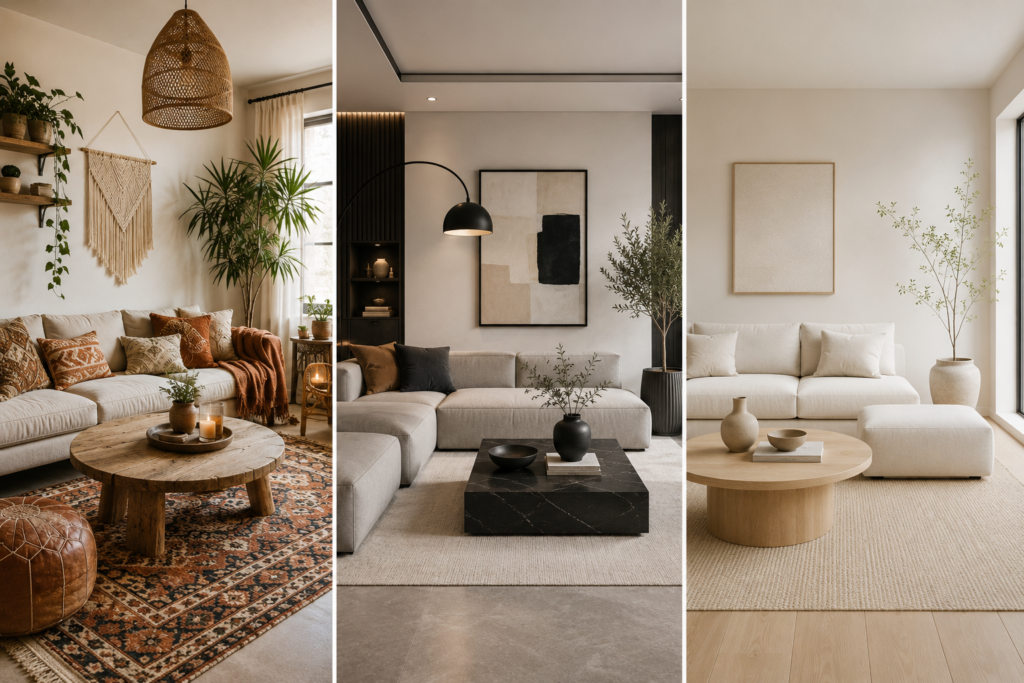
Multiple interior design styles comparison showing modern boho and minimalist living rooms
Traditional
Classic, symmetrical, rich in pattern and material, and deeply rooted in European décor history—traditional style is defined by its permanence and elegance. Crown molding, tufted furniture, silk drapery, antique wood finishes, and layered rugs create a sense of richness that never feels trendy because it doesn’t try to be.
If your interior decorating style quiz leans traditional, you may find yourself drawn to pieces that look like heirlooms, even if they were bought last week.
Transitional
Transitional style lives in the space between traditional and contemporary. It borrows the warmth and comfort of traditional design while embracing the cleaner lines and neutral palette of modern aesthetics. Most home design quizzes find that the majority of people actually land in transitional territory—meaning they don’t fit neatly into one box, and their homes shouldn’t either.
If you’ve taken a what’s my interior design style quiz and come out feeling like your results are a mix of two or three styles, congratulations—you might be a transitional designer at heart.
Eclectic
Eclectic isn’t “no style”—it’s all styles, curated intentionally. An eclectic interior mixes periods, cultures, textures, and scales in a way that feels purposefully collected rather than chaotically thrown together. The key difference between eclectic and messy? A cohesive color palette or a consistent design principle that ties the room together.
How to Find Your Interior Design Style: A Step-by-Step Approach
Knowing the styles is one thing. Actually finding your interior design style is another. Here’s a process that goes beyond just taking a design quiz and clicking “submit.”
Step 1: Audit What You Already Own and Love
Before you look anywhere else, look around your current home. Which pieces do you never get tired of? Which rooms make you feel most at peace? Your existing preferences are already telling you something. The goal of a home decor quiz isn’t to give you a style from scratch—it’s to help you articulate what you already feel drawn to.
Step 2: Build a Visual Collection
Open a new board on Pinterest or a folder on your phone and save everything that catches your eye—without overthinking it. Don’t ask yourself why you like something. Just save it. After a week of this, review your collection. Patterns will emerge. Certain colors, materials, furniture shapes, and room arrangements will repeat. That pattern is your style.
Step 3: Take a Structured Interior Style Quiz
This is where a solid interior design style quiz becomes genuinely useful. Look for quizzes that ask you about more than just colors and furniture—good ones will ask how you want your home to feel, what activities happen in each room, and what irritates you about spaces you dislike. The which interior design style are you quiz from KDA Designology (which interior design style are you kdadesignology) is one example that goes deeper than surface aesthetics.
When taking a home aesthetic quiz or room aesthetic quiz, answer instinctively. Your first reaction is usually more honest than your carefully considered second guess.
Step 4: Edit Your Results Through a Practical Lens
You might love the maximalist drama of Art Deco but live in a 600-square-foot apartment with two kids and a dog. Your interior design style quiz results should be a starting point, not a prison sentence. Take the elements of your preferred style that work in your actual life and adapt the rest.
Step 5: Start Small and Build
You don’t overhaul your entire home at once. Pick one room—ideally the one you spend the most time in—and start applying your style there. A living room style quiz or room design quiz can help you focus specifically on the space you’re working with before making any purchases.
What Your Interior Design Quiz Results Actually Tell You About Yourself
Here’s something interior designers quietly know that they don’t always spell out: your preferred home aesthetic is a window into your personality, values, and even your stress responses.
People who test as minimalist on a design quiz often value control, clarity, and the mental space that comes from visual simplicity. Studies suggest minimalists tend to be more intentional about their possessions overall—not just in their homes.
Boho results frequently correlate with creative personalities who find rigid structures limiting. The layered, globally-inspired nature of bohemian style reflects an openness to different cultures and a collector’s mindset.
Traditional style preferences often show up in people who value stability, heritage, and the comfort of familiar forms. There’s a reason traditional décor feels timeless—it taps into a deep human appreciation for craft and permanence.
None of this is destiny. A house style quiz tells you where your instincts lie right now. As you grow and your life changes, your style often evolves too. Many designers find their clients shift significantly every five to ten years.
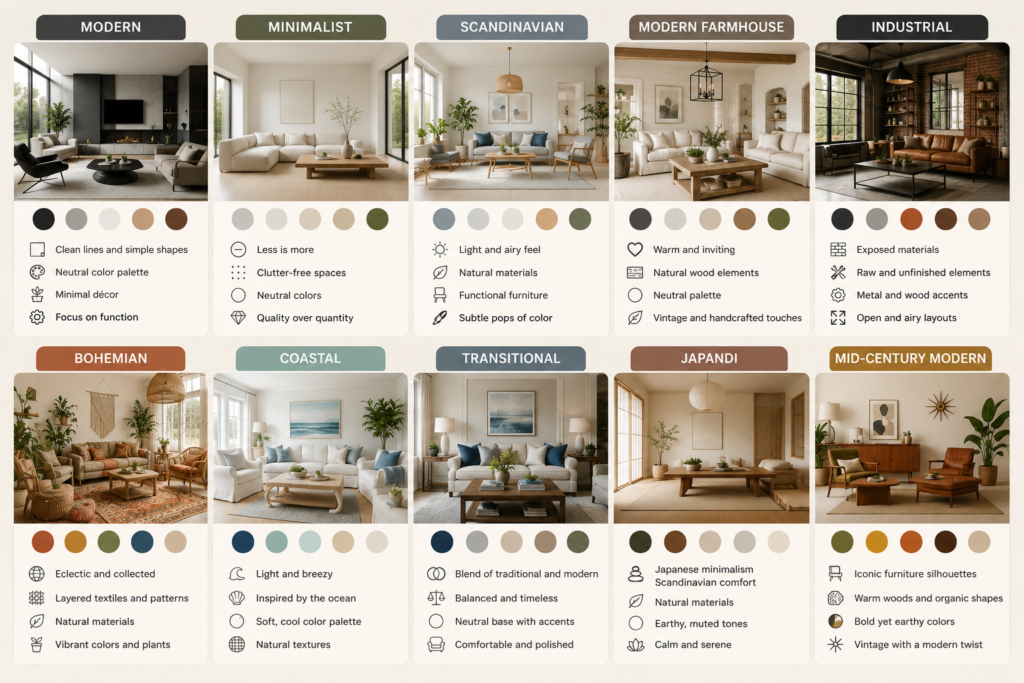
Infographic showing interior design style categories and their key characteristics
The Most Common Interior Design Quiz Mistakes (And How to Avoid Them)
Taking a home decor style quiz is easy. Using your results wisely is a skill. Here are the most common ways people misuse their quiz results—and how to avoid them.
Mistake 1: Treating your result as a strict rulebook. Your interior design style test might say “Scandinavian,” but that doesn’t mean you have to throw out your grandmother’s Persian rug. Good design always makes room for personal meaning over stylistic purity.
Mistake 2: Shopping immediately after getting your results. The first impulse after discovering your style is to go buy things. Resist this. Spend a few weeks living with your results, noticing how they show up (or don’t) in what you currently own.
Mistake 3: Ignoring your lifestyle. A home style quiz asks about preferences, not practicalities. A white linen sofa might score perfectly for your minimalist aesthetic—and be a disaster if you have toddlers or pets. Always filter your results through your real daily life.
Mistake 4: Choosing a style because it’s trendy, not because it resonates. Interior design trends cycle faster than ever. What looks amazing on Instagram right now may feel dated in three years. Your what is my design style answer should come from your gut, not from what’s currently dominating your social media feed.
How to Apply Your Interior Design Style Without a Big Budget
Once your interior decor style quiz results are in and you’ve done the reflective work, the exciting part begins: actually making your space reflect your style. Good news—this doesn’t require a designer’s budget.
Start with paint. It’s the highest-impact, lowest-cost change you can make to any room. Your quiz results will likely suggest a color palette—lean into it. A deep terracotta for a boho space, soft white for Scandinavian, warm charcoal for industrial.
Invest in one hero piece per room. Rather than buying ten medium-quality pieces, save for one piece that genuinely reflects your home design style—a sofa, a rug, or a statement light fixture. Build everything else around it.
Shop secondhand for texture and character. Thrift stores, estate sales, and online marketplaces are goldmines for mid-century modern finds, bohemian textiles, and traditional antiques. Many of the most beautifully styled homes you see online were built largely from secondhand pieces.
Use textiles to shift the mood quickly. Throw pillows, curtains, and rugs are the most affordable and reversible way to express your decorating style. They’re also the easiest to swap if your style evolves.
Group accessories intentionally. Whether your interior design aesthetic is minimal or maximalist, accessories arranged in odd-numbered groups at varying heights always look more intentional than items scattered randomly.
FAQ
Frequently Asked Questions About Interior Design Style Quizzes
What is the most accurate interior design style quiz?
The most accurate interior design style quiz is one that asks about more than just visual preferences—it should explore how you want your home to feel, your lifestyle, and your relationship with clutter and openness. Look for quizzes that use “this or that” image-based questions alongside more reflective prompts about how you live.
Can I have more than one interior design style?
Absolutely. Most people land somewhere between two or three styles on a home decor quiz. This is actually very common—it’s called a transitional or eclectic style. The goal isn’t to be a purist; it’s to understand which elements of each style resonate most with you.
How do I find my interior design style if I have no idea where to start?
Start by saving images that appeal to you for two to three weeks without overthinking it. Then review them for patterns. After that, take a structured find my interior design style quiz to validate what you’re seeing. Your instincts are usually more consistent than you think.
What’s the difference between an aesthetic quiz and an interior design quiz?
An aesthetic test tends to be broader, covering your overall vibe across fashion, music, and lifestyle. An interior design quiz specifically focuses on how those preferences translate to your living space. Both can be useful, but for decorating decisions, a focused interior decorating quiz will give you more actionable results.
What is my home aesthetic if I like both modern and cozy elements?
You might be a “warm modern” or “Scandinavian” style person—someone who appreciates clean lines and minimalist structure but needs warmth and texture to feel comfortable. Taking a what is my home aesthetic quiz that includes this hybrid category will help you see how your preferences translate to specific furniture, color, and material choices.
How often should I retake an interior design quiz?
Designers generally recommend revisiting your interior design style test every three to five years, or whenever your life changes significantly—a move, a new relationship, a major life transition. Your style evolves as you do.
Do interior design style quizzes work for renters?
Yes—and often more usefully for renters than homeowners. Since you can’t make major structural changes, knowing your what’s my interior design style answer helps you focus on what is changeable: furniture, lighting, textiles, art, and accessories. A clear aesthetic vision makes a rented space feel personal without requiring a single nail hole.
What’s the difference between home style and home aesthetic?
Home style usually refers to a recognizable design tradition (mid-century modern, farmhouse, industrial). Home aesthetic is a slightly broader term that can include mood, vibe, and emotional quality—a space can have a “cozy aesthetic” without neatly fitting into any named style category. Both a home style quiz and a home aesthetic quiz are useful tools, but they answer slightly different questions.
Conclusion
Your Style Is Already Inside You—A Quiz Just Helps You See It
The most important thing to remember is that no interior design style quiz is giving you a style you don’t already have. It’s reflecting back what’s already there, buried under years of “settling” for what was affordable, or convenient, or what someone else chose. Your design instincts are real. They deserve to be trusted.
Taking an interior design style quiz is an act of self-knowledge. It’s asking: how do I really want to live? What does home feel like to me, specifically? Those aren’t small questions. The answers shape your daily experience more than most people realize.
So take the quiz. Sit with the results. Walk through your home with fresh eyes. And then—slowly, intentionally—start building a space that feels like you. Not like a catalog. Not like a trend. Like you.
Because the best-decorated home isn’t the most expensive one. It’s the one that makes you exhale the moment you walk through the door.
Whether you’re just starting to explore your aesthetic or you’ve been obsessing over home decor style for years, the right quiz can be the shortcut to clarity you didn’t know you needed. Start simple, trust your gut, and remember: your home is the only space in the world that exists entirely for you.