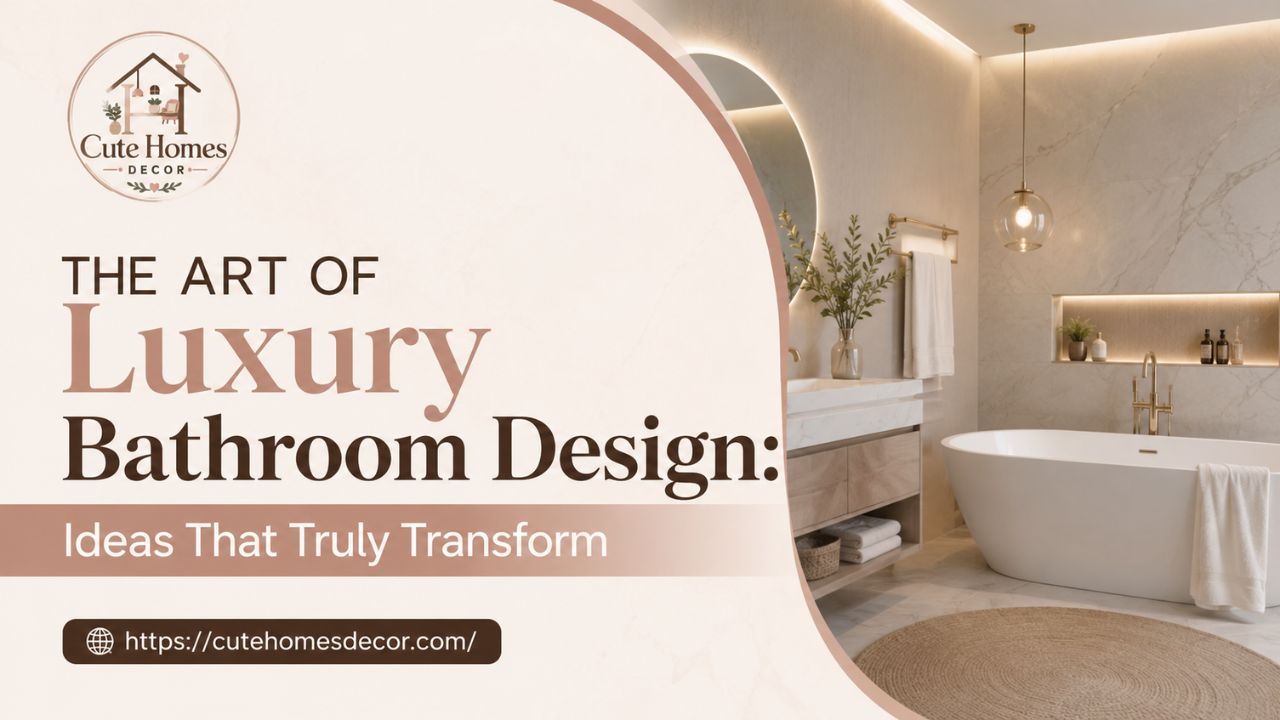

There is a moment—right when you step into a beautifully designed bathroom and the rest of the world disappears—that tells you everything about the power of intentional design. A luxury bathroom is not simply a room fitted with expensive fixtures; it is a carefully crafted sanctuary that blends architecture, material science, and personal wellness into a single, deeply satisfying experience. Whether you are planning a full renovation or just searching for a spark of inspiration, understanding what separates an ordinary bathroom from a truly luxurious bathroom can change the way you think about your entire home.
In recent years, the definition of luxury bathroom design has evolved dramatically. What was once confined to five-star hotel suites has steadily moved into private residences across the world. Homeowners are investing more time, money, and creative energy into their bathrooms than ever before—and the results are breathtaking. From dramatic marble slabs and rain-shower systems to integrated smart technology and museum-quality lighting, the modern bathroom has become one of the most exciting spaces in contemporary interior design.
This guide is for anyone who has ever stared at a plain white tile and thought: there has to be something better. Here, you will find everything from sweeping design philosophies to the smallest finishing details, all rooted in practical advice and real design principles. Let’s explore what makes a luxury bathroom truly extraordinary.
What Defines a True Luxury Bathroom in 2025
The word “luxury” gets thrown around freely in home design, but genuine luxury bathroom interior design has specific, identifiable qualities that go far beyond price tags. At its core, a high end bathroom is defined by three principles: the quality of materials, the precision of craftsmanship, and the thoughtfulness of the spatial experience.
Quality materials mean natural stone—Carrara, Calacatta, or Nero Marquina marble—hand-fired ceramic, unlacquered brass, and solid timber vanities. These materials age gracefully, developing a character that no synthetic alternative can replicate. Precision craftsmanship shows in grout lines that are perfectly level, in custom-built cabinetry with soft-close hinges, and in plumbing fixtures that operate with the satisfying solidity of a Swiss watch. And thoughtful spatial experience is about proportion, light, and the way the room makes you feel the instant you walk in.
“A truly luxurious bathroom is not designed to impress guests—it is designed to restore the person who lives there.”
The Role of Proportion and Space
One of the most common mistakes in modern bathroom design is prioritising features over flow. You could install a high end bathroom shower system and a freestanding soaking tub, but if they compete with each other for visual and physical space, neither delivers its full potential. Luxury modern bathroom design respects the relationship between objects and the empty space around them. Generous ceiling heights, uncluttered countertops, and careful traffic-flow planning are not optional—they are foundational.
In a small luxury modern bathroom, this principle becomes even more critical. The goal is to create a sense of expansiveness through optical tricks: large-format floor tiles with minimal grout lines, floor-to-ceiling mirrors, recessed niches instead of surface shelving, and a single vanity unit that does not crowd the room. Restraint, in small spaces, is the ultimate luxury.

A master luxury bathroom featuring full-height marble cladding and integrated architectural lighting — a hallmark of modern luxury bathroom design.
Light as a Design Material
In any designer bathroom, lighting is treated with the same seriousness as the tile selection or the plumbing layout. A layered lighting scheme typically includes ambient light (soft, diffused ceiling panels or indirect coves), task light (bright, shadow-free illumination around the vanity mirror), and accent light (LED strips beneath floating vanities, lit niches, or backlit mirrors). The combination creates a room that feels warm and dimensional rather than flat and clinical.
Natural light is the ultimate prize. If your luxury master bathroom has access to a courtyard, a roof lantern, or even a well-placed skylight, protect that light at all costs. Frosted or textured glass allows natural light to flood the room while maintaining privacy—a solution that feels both practical and beautifully considered in any luxury bathroom interior design.
Luxury Modern Bathroom Design: Key Style Directions
While timeless elegance never goes out of style, there are several distinct design directions shaping luxury modern bathrooms in 2025. Understanding these categories can help you identify the aesthetic language that resonates most with your personal taste.
Ultra Modern and Minimalist
The ultra modern luxury bathroom design is characterised by clean geometry, monochromatic palettes, and an almost aggressive commitment to editing. Floating vanities with handle-free fronts, wall-hung toilets, seamless walk-in showers with frameless glass, and a singular material story—perhaps concrete and brushed steel, or white quartz and matte black—are the defining elements. Every unnecessary object is removed, and what remains is given extraordinary presence.
This aesthetic is especially powerful in open-plan master luxury bathrooms where the bathroom flows visually into the bedroom suite. The absence of a door, replaced instead by a screen of ribbed glass or a sculptural partition wall, blurs the boundary between rest and ritual in the most sophisticated way.
Contemporary Spa and Wellness
Perhaps the most widely aspired-to style, the spa-inspired luxury modern master bathroom draws directly from the visual vocabulary of premium wellness retreats. Think large-format porcelain tiles in warm sand or travertine tones, a freestanding soaking tub positioned as the centrepiece of the room, an oversized rain shower with multiple body jets, and a double vanity with integrated storage.
The modern master bathroom ideas in this category typically include heated floors, steam generators, chromotherapy lighting in the shower, and built-in speakers connected to the home’s audio system. These additions move the bathroom from purely functional territory into something that genuinely rivals a professional spa experience. If budget allows, a luxury bathroom renovation focused on wellness features consistently ranks as one of the highest-return investments in residential real estate.
Classic and Timeless Elegance
Not every homeowner wants an industrial-cool aesthetic or a minimalist void. For many, the ideal luxurious bathroom design is rooted in tradition—in panelled walls, freestanding roll-top baths, polished nickel fixtures, and the soft gleam of natural stone. This is the world of luxury classic bathroom design: a space that feels like it has always existed and will never feel dated.
Here, designer bathrooms often feature clawfoot tubs on tiled plinths, wainscoting in heritage colours, antique brass hardware, and bevelled mirrors in ornate frames. The bathroom interior design goal is not to look new—it is to look right.
Luxury Bathroom Design: Key Numbers & Insights
72%of homeowners say the bathroom is their top renovation priority in 2025
$38Kaverage spend on a high end bathroom remodel in North America
3×increase in demand for spa-inspired luxury bathroom features since 2020
85%ROI typical of a luxury master bathroom renovation on resale value
Sources: NKBA 2025 Design Trends Report · Houzz Bathroom Renovation Study · National Association of Realtors
Eclectic and Boutique Hotel Style
Inspired by the world’s most photographed boutique hotels, this direction leans into personality, layering pattern, texture, and collected objects in a way that feels curated rather than decorated. Patterned encaustic tiles on the floor, limewash walls, a vintage vanity repurposed from an antique chest of drawers, and contemporary brushed-gold tapware—this is luxury bathroom design that tells a story.
It takes genuine skill to pull off this aesthetic without it tipping into clutter. The key is to anchor the design with one strong structural element—a statement tile, a sculptural basin, or a dramatic wallcovering—and let everything else respond to it.
Master Luxury Bathrooms: A Room-by-Room Design Breakdown
The best luxury master bathroom ideas come from thinking about each zone of the room as a distinct experience. Here is how to approach every element with the intentionality that separates good design from great design.

A freestanding soaking tub positioned beside a floor-to-ceiling glazed shower — the definitive pairing in any luxury master bathroom renovation.
The Vanity: Command Centre of the Bathroom
In luxury modern bathroom design, the vanity is the focal point. Double vanities are standard in master bathrooms, providing each occupant with their own sink, storage, and mirror zone. The most compelling vanity designs pair a stone countertop—honed Calacatta marble or leathered quartzite are perennially popular—with a custom millwork base in a paint finish or natural wood veneer.
Vessel sinks sitting proud of the counter surface create sculptural interest; undermount sinks produce the cleaner line preferred in ultra modern bathroom design. Illuminated vanity mirrors with built-in demisters and colour temperature controls are a near-universal feature in high end bathroom designs today.
Material Pairing Guide for Luxury Vanities
Classic Pairings
- Carrara marble + unlacquered brass
- Painted millwork + polished nickel
- Aged oak + brushed bronze
- Black granite + chrome fixtures
Modern Pairings
- White quartz + matte black
- Concrete + brushed stainless
- Porcelain slab + gun-metal grey
- Sintered stone + rose gold
The Shower: Engineering a Personal Spa
In any modern luxury bathroom design, the shower is where serious investment pays the greatest daily dividends. A frameless glass enclosure with a structural glass panel—rather than a hinged door—creates the impression of a wet room without fully committing to it. The shower floor should be a single large-format slab with a linear drain, producing the uninterrupted tile plane that is characteristic of high end bathrooms.
Overhead, an oversized rain showerhead—400mm or larger—positioned centrally delivers the immersive, full-body rainfall effect that defines the luxury washroom experience. Pair it with a separate thermostatic handset, body jets set at chest and hip height, and a dedicated steam generator for a truly comprehensive setup. Shower benches in marble or teak add both function and beauty, and recessed niches tiled in a contrasting material introduce a moment of visual surprise.
The Bathtub: Statement and Sanctuary
Not every bathroom needs a freestanding tub, but when the room proportions support it, nothing commands a space like a beautifully crafted bath. The lavish bathroom tradition of the deep soaking tub has never been stronger—whether that is a sculptural stone resin vessel in an organic form, a cast-iron roll-top in a polished Farrow & Ball finish, or a built-in tub with a marble deck and integrated chromotherapy lighting.
Positioning matters enormously. In the best luxury master bathroom remodel ideas, the tub is placed to enjoy a view—of a garden through a picture window, of a fireplace in a double-aspect suite, or of a skylight that fills the bath zone with changing natural light throughout the day.
Flooring and Wall Treatments
The surfaces of a luxurious master bathroom do more work than almost any other element. Large-format porcelain tiles (1200×600mm or larger) in a continuous-lay pattern eliminate visual interruption and make any room feel more expansive. Bookmatched marble slabs—where two adjacent cuts of stone are opened like a book to create a mirror-image veining pattern—are the ultimate wall treatment in premium bathroom design.
On floors, heated systems are non-negotiable in any serious luxury bathroom remodel. Underfloor heating not only adds comfort but also keeps the stone or tile at a consistent temperature, reducing condensation and the risk of hairline cracking over time. Herringbone-laid natural stone, chevron timber effect porcelain, and encaustic terrazzo are among the most timeless flooring choices for luxury bathrooms today.
- Bookmatched marble slabs — dramatic mirror-image veining; best for feature walls behind the tub or vanity
- Large-format porcelain — low maintenance, highly durable, and visually expansive in any modern bathroom
- Handmade ceramic zellige — rich textural depth; ideal for accent zones or full wet-room walls
- Limewash plaster — breathable, organic, and beautifully imperfect; pairs with natural stone floors
- Fluted glass partitions — allows light transmission while creating privacy and visual rhythm
- Heated terrazzo floors — composite stone aggregate in a polished matrix; deeply luxurious underfoot
High End Bathroom Technology: Where Smart Meets Serene
The luxury bathroom of 2025 is an intelligent space. Smart technology, when integrated discreetly, elevates the daily bathroom ritual from routine to restorative. The challenge—and the art—is ensuring that technology enhances the design rather than cluttering it.
Smart Plumbing and Shower Systems
Digital shower controllers allow you to set precise water temperature, flow rate, and spray pattern from a wall-mounted panel or even a smartphone app before you step in. Brands like Kohler, Hansgrohe, and Dornbracht lead this space with products that bridge engineering and aesthetic sophistication. In a fancy bathroom design, a concealed valve system routes plumbing entirely within the wall, presenting only the slimmest of outlets—an almost magical disappearance of the mechanical into the architectural.
Intelligent Toilets and Wellness Fixtures
The luxury toilet design has evolved far beyond its basic function. Wall-hung WCs from brands like Toto, Geberit, and Villeroy & Boch integrate bidet functions, heated seats, automatic lid operation, deodorising systems, and even health-monitoring sensors. In high end bathroom projects, these fixtures are increasingly specified as standard—their clean, wall-mounted format also supports the floating aesthetic of modern luxury bathroom design.
Ambient and Circadian Lighting
Circadian lighting systems adjust the colour temperature of the bathroom’s ambient light throughout the day—cooler blue-white tones in the morning to promote wakefulness, and warmer amber tones in the evening to signal the body to wind down. This technology, once found only in best bathrooms in the world featured in architectural magazines, is now accessible at a range of price points and is a defining feature of the truly considered luxury bathroom plan.

A contemporary high end bathroom with a double floating vanity, backlit mirrors, and large-format stone-look porcelain — exemplifying modern luxury bathroom interior design.
Luxury Bathroom Renovation: Planning Your Project
A successful luxury bathroom renovation is built on three pillars: a clear design brief, a realistic budget, and the right professional team. Skipping or rushing any of these typically results in costly changes mid-project and outcomes that fall short of the original vision.
Setting Your Design Brief
Before engaging an architect or bathroom designer, spend time building an image library of spaces that genuinely excite you. Pinterest, Dezeen, Architectural Digest, and the Instagram profiles of leading interior design practices are invaluable here. Once you have thirty to fifty images, look for the patterns: Are you consistently drawn to dark, moody spaces or light, mineral ones? Do freestanding tubs appear in most of them? Is natural stone a constant? These patterns reveal your authentic aesthetic language—the foundation of your design brief.
Budgeting for a High End Bathroom Remodel
The budget conversation in a high end bathroom remodel can be surprising. The most significant costs are often not the materials but the labour: a skilled tiler working with large-format marble slabs requires far more time and expertise than one working with standard ceramic tiles. Plumbing reconfiguration, structural changes to accommodate larger showers or freestanding baths, and bespoke joinery all carry substantial labour costs. As a rough guide, a full luxury bathroom remodel in a master suite of 12–20 square metres typically ranges from $35,000 to over $120,000 depending on specification level and location.
Working with Luxury Bathroom Designers
Engaging an experienced luxury bathroom designers professional—ideally someone who specialises in residential projects at the high end—brings expertise that more than justifies their fee. They will identify spatial inefficiencies, recommend materials that perform as well as they look, coordinate with plumbers and electricians to avoid costly surprises, and produce detailed drawings that ensure every element is precisely positioned before a single tile is laid. The best bathroom luxury design projects are collaborative conversations between client and designer, with both parties bringing something essential to the outcome.
- Hire a specialist — a designer with a dedicated portfolio in luxury washrooms will save money in the long run
- Specify early — lead times on natural stone, custom cabinetry, and imported fixtures can be 12–16 weeks
- Allow contingency — a 15–20% contingency budget is standard in any luxury bathroom renovation project
- Think long-term — prioritise timeless materials over trend-driven choices for maximum longevity
- Consider resale — luxury master bathroom ideas that align with the broader home’s architectural style add the most value
Luxury Bathroom Decor: The Details That Make the Difference
Once the architectural framework is in place, it is the details of luxury bathroom decor that elevate a beautiful room into an unforgettable one. These are the elements that photographs cannot fully capture—the weight of a handmade ceramic soap dish, the scent of a candle from a Parisian maison, the texture of a thick linen towel folded with hotel precision.
Textiles and Accessories
In the world of luxury bathroom decor ideas, textiles command respect. Bath towels in 700 gsm Egyptian cotton, bath mats in woven linen or organic cotton, a robe in waffle-weave cashmere-blend—these additions shift the sensory experience of the bathroom as dramatically as any architectural feature. Accessory sets in solid brass, porcelain, or natural stone (rather than plastic or chrome-plated zinc) maintain the material integrity of the room and age beautifully over time.
Plants, Art, and Scent
The most sophisticated stylish bathrooms treat plants, art, and fragrance as design elements rather than afterthoughts. A single sculptural plant—a Monstera in a handthrown ceramic pot, or a trailing Scindapsus in a niche—introduces organic life that no inert material can replicate. A piece of original artwork, properly sealed against humidity, transforms a designer bathroom into a gallery. And a diffuser or candle with a distinctive fragrance creates sensory memory—the smell of that particular bathroom becomes inseparable from the feeling of being at home.
Frequently Asked Questions
What is the most important element in luxury bathroom design?
The single most important element is the quality and coherence of your material palette. A luxury bathroom design can be built on a relatively simple layout, but if every surface—stone, tile, timber, metal—speaks the same visual language, the result will feel genuinely high-end. Material selection, more than any individual fixture or feature, defines the character and longevity of the space.
How much does a luxury master bathroom renovation typically cost?
A full luxury bathroom renovation for a master suite typically ranges from $35,000 to over $120,000 in North America and Western Europe, depending on room size, material specification, and the extent of structural changes. Bespoke joinery, imported natural stone, and smart plumbing systems are among the highest-cost line items. Allowing a 15–20% contingency is strongly recommended in any high end bathroom remodel.
Can a small bathroom be a luxury bathroom?
Absolutely. A small luxury modern bathroom achieves its sense of luxury through material quality, spatial intelligence, and lighting—not size. Large-format tiles with minimal grout lines, a floor-to-ceiling mirror, a floating vanity, and a carefully edited material palette can make a compact bathroom feel as considered and serene as a much larger space. Restraint is, in fact, a form of luxury.
What are the best tiles for a luxury bathroom?
The best tiles for a luxury bathroom interior design project depend on the aesthetic direction. Natural stone—marble, travertine, limestone, or slate—brings organic depth and timeless elegance. Large-format porcelain or sintered stone slabs create seamless, low-maintenance surfaces ideal for ultra modern bathroom design. Handmade zellige or encaustic ceramic tiles introduce texture and personality. Prioritise quality over novelty, and always use heated underlays beneath stone to protect against cracking.
What smart technology should I include in a luxury bathroom?
A fully considered modern luxury bathroom might include a digital thermostatic shower system, an intelligent luxury toilet design with integrated bidet and seat heating, circadian lighting with adjustable colour temperature, underfloor heating with smart controls, a Bluetooth-integrated audio system, and a mirrored display panel for news or wellness data. The key is discretion—all technology should be specced to disappear into the architecture rather than dominate it.
How do I choose a luxury bathroom designer?
Look for an interior designer or bathroom specialist with a portfolio that consistently demonstrates high-quality finishes, intelligent spatial planning, and material sophistication. Strong luxury bathroom designers should be able to articulate a clear design philosophy, provide detailed technical drawings, coordinate with specialist contractors, and manage the procurement of long-lead items. Personal chemistry matters too—the best outcomes come from collaborative, communicative working relationships.
What are the latest trends in luxury bathroom decor for 2025?
In 2025, the strongest trends in luxury bathroom decor include warm stone tones (travertine, sandstone, warm limestone) replacing the cooler greys of the previous decade; integrated wellness technology including steam, chromotherapy, and circadian lighting; bespoke furniture-style vanities bridging the bathroom-bedroom boundary; fluted glass and fluted stone as textural accents; and a renewed appreciation for natural, imperfect surfaces such as limewash plaster and handthrown ceramic. Chic bathrooms in 2025 feel warm, personal, and deeply considered.
Is a freestanding bathtub worth it in a luxury bathroom?
If the room proportions genuinely accommodate one—typically at least 4 square metres of clear floor space around the tub—a freestanding bath is one of the most impactful investments in any luxury bathroom project. It serves as a sculptural focal point, introduces a sense of unhurried ritual to the bathing experience, and consistently appears in the luxury bathroom ideas and renovation portfolios that garner the most admiration. It should be positioned to enjoy a view, natural light, or both.
Conclusion
A truly extraordinary luxury bathroom does not happen by accident. It is the result of clear intention, quality materials honestly applied, thoughtful technology discreetly integrated, and a deep respect for the way space, light, and texture shape human experience. Whether you are embarking on a full luxury bathroom renovation or simply refining the details of an existing space, the principles explored in this guide remain constant: prioritise material quality, honour proportional balance, invest in lighting, and never underestimate the power of the seemingly small things—the scent, the textile, the single sculpture on the marble shelf.
The bathroom has emerged as the most personal room in the modern home—the first room you enter each morning and the last you leave each night. Designing it with the care and intelligence that a luxury bathroom design demands is not indulgence. It is, quite simply, one of the best investments you can make in your daily quality of life.