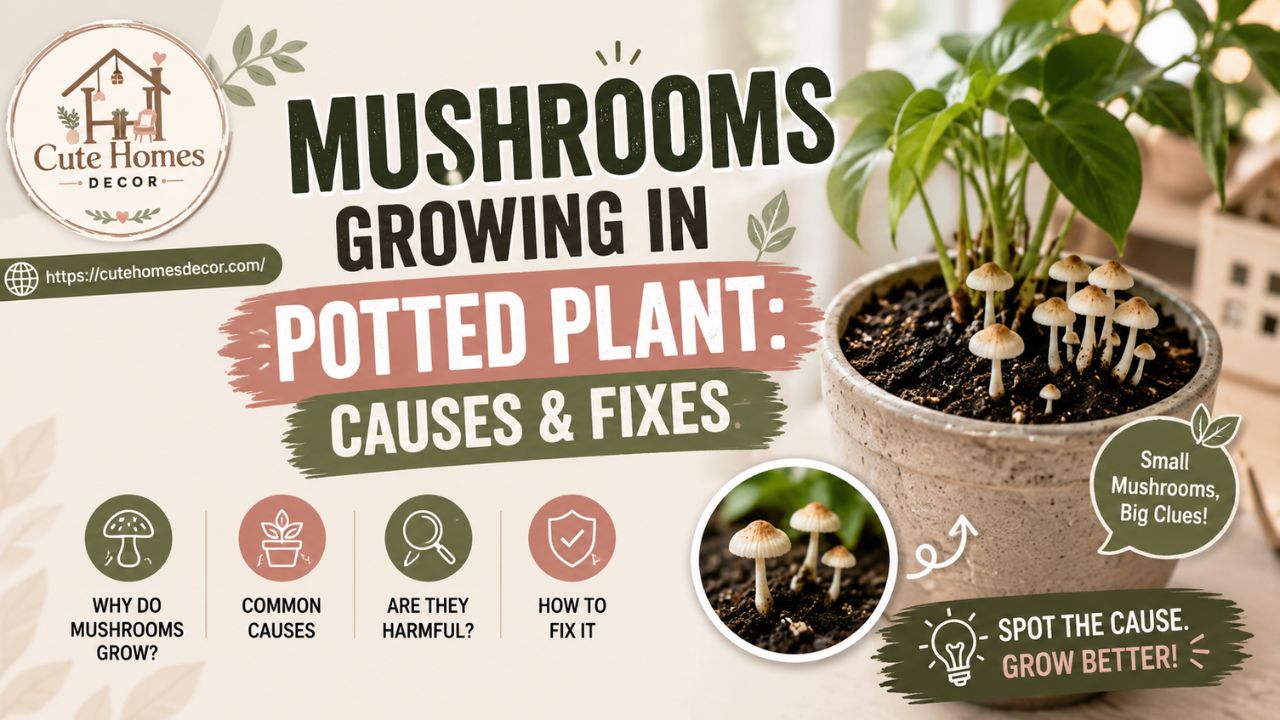

You walk over to water your favorite indoor plant, and there it is — a tiny mushroom, seemingly out of nowhere, poking up through the soil. It’s one of those moments that makes you stop and think, wait, what? If you’ve noticed mushrooms growing in your potted plant, you’re definitely not alone, and honestly, it’s more common than most people realize.
Whether you’ve spotted a white mushroom growing in a potted plant, a pale yellow cap after a particularly humid week, or a cluster of tiny ones you never expected, the sight can feel a little alarming. Is your plant sick? Is your home too damp? Are these mushrooms poisonous? Should you be worried at all?
The truth is, mushrooms growing in potted plants is usually a sign of something completely natural happening in your soil — not a crisis. But that doesn’t mean you should ignore it either. Understanding why it happens, what it means for your plants, and what you can do about it will put your mind at ease and help you make smarter choices as a plant parent.
Let’s dig into all of it.
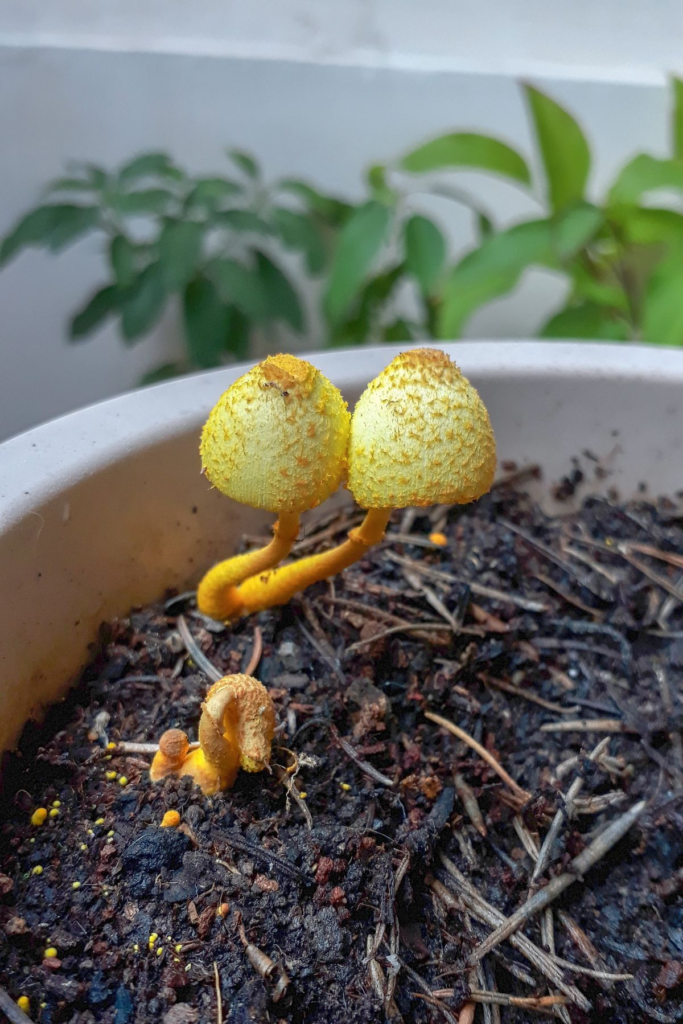
Leucocoprinus birnbaumii, the flowerpot parasol, is the most commonly seen mushroom in houseplant pots — its bright lemon-yellow cap is hard to miss.
Why Are Mushrooms Growing in My Potted Plant?
The single most common reason you’re seeing mushrooms growing in your potted plant comes down to one thing: fungi spores in the soil. Mushrooms are the fruiting bodies of fungi — they’re the visible part of a much larger underground network called mycelium. When conditions are just right (moisture, warmth, organic matter), that hidden network sends up mushrooms almost overnight.
So when you ask why are mushrooms growing in my potted plant, the short answer is: your potting mix already contained fungal spores, and your growing conditions gave those spores exactly what they needed to thrive.
The Role of Potting Mix in Mushroom Growth
Most commercial potting soils are made from a blend of peat moss, bark, compost, and other organic materials. These ingredients are rich in decomposing matter — exactly what fungi love. Many bags of potting mix actually come pre-loaded with fungal spores that lie dormant until conditions trigger them.
This is why mushrooms in potted plant soil can appear even in a brand-new pot with fresh soil. You didn’t do anything wrong. The spores were already there, quietly waiting.
Moisture and Humidity Are Key Triggers
Overwatering is the number one environmental trigger for mushrooms growing in houseplants. Fungi love moisture, and a pot that stays consistently damp gives mycelium the perfect environment to push out fruiting bodies — aka mushrooms.
If you’ve been watering more heavily than usual, recently moved your plant to a more humid room, or gone through a stretch of rainy, overcast weather, don’t be surprised if a mushroom growing in your houseplant pot shows up shortly after. The same goes for mushrooms growing in your house more broadly — high indoor humidity encourages fungal growth everywhere.
Organic Material and Decomposition
Another major factor is the breakdown of organic matter in your soil. As bark chips, wood pieces, and compost decompose inside your pot, they release nutrients that fungi consume. This is actually a normal and healthy part of the soil ecosystem. The fungi breaking down organic material are, in a way, helping your plant by releasing nutrients into the soil.
This is why mushrooms growing in plant soil isn’t necessarily a red flag — it can actually be a sign of a biologically active, healthy growing medium.
What Does It Mean When Mushrooms Grow in Your Plants?
If you’re wondering what it means when mushrooms grow in your plants, it mostly means your soil is biologically alive. Fungi and plants have co-existed for hundreds of millions of years. In nature, fungal networks in soil actually help plants absorb water and nutrients through a relationship called mycorrhizae.
That said, not every fungus in your pot is a helpful partner. Some are simply opportunistic decomposers — they’re breaking down dead organic matter in the soil and have nothing to do with your plant’s root system at all. Either way, their presence is a signal about your soil conditions more than it is a warning about your plant’s health.
Mushroom Growing in Houseplant: Should You Panic?
No. Take a breath. A mushroom growing in your houseplant pot is not a sign your plant is dying. In most cases, it’s not even a sign it’s struggling. The fungus and your plant are typically sharing the same space without interacting much at all.
However, it is a sign to check in on your watering habits and soil drainage. Consistently soggy soil doesn’t just grow mushrooms — it can also lead to root rot, which is a much more serious problem.
Do Mushrooms Kill Plants? The Truth
This is one of the most Googled questions on this topic: do mushrooms kill plants? And the answer is almost always no.
The fungi that produce mushrooms in your indoor pots are typically saprophytic — meaning they feed on dead or decaying organic matter, not on living plant tissue. They’re not parasites. They don’t attack your plant’s roots. In fact, mushrooms in potted plants are often doing you a quiet favor by speeding up decomposition and releasing nutrients your plant can eventually use.
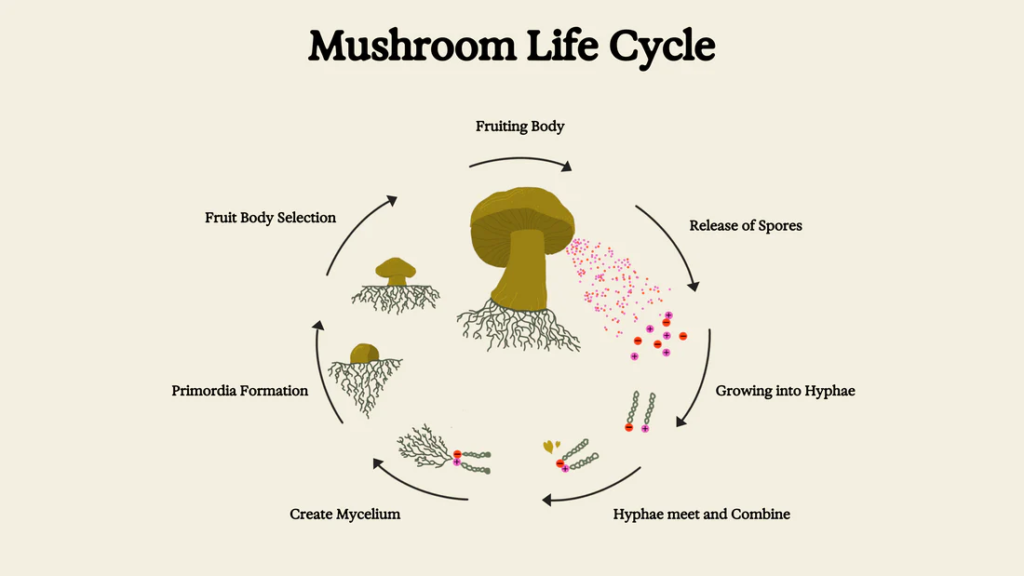
The full mushroom lifecycle in potted plant soil: dormant spores activate with moisture and warmth, mycelium spreads underground, then the visible mushroom fruiting body emerges.
Will Mushrooms Kill My Plants?
In rare cases, a fungal infection can harm plants — but these are typically caused by pathogenic fungi, not the mushroom-producing kind you see popping up in pots. The visual mushroom in your pot is almost certainly a decomposer, not a pathogen.
So will mushrooms kill your plants? Almost certainly not. But if your plant is already showing signs of distress — yellowing leaves, wilting, root rot — then the mushrooms are sharing the same damp conditions that caused those problems, not causing them directly.
Types of Mushrooms That Grow in Houseplants
Knowing what you’re dealing with can help you feel more confident. Here are the most common types of mushrooms in houseplants and potted plants:
Leucocoprinus birnbaumii (Yellow Houseplant Mushroom)
This is probably the most commonly seen yellow mushroom growing in a houseplant pot. It goes by several names: the flowerpot parasol, the plantpot dapperling, and sometimes the lemon-yellow lepiota. It’s bright yellow, often with a frilled cap, and it tends to appear in tropical houseplant soil.
While it looks cheerful, it is considered toxic if ingested, so keep it away from children and pets. It won’t harm your plant though.
Small White Mushrooms
Small white mushrooms in potted plants are another very frequent sighting. White mushroom growing in a potted plant scenarios usually involve species like Leucoagaricus or related fungi. These are also saprophytic and generally harmless to your plant.
Brown Mushrooms in Houseplants
A brown mushroom growing in a potted plant is typically another variety of decomposer fungus. The color variation depends on species, but most brown indoor mushrooms are harmless to plants.
Light Green or Grey Mushrooms
A light green mushroom growing in your plant or a grey mushroom in your houseplant is less common but not unheard of. These tend to be rarer species of saprophytic fungi, still operating in the same decomposer role.
Why Is My Indoor Plant Growing Mushrooms? Common Causes Checklist
If you’re still puzzling over why your indoor plant is growing mushrooms, run through this quick checklist:
- Overwatering — Consistently wet soil is the #1 trigger. Check if your pot has drainage holes and if you’re letting the topsoil dry slightly between waterings.
- High Humidity — Mushrooms growing in your house or mushrooms growing in indoor plants is much more common in humid climates or during summer months.
- Organic potting mix — Rich, bark-heavy potting soils come with more fungal spores. This isn’t bad, just something to be aware of.
- Low light conditions — Dark, moist corners are mushroom heaven. Move your plants to brighter spots where soil can dry out more quickly.
- Contaminated pots or tools — Reusing pots without cleaning them can transfer fungal spores from one plant to another.
How to Get Rid of Mushrooms in Potted Plants
If you’d rather not share your windowsill with fungi, there are several effective ways to remove them. Here’s how to get rid of mushrooms in potted plants without harming your plants:
Remove Them by Hand
The simplest approach: wear gloves and pull the mushroom in the plant pot out by the base, removing as much of the stem as possible. This won’t eliminate the mycelium network beneath the soil, but it removes the visible fruiting body and prevents spore spread.
Do this before the caps open and release spores — once spores spread, you’ll likely see more mushrooms pop up.
Repot With Fresh Soil
If mushrooms keep returning, consider repotting your plant with fresh, sterile potting mix. This is the most thorough way to deal with mushrooms in houseplant soil. Clean the pot well before reusing it, and let it dry completely.
Improve Drainage and Reduce Watering
Since moisture is the main enabler, fixing your watering habits goes a long way. Make sure your pot has adequate drainage holes, use a well-draining mix, and allow the top inch of soil to dry between waterings. This alone often stops mushrooms in indoor plants from reappearing.
Use a Fungicide
For persistent cases, an organic or commercial fungicide can help suppress fungal growth. Look for products safe for houseplants. This is typically a last resort — most people find that adjusting watering habits and improving airflow is enough.
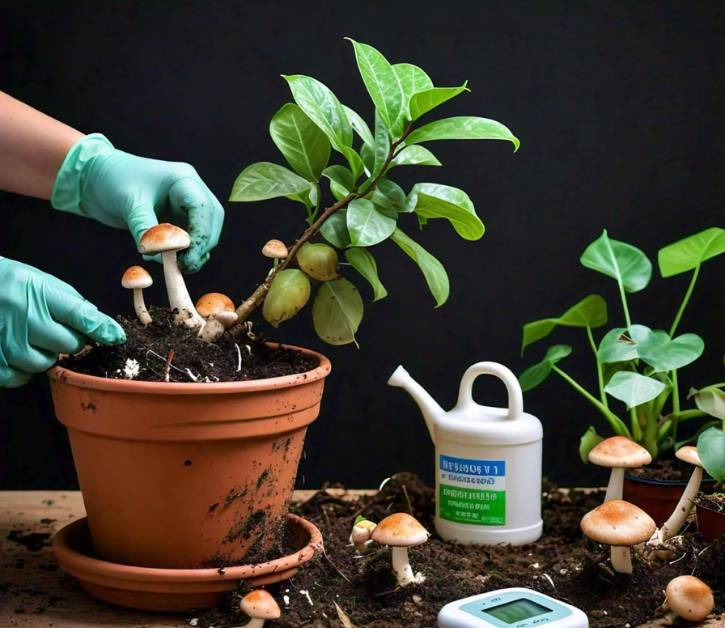
Always remove mushrooms from your houseplant pots before the cap opens and releases spores — pulling from the base gets more of the stem out.
How to Kill Mushrooms in Potted Plants Naturally
A diluted solution of water and dish soap applied to the soil surface can disrupt fungal growth. Alternatively, sprinkling cinnamon on the soil is a popular natural antifungal remedy that many plant enthusiasts swear by. Neither method will harm your plants.
Should I Remove Mushrooms From My Plants?
This is genuinely a matter of preference. Should you remove mushrooms from your plants? Here’s how to think about it:
Remove them if:
- You have young children or pets who might eat them (many houseplant mushrooms are toxic if ingested)
- You prefer a tidy, clean-looking pot
- You’re worried about spores spreading to other plants
- The mushrooms keep recurring after removal and you want to address the root cause
Leave them if:
- Your plant is thriving and you see no signs of distress
- You’re interested in soil biology and want to observe the growth cycle
- They’re appearing in outdoor pots or garden containers where removal is inconvenient
Either way, mushrooms in your houseplants are not an emergency.
Mushroom Growing in House: Is It Good or Bad?
People often wonder whether a mushroom growing in a house is good or bad. Culturally, in some traditions, a mushroom appearing in your home is considered a good luck omen — mushroom in a houseplant bringing good luck is a belief you’ll find in several East Asian and European folk traditions.
From a purely practical standpoint, a single mushroom appearing in a pot is neither good nor bad — it’s just biology. The bigger question is what conditions in your home allowed it to grow. If you’re seeing mushrooms growing inside your house in multiple places (not just in pots), that could point to moisture issues worth investigating, like a leaky pipe or inadequate ventilation.
What does it mean when mushrooms grow in your house? In a non-superstitious sense, it means you have moisture, warmth, and organic matter available somewhere. For potted plants, that’s expected. For walls, floors, or structural areas, it warrants attention.
Mushrooms Growing in Specific Plant Types
Mushroom Growing in Monstera
If you’ve found a mushroom growing in your Monstera, this is very common. Monsteras thrive in rich, humid conditions — exactly what fungi love. The large pots and chunky, organic potting mixes used for tropical plants are particularly hospitable to fungal spores.
Mushrooms Growing in Aloe Plant
Aloe is a succulent, so mushrooms growing in an aloe plant pot is a sign you might be overwatering. Succulents need fast-draining, sandy soil and infrequent watering. If mushrooms are appearing, dial back the water significantly.
Mushrooms Growing in Succulent Pot
Similarly, mushrooms growing in a succulent pot point almost entirely to excess moisture. Succulents are desert plants — they want dry, gritty soil. If fungi are colonizing the pot, the soil is staying too wet for too long.
How to Get Rid of Leucocoprinus birnbaumii
Since this yellow species is the most common culprit in houseplant pots, here’s a targeted guide on how to get rid of Leucocoprinus birnbaumii:
- Remove visible mushrooms as soon as they appear, before caps open.
- Scrape the top inch or two of soil and replace it with fresh potting mix.
- For severe infestations, fully repot the plant in sterilized soil.
- Reduce watering frequency and improve drainage.
- Increase airflow around your plant — this helps the soil dry faster between waterings.
Note: this species is nearly impossible to fully eradicate without a complete soil replacement, because its mycelium is deeply embedded in the existing potting mix. But you can absolutely control it.
Mycelium in Houseplant Soil: The Bigger Picture
Even when you can’t see mushrooms, mycelium in houseplant soil is likely present. Mycelium — the white, thread-like network of fungal cells — is a normal, expected part of any soil ecosystem. You might spot it as a white web under the surface when you repot a plant.
This isn’t cause for alarm. Mycelium in soil is working constantly to break down organic matter, and in some cases, it’s actively helping your plant access water and nutrients. The visible mushroom is just the tip of the iceberg — the brief, reproductive phase of something that’s been living in your soil for much longer.
FAQ
Can mushrooms grow in your house without being in plant pots?
Yes. Mushrooms can grow in your house anywhere there’s moisture, warmth, and organic material. This includes damp wood, cardboard, and walls with moisture problems. In pots, it’s very common and usually harmless. In structural areas of your home, recurring mushroom growth may indicate a moisture or mold issue worth addressing.
Are mushrooms in houseplants bad?
No, mushrooms in houseplants are not bad in most cases. They are decomposers feeding on organic matter in the soil, and they don’t harm your plant’s roots or overall health. The only real concern is toxicity to pets and children — many houseplant mushrooms are toxic if eaten.
Why is there a mushroom growing in my bathroom plant?
The bathroom is one of the most humidity-rich rooms in any home, which makes it ideal for fungal growth. Mushrooms growing in a bathroom plant pot are almost entirely explained by the high ambient moisture. Improving ventilation and reducing watering frequency usually resolves the issue.
What causes mushrooms to grow in houseplants?
Mushrooms growing in houseplants are caused by fungal spores already present in potting soil, activated by moisture, warmth, and organic material. Overwatering, high humidity, and rich organic potting mixes are the main contributing factors.
Are white mushrooms in potted plants dangerous?
White mushrooms in potted plants are generally not dangerous to your plant, but they may be toxic to humans and pets if ingested. Always remove them carefully with gloves, especially if you have children or animals in the home.
How do I stop mushrooms from growing in potted plants?
To stop mushrooms from growing in potted plants, reduce watering frequency, improve soil drainage, increase airflow around your plants, and replace contaminated soil with fresh sterile potting mix if needed. Removing mushrooms before their caps open also prevents spore spread.
Do mushrooms kill plants?
Almost never. Mushrooms do not kill plants in typical houseplant scenarios. The fungi involved are saprophytic — they eat dead organic matter, not living plant tissue. However, the same moist conditions that encourage mushrooms can also cause root rot, so it’s worth addressing moisture management.
What types of mushrooms grow in houseplants?
The most common types of mushrooms in houseplants include Leucocoprinus birnbaumii (yellow), various small white species like Leucoagaricus, and brown decomposer fungi. All are typically saprophytic and harmless to your plant, though potentially toxic if consumed.
Is a mushroom in a houseplant good luck?
In several folk traditions, a mushroom in a houseplant is considered a sign of good luck and abundance. Scientifically, it simply reflects healthy biological activity in your soil, but there’s nothing wrong with enjoying the positive cultural symbolism if it appeals to you.
Can I keep mushrooms as houseplants?
Technically yes, though it’s not simple. Keeping mushrooms as houseplants requires specific substrate kits designed for mushroom cultivation — they won’t thrive long-term in regular potting soil. If you’re interested in growing mushrooms indoors intentionally, mushroom grow kits are a much better starting point than hoping the ones in your pots stick around.
Conclusion
Finding mushrooms growing in your potted plant is one of those surprising moments in plant parenthood that turns out to be far less alarming than it looks. In most cases, it’s your soil doing exactly what healthy, biologically active soil does — hosting fungi that break down organic matter and cycle nutrients back into the growing medium.
The mushrooms themselves won’t hurt your plant. The main things to watch for are moisture levels (since soggy soil causes far bigger problems than just mushrooms), and whether the fungi are within reach of curious pets or small children who might try to eat them.
Whether you decide to remove them or let them run their natural course, you now know exactly why mushrooms grow in your plants, what different types look like, how to safely get rid of them, and when — if ever — to be concerned. The next time a little cap pokes up through your potting soil, you’ll know just what to do.