
Introduction
You’ve been staring at that old dresser for months, dreading the idea of dragging out the sander, covering your floors in dust, and spending an entire weekend on prep work alone. Here’s the truth nobody tells you upfront: painting furniture without sanding is not only possible — it’s often the smarter, faster, and even more durable choice when you use the right products and follow the right steps.
According to a 2023 survey by Statista on home improvement trends, DIY furniture makeovers rank among the top five most popular home projects in North America, with paint being the number one transformation tool. Yet one of the biggest reasons people abandon their furniture refresh plans is the intimidating prep phase — specifically, sanding. The good news is that modern bonding primers, chalk paints, and liquid deglosser products have completely changed the game for anyone who wants to paint furniture without sanding or priming in the traditional sense.
Whether you’re tackling a thrift-store find, trying to figure out how to paint a dresser you’ve had for years, or giving an entire bedroom set a facelift, this guide covers everything you need — the right products, the correct order of steps, and the insider tricks that separate a chipping disaster from a professional-looking finish that lasts.

Why So Many People Skip Sanding (And Why That Goes Wrong)
Let’s be honest. Most people who attempt painting wood furniture without any preparation at all end up with peeling paint within weeks. That happens not because skipping sanding is impossible, but because they’re missing the actual step that replaces it.
Sanding has one primary job: it scuffs up the surface so paint has something to grip onto. That’s it. If you can achieve that grip another way — through a bonding primer, a liquid deglosser, or a specialty paint formulated for adhesion — you’ve done the hard part without ever picking up a piece of sandpaper.
The DIY community has caught on in a big way. Searches for “how to paint furniture without sanding or priming” have surged over 300% on Google since 2019, reflecting a massive shift toward smarter, product-driven approaches rather than pure elbow grease. And the results, when done correctly, are genuinely indistinguishable from a fully sanded piece.
The Products That Make It All Possible
Bonding Primers: Your Best Friend
If there’s one product that makes painting furniture without sanding reliable and long-lasting, it’s a high-quality oil-based bonding primer. Products like Zinsser BIN or Zinsser Cover Stain are professional-grade primers specifically formulated to grip glossy, slick, or previously painted surfaces without any pre-sanding required.
A bonding primer works by chemically adhering to the existing finish rather than relying on mechanical tooth (which is what sanding creates). This is the same technology that professional painters use when refinishing cabinets or repainting bedroom furniture in client homes. It isn’t a shortcut — it’s a different, equally valid method.
What to look for in a no-sanding primer:
- Label mentions “bonds to glossy surfaces” or “no sanding required”
- Oil-based formulas (stronger adhesion than water-based for glossy furniture)
- Stain-blocking capability (helpful for older wood pieces)
Chalk Paint: The Original No-Prep Formula
Chalk paint — popularized by Annie Sloan in the 1990s — is probably the most widely known furniture paint no sanding solution available today. Its ultra-matte, porous formula grips almost any surface without requiring primer or sanding. This makes it ideal for painting a dresser without sanding, painting chairs, tables, and even laminate furniture.
The key thing to know about chalk paint is that it requires a protective topcoat. Without it, the finish is highly susceptible to moisture, scuffs, and stains. Two coats of clear wax or a polycrylic topcoat are the standard finishing steps. Skipping the topcoat is one of the most common reasons chalk-painted furniture gets a bad reputation.
Popular chalk paint brands include Annie Sloan, Rust-Oleum Chalked, and Behr Chalk Decorative Paint. They’re available at most major home improvement stores and widely stocked online.
Liquid Deglosser: The Alternative to Sanding
For people who prefer to use standard wall or furniture paint but still want to skip sanding, liquid deglosser (also called liquid sandpaper) is the answer. Products like Klean-Strip Easy Liquid Sander Deglosser chemically dull the surface finish, giving paint something to hold onto — all without a single swipe of sandpaper.
A deglosser is particularly useful when you’re painting over finished wood without sanding or tackling glossy lacquered pieces. You simply wipe it on, let it sit for the recommended time, wipe it off, and proceed directly to painting. It’s fast, low-mess, and extremely effective on previously painted or varnished surfaces.
Step-by-Step: How to Paint Furniture Without Sanding
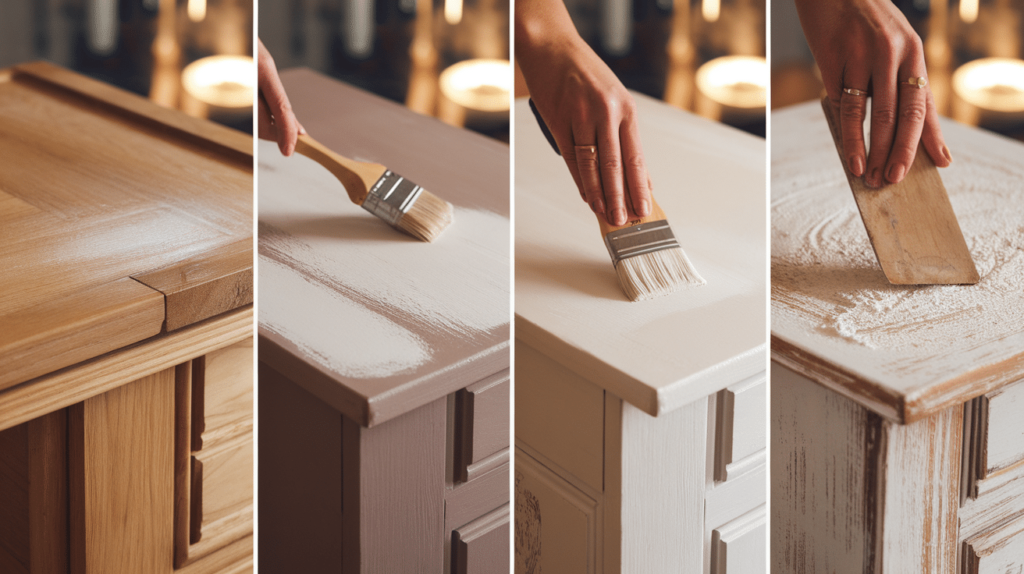
This is the approach that consistently produces professional results — the same process used by experienced DIYers who have refinished dozens of pieces.
Step 1 — Clean the Surface Thoroughly
This step is non-negotiable. Any grease, wax, or grime on the surface will prevent even the best primer from adhering properly. Use a TSP (trisodium phosphate) cleaner or a strong degreaser like Dawn dish soap in warm water. Wipe the entire piece down, then allow it to dry completely — ideally for at least 2 hours.
This is the step most beginners rush or skip entirely, and it’s the single biggest reason painted furniture fails prematurely.
Step 2 — Remove Hardware
Take off all knobs, pulls, and hinges before you start. Tape off any areas you don’t want painted. If you’re painting a dresser, remove the drawers and paint them separately — it gives you better access and a more even finish on all sides.
Step 3 — Apply Your Bonding Primer or Deglosser
If using a bonding primer, apply a thin, even coat using a high-quality brush or foam roller. Foam rollers leave a very smooth finish with minimal brush marks, which matters especially when you’re painting wood furniture white without sanding or going for a sleek, modern look.
If using liquid deglosser, follow the product directions carefully. Most require you to wipe the solution on with a clean cloth, wait 5–10 minutes, then wipe off the residue before painting.
Allow primer to dry fully — usually 1 to 2 hours for oil-based primers. Do not rush this.
Step 4 — Apply Your First Coat of Paint
Use thin coats. This is critical. Thick coats are the primary cause of brush marks, drips, and uneven finishes. Two or three thin coats will always outperform one thick coat. Apply using long, smooth strokes going in the same direction as the wood grain (if visible).
For painting wood furniture, a good-quality latex or acrylic furniture paint works well over a bonding primer. For chalk paint projects, you can apply the paint directly to the cleaned (and deglossed, if needed) surface — no separate primer step required.
Step 5 — Light Scuff Between Coats (Optional but Recommended)
Even when you’re painting without sanding the base surface, a very light scuff with 220-grit sandpaper between paint coats creates a dramatically smoother final finish. This isn’t sanding the piece — it’s just knocking down any dust particles or brush bristles that dried into the surface. Wipe away the fine dust with a tack cloth before applying the next coat.
Step 6 — Apply a Protective Topcoat
For any furniture that sees regular use — a dresser, dining table, desk, or bed frame — a protective topcoat is essential. Polycrylic (water-based) is the most popular choice for light or white-painted furniture because it dries clear without yellowing. Oil-based polyurethane is more durable but can add a warm amber tone, which works beautifully on darker colors.
Apply two coats of topcoat, allowing each to dry fully. This step is what transforms a DIY project into something that looks genuinely professional and holds up to real daily use.
Painting Specific Pieces: Tips for Dressers, Tables, and More
How to Paint a Dresser Without Sanding
A dresser is probably the most popular painting furniture project for good reason — it’s a high-impact piece in any bedroom, and a fresh coat of paint can completely transform the feel of the room. Here’s what makes dresser painting different from other pieces:
- Drawer faces are the most visible parts. Use a foam roller on flat drawer fronts for the smoothest possible finish.
- Remove drawers before painting for easier access and to avoid getting paint in the tracks.
- Paint the inside edges of the dresser frame as well as the exterior — this detail makes the piece look truly refinished rather than just painted over.
- For how to repaint a dresser without sanding, the bonding primer method is the most reliable. Two coats of primer plus two coats of paint plus a polycrylic topcoat is the standard formula for a finish that will last years.
The most popular dresser colors right now? Deep forest green, muted navy, creamy white, and rich terracotta. All of these work beautifully with brass or black hardware for a contemporary look.
How to Paint a Table Without Sanding
Tables — especially dining tables and kitchen tables — take an enormous amount of abuse. Hot plates, drinks, scratches from plates and cutlery. This means the prep and topcoat steps matter even more here than on a dresser.
For how to paint a kitchen table without sanding or a dining room table, the deglosser-plus-bonding-primer combination provides the most durable foundation. Follow with a latex furniture paint rated for high-traffic surfaces, and finish with at least two coats of oil-based polyurethane for maximum protection.
Avoid chalk paint alone on tables unless you’re prepared to apply multiple layers of wax and re-wax regularly — it’s simply not durable enough for daily table use without a very robust topcoat.
How to Paint Glossy Furniture Without Sanding
Glossy furniture — think lacquered nightstands, shiny laminate dressers, or poly-coated pieces — is actually where the no-sanding method shines brightest. The high gloss finish is what causes most people to think they must sand. But a bonding primer or liquid deglosser handles that gloss perfectly.
For how to paint glossy furniture without sanding, the deglosser is your most efficient route. It chemically breaks down the sheen so your primer and paint can adhere. Clean, deglosser, prime with a bonding primer, then paint. That’s the whole sequence.
How to Spray Paint Furniture Without Sanding
Spray painting is a fantastic option for chairs, intricate carved pieces, or anything with lots of curves and detail work. It produces a factory-smooth finish that’s almost impossible to replicate with a brush.
The key for how to spray paint furniture without sanding is using a spray primer first — Zinsser BIN in spray-can form is the go-to choice among experienced DIYers. Spray in thin, even passes about 10–12 inches from the surface. Multiple thin coats beat one heavy coat every single time.
For larger pieces, a handheld HVLP (high volume low pressure) paint sprayer gives you the same smooth result with much greater control and speed than aerosol cans.
What Paint to Use on Wood Furniture Without Sanding
Choosing the right paint matters as much as the prep work. Here’s a breakdown of the main options:
Chalk Paint — Excellent adhesion, no primer required, ultra-matte finish, wide color range. Requires wax or polycrylic topcoat. Best for decorative pieces.
Milk Paint — Natural, eco-friendly, binds well to raw and previously painted wood. Needs a bonding agent for sealed surfaces. Gives an authentic aged look.
Latex/Acrylic Furniture Paint — Best overall choice when used over a bonding primer. Durable, widely available, and comes in virtually any color. Products like Behr Alkyd Semi-Gloss, Benjamin Moore Advance, and Sherwin-Williams Emerald are excellent choices.
Mineral Paint — Newer on the market, mineral-based paints like Fusion Mineral Paint are self-sealing and formulated to bond to most surfaces without sanding or priming. They’re one of the most convenient no sanding paint for furniture options available today.
The best paint for wood furniture without sanding ultimately depends on the piece, its current finish, and how much daily use it sees. For most projects, a quality chalk paint or a latex furniture paint over a bonding primer will give you outstanding results.
Common Mistakes That Lead to Peeling and Chipping
Even with the right products, a few common errors will undermine your results every time:
- Skipping the cleaning step — Grease or wax on the surface is a primer killer.
- Applying paint too thick — Always thin coats. Always.
- Painting in cold or humid conditions — Ideal painting temperature is 60–80°F with low humidity. Cold slows drying and compromises adhesion.
- Skipping the topcoat — Paint alone is not durable enough for furniture that gets touched and used daily.
- Using wall paint instead of furniture paint — Wall paint lacks the flexibility and hardness needed for furniture surfaces, making it prone to scratching and chipping.
- Not allowing full cure time — Paint may feel dry to the touch in hours, but most furniture paints require 2–4 weeks to fully harden and cure. Avoid heavy use during this period.
Refinishing Bedroom Furniture: A Full Room Approach
If you’re thinking bigger — repainting bedroom furniture as a cohesive set — there are a few strategies that produce the most satisfying results.
Choose one paint color and finish for all pieces to create a unified look. Or try a two-tone approach: paint the main body of each piece in a neutral like warm white or soft gray, and use a contrasting color for the drawer faces. This creates visual interest without the commitment of a bold color on every surface.
For refinish bedroom furniture projects, working in a well-ventilated garage or outdoor space during good weather makes the process much more manageable. Lay everything out, work piece by piece, and let each coat dry fully before moving on.
The satisfaction of walking into a bedroom transformed by painted wooden furniture you refinished yourself is genuinely hard to beat. And when you didn’t have to spend an entire weekend elbow-deep in sanding dust to get there? Even better.
Frequently Asked Questions
Can you paint furniture without sanding?
Absolutely. With a bonding primer, liquid deglosser, or a specialty paint like chalk paint or mineral paint, you can achieve a beautiful, durable finish on furniture without sanding. The key is proper cleaning beforehand and a protective topcoat afterward.
What is the best way to paint a dresser without sanding?
The most reliable method for how to paint a dresser without sanding is: clean thoroughly, apply a coat of oil-based bonding primer (like Zinsser Cover Stain), let it dry fully, apply two thin coats of furniture-grade latex or chalk paint, and seal with two coats of polycrylic topcoat.
Can I paint furniture without sanding or priming?
Yes — chalk paint and mineral paint are both specifically formulated to bond to surfaces without requiring separate primer. However, on very glossy surfaces, even chalk paint benefits from a light application of liquid deglosser first for the best adhesion.
What paint can I use on wood furniture without sanding?
The best options are chalk paint, mineral paint (like Fusion Mineral Paint), and high-quality latex or acrylic furniture paint applied over a bonding primer. For a truly no prep furniture paint experience, chalk paint from brands like Annie Sloan, Rust-Oleum, or Behr is the most widely accessible option.
How do I paint glossy furniture without sanding?
Use a liquid deglosser wiped across the surface to chemically dull the gloss, follow with a bonding primer, then apply your chosen paint. This three-step sequence — deglosser, primer, paint — reliably conquers even the shiniest lacquered surfaces.
Can you paint cheap furniture like IKEA or laminate pieces?
Yes. Laminate furniture is one of the trickiest surfaces because paint doesn’t naturally adhere to it well — but a shellac-based primer like Zinsser BIN solves this problem. Clean well, prime with BIN, then paint as normal. Chalk paint over a bonding primer also works well on laminate.
How long does painted furniture without sanding last?
When the process is done correctly — thorough cleaning, bonding primer, quality paint, protective topcoat — the finish can last 10 or more years under normal use. The topcoat is the longevity factor; without it, even well-applied paint will show wear within months.
Is there an alternative to sanding furniture before painting?
Yes — the main alternatives are liquid deglosser (liquid sandpaper), bonding primer, and specialty paints formulated for direct adhesion. These products replace the mechanical roughness that sanding creates with either chemical roughness or a formula that bonds regardless.
How do I paint dark furniture white without sanding?
For how to paint dark furniture white without sanding, use a stain-blocking bonding primer (Zinsser Cover Stain is the top recommendation). This blocks any tannins or pigments from the dark original finish from bleeding through your white paint. Apply two coats of primer before painting white for the cleanest, brightest result.
What’s the easiest way to paint furniture?
The easiest overall method is chalk paint — clean the piece, apply two coats of chalk paint, seal with wax or polycrylic. It requires no primer, bonds to most surfaces, and comes in beautiful colors. For the smoothest finish with the least brush-marking, use a foam roller on flat surfaces and a quality round chalk paint brush on details.
Conclusion
Painting furniture without sanding is one of those DIY skills that feels almost too good to be true once you realize how well it actually works. The secret was never in the sanding itself — it was always in giving paint something to adhere to. Bonding primers, deglossers, chalk paints, and mineral paints have simply found better, cleaner ways to achieve that same adhesion without the mess, the time, and the physical effort of traditional prep work.
Whether you’re refreshing a single painted dresser, giving your entire bedroom furniture a new identity, or figuring out how to repaint furniture you’ve owned for decades, the approach in this guide will serve you well. Clean thoroughly, use the right primer or paint for your specific surface, apply thin coats, and seal everything with a quality topcoat.
The result? A finish that looks professionally done, holds up to real life, and gives you the satisfaction of having done it yourself — without a cloud of sawdust in sight.