
There is something almost magnetic about walking into a bedroom anchored by a real, honest piece of timber. Solid wood beds do not just hold a mattress — they hold history, craft, and a quiet promise that this piece of furniture will still be standing long after everything else in the room has been replaced twice over. In a world drowning in flat-pack furniture assembled with Allen keys and crossed fingers, choosing a bed built from genuine hardwood feels less like a purchase and more like a decision.
Yet most shoppers feel overwhelmed the moment they start researching. Should you go with beds made in USA or imported alternatives? Is a handmade wooden bed actually worth the extra cost? What species of wood holds up best? What brands can you actually trust? This guide answers all of it — practically, honestly, and without the fluff you usually have to wade through before getting to anything useful.
Whether you are hunting for a sprawling wooden bed king for the master suite, a streamlined solid wood twin bed for a child’s room, or a custom wood bed built to exact measurements, the information below will help you buy with real confidence. Let’s dig in.
Why Solid Wood Beds Outperform Every Alternative
Walk through any big-box furniture store and you will notice that almost everything labelled “wood” is actually MDF, particleboard, or veneer — a thin slice of real wood bonded over compressed sawdust. These materials are inexpensive, but they are also brittle, moisture-sensitive, and virtually impossible to refinish when they get scratched. Real wood beds, by contrast, are made from solid timber all the way through.
The practical differences are enormous. A solid wood bed frame can be sanded and refinished when its surface shows wear; particleboard simply crumbles. Studies from the Forest Products Laboratory have shown that dense hardwoods like white oak and hard maple can withstand compression forces several times greater than engineered wood composites — which matters enormously if you are choosing a solid wood bed frame king that needs to support two adults night after night for decades.
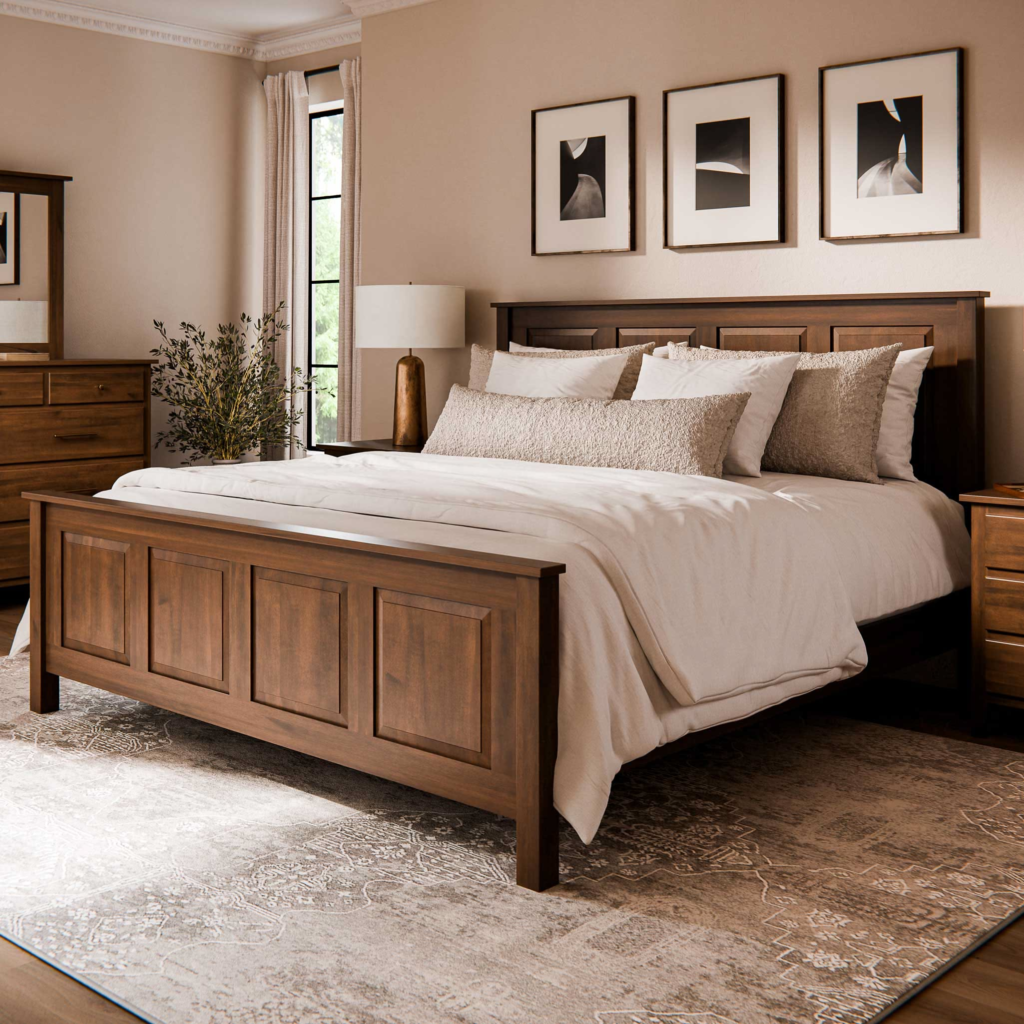
A classic solid wood bed anchors a bedroom with warmth and permanence that engineered alternatives simply cannot replicate.
Beyond durability, there is the question of indoor air quality. Many engineered wood products off-gas formaldehyde from their adhesives for years. Solid hardwood — especially beds made in America using domestic lumber — typically avoids these concerns entirely. And then there is the benefit no spec sheet can quantify: solid wood simply looks better. The grain patterns in beautiful wood beds are unique to every single piece of timber.
The Most Popular Hardwoods and What They Offer
Not all hardwood beds are created equal. The species of wood used has a direct impact on durability, weight, colour, and price. Here is a quick breakdown of the most commonly used domestic species:
- White Oak — Dense, tight-grained, and naturally resistant to moisture. The go-to for dark wood bed frame styles. Janka hardness rating: ~1,360 lbf.
- Hard Maple — Exceptionally hard and creamy-pale, ideal for solid wood white bed designs. Janka rating: ~1,450 lbf.
- Cherry — Slightly softer but prized for its warm reddish-amber tones that deepen beautifully with age.
- Walnut — Rich chocolate-brown colour, medium hardness, and natural lustre. A favourite for custom wooden beds in contemporary interiors.
- Ash — Pale, flexible, and shock-resistant with a dramatic open grain. A budget-friendly alternative to oak.
- Hickory — The toughest of common domestic hardwoods. Popular for farmhouse-style all wood beds.
Handmade Wooden Beds: Craft, Character, and Why It Matters
The phrase “handmade” gets thrown around so loosely in furniture marketing that it has nearly lost all meaning. A genuinely handmade wooden bed is one where a skilled craftsperson has shaped, jointed, fitted, and finished the primary structural components by hand — using machines where appropriate for safety and precision, but relying on trained judgment at every critical step.
True handmade wood beds show their craft in the joinery. Look for mortise-and-tenon joints rather than cam locks and wooden dowels. Check whether the drawboring pins are hand-cut. These are the details that determine whether a bed will still be structurally sound in 50 years or will begin to wobble and creak within a decade.
📊 Handmade vs. Mass-Produced Wood Beds — At a Glance
| Icon | Feature | Handmade vs. Mass-Produced |
| 🪙 | Wood Source | Handmade: Domestic hardwood | Mass-produced: Mixed / engineered |
| 🔩 | Joinery | Handmade: Mortise & tenon | Mass-produced: Cam locks, dowels |
| ⏳ | Expected Lifespan | Handmade: 50–100+ years | Mass-produced: 5–15 years |
| ♻️ | Refinishable | Handmade: Yes, multiple times | Mass-produced: No |
| 🌿 | Off-Gassing | Handmade: Minimal to none | Mass-produced: Moderate (adhesives) |
| 🎨 | Customisation | Handmade: Full bespoke options | Mass-produced: Fixed SKUs only |
Many buyers are also surprised to discover that hand made beds are not always dramatically more expensive than high-end retail alternatives. When you factor in that a quality American-made piece may never need to be replaced, the cost-per-year calculation often favours the handmade option by a wide margin.
What to Look for in a Handmade Wood Bed Maker
When shopping for handmade wooden beds, ask these questions before placing an order:
- Where does the lumber come from, and is it properly kiln-dried to 6–8% moisture content?
- What joinery method is used for the headboard-to-rail connection?
- How is the finish applied — hand-rubbed oil, catalysed lacquer, or waterborne polyurethane?
- Is the lead time for a custom made wood bed clearly communicated upfront?
- Do they offer a structural warranty, and for how long?
Beds Made in USA: The Case for Buying American
The label made in USA bed carries genuine meaning in the furniture industry. Federal Trade Commission guidelines require that products bearing this label be “all or virtually all” made in the United States. That means the lumber, the hardware, the finish, and the labour all trace back to American soil and American workers.
American made wood beds also benefit from being built under US labour and environmental regulations. Domestic hardwood forestry is governed by the Lacey Act and overseen by the US Forest Service, which means the timber used in a genuine bed made in usa comes from sustainably managed forests.
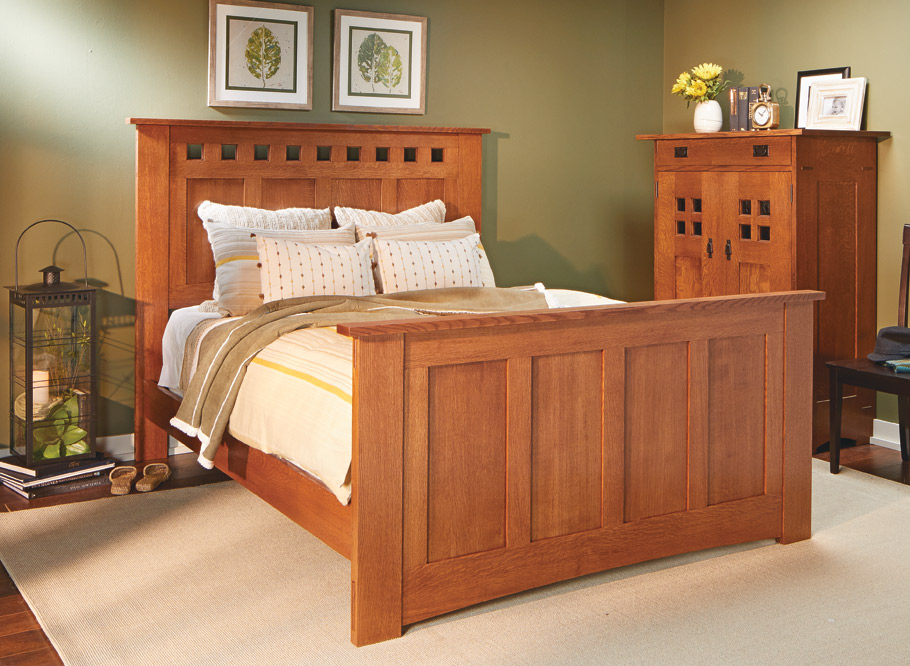
American woodworkers bring generations of craft knowledge to every handmade wooden bed frame they produce.
From a practical standpoint, buying wood beds made in usa also simplifies customer service, warranty claims, and returns. You are dealing with a domestic company subject to US consumer protection laws, not navigating international shipping complications and overseas warranty disputes.
Leading American-Made Solid Wood Bed Brands
Several companies have built strong reputations around domestically crafted solid hardwood beds. Here are some worth knowing:
James and James Furniture
James and James (often searched as james and hames or james and james bed) has developed a loyal following for their Shaker-influenced hardwood bedroom pieces. Their turned wood bed designs reference classic American furniture traditions with hand-turned posts and pegged rail systems. Many shoppers actively search for a james and james furniture discount code before purchasing — worth checking their official site for seasonal promotions. Their work exemplifies what a traditional wooden bed frame should be: clean lines, honest materials, built to last.
Other Notable American Makers
Beyond James and James, makers like Copeland Furniture (Vermont), Amish craftspeople across Ohio and Pennsylvania, and smaller independent studios across Appalachia produce outstanding beds made in america. Many operate direct-to-consumer, meaning you can sometimes get a bespoke wooden bed built to your exact specification for less than you might expect.
Choosing the Right Solid Wood Bed Frame Size
Sizing seems straightforward until it is not. Standard US mattress dimensions have stayed consistent, but frame dimensions vary significantly between makers. Before ordering any wood bed frames, measure your room with a tape measure and mark the bed’s footprint on the floor with painter’s tape.
Solid Wood Bed Frame King
A solid wood bed frame king accommodates a 76” × 80” mattress. The outer frame footprint is typically 80–82” wide and 85–87” long — which requires a minimum room width of about 12 feet. King-size wood beds king typically weigh between 180 and 300 pounds in genuine hardwood, so factor in delivery logistics.
Solid Wood Bed Frame Queen
The solid wood bed frame queen is the most popular size in the US. It fits a 60” × 80” mattress and works comfortably in rooms as small as 10’ × 10’, making it the ideal choice for most master bedrooms.
Solid Wood Twin Bed
A solid wood twin bed (38” × 75” mattress) is the standard choice for children’s rooms and guest rooms. In hardwood, these frames are remarkably durable — many Amish-made twin beds in white oak have survived two or three generations of growing kids and remain structurally sound.
Full / Double
The wooden bed frame full (54” × 75”) fills the gap between twin and queen. Double bed designs in wood were the standard American bed size for most of the 20th century. The wooden bedframe in full size is a fantastic choice for a guest room.
Custom Wood Beds: Getting Exactly What You Want
Custom wooden beds represent the pinnacle of the form. Rather than choosing from a catalogue, you work directly with a woodworker or small studio to specify every dimension, wood species, finish, joinery style, headboard profile, and hardware detail.
Custom made wood beds are particularly valuable in rooms with non-standard dimensions — attic spaces with sloped ceilings, converted lofts, or historic homes where doorway widths make standard king frames impossible to deliver assembled. A skilled maker can design around any constraint.
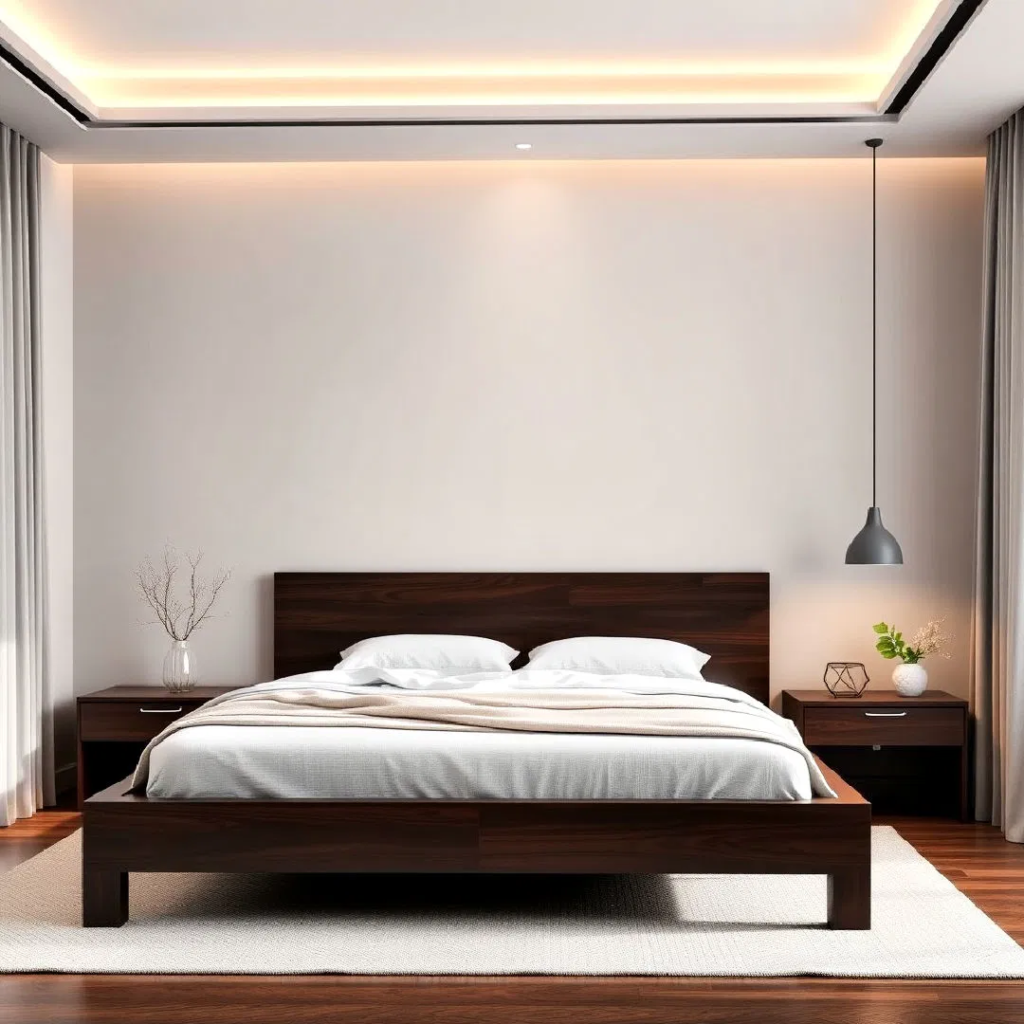
A custom dark wood bed frame in king size demonstrates how bespoke craftsmanship perfectly marries form and function.
The process of commissioning a custom wood bed typically involves three stages: an initial consultation, a design review with drawings or 3D renders, and a production period ranging from four to sixteen weeks depending on complexity.
How to Commission Bespoke Wooden Beds
- Define your budget upfront. Bespoke wooden beds range from around $1,500 for a simple platform design to $12,000+ for a complex four-poster in figured walnut with hand-carved details.
- Choose your wood species first. This single decision drives colour, grain character, weight, and a significant portion of cost.
- Specify your finish preference. Hand-rubbed oil offers a natural matte look but requires annual maintenance. Catalysed lacquer is harder and nearly maintenance-free.
- Ask for a materials sample. Any reputable maker of solid wooden beds will send you a finished wood sample so you can evaluate colour and sheen under your room’s lighting.
- Get the joinery details in writing. The difference between mortise-and-tenon and pocket-screw joinery is the difference between a 100-year heirloom and a 10-year furniture purchase.
Finding Solid Wood Beds Near Me — What to Look For Locally
Searching for solid wood beds near me is a completely reasonable starting point, and local options offer genuine advantages: you can see the finish in person, feel the weight of the wood, test the joinery, and often negotiate directly with the craftsperson. Local purchases also avoid long-distance freight costs, which can add $200–$500 to the price of a large wooden bed frame king ordered online.
To find quality local makers, go beyond Google’s first page. Search Etsy for local workshops, ask at local lumber yards, visit craft fairs and furniture shows, and check community Facebook groups focused on local artisans. Local Amish furniture stores are particularly reliable sources of genuine all wood bed frames at competitive prices.
Red Flags to Avoid When Shopping Locally
- Vague answers about wood species or the use of terms like “solid wood construction” when the visible cross-sections show MDF or particleboard.
- Beds that feel unusually light for their size — solid hardwood is heavy, and a king-size hardwood bed frame should feel substantial.
- Rail-to-post connections that rely entirely on bolts with no wood-to-wood joint. These loosen over time and are a structural weakness.
- Finishes that smell strongly of solvent even after several weeks on the showroom floor.
Care and Maintenance for Beautiful Wood Beds That Last Generations
One of the most compelling arguments for choosing beautiful wooden beds over alternatives is the ease of their long-term care. Unlike upholstered beds, which stain, harbour allergens, and eventually require reupholstering, solid hardwood requires almost nothing beyond occasional cleaning and periodic refinishing.
Routine Care Tips
- Dust regularly with a soft, lint-free cloth, always wiping in the direction of the grain.
- Avoid wet cleaning where possible. When moisture is needed, use a cloth wrung almost completely dry and dry the surface immediately.
- Control room humidity. The ideal range for solid wood furniture is 35–55% relative humidity.
- Tighten hardware annually. Even the best mortise-and-tenon joints benefit from a once-a-year check of the rail bolts.
- Re-oil oiled finishes every 12–18 months. Products like Danish Oil applied with a lint-free cloth will restore depth and protection to any oil-finished bed made of wood.
Refinishing — The Superpower of Real Wood
Perhaps the single greatest advantage of beds solid wood construction is the ability to refinish. A poly-coated dark wood bed frame that has developed surface scratches over 15 years can be lightly sanded with 220-grit paper and re-coated in an afternoon. An oil-finished wooden bed frame can simply be cleaned, lightly scuffed, and re-oiled. No replacement required. This is the logic that turns the higher upfront cost of a solid wood bed into genuine long-term value.
Frequently Asked Questions About Solid Wood Beds
1. What makes a bed truly “solid wood” vs. engineered wood?
A solid wood bed uses timber that is solid all the way through — no veneers, no particleboard, and no MDF in the structural components. Ask the seller to identify the wood species and show you an end-grain cross-section if you are unsure.
2. Are beds made in USA worth the higher price?
In most cases, yes. Beds made in USA are subject to domestic labour and environmental standards, use traceable domestic lumber, and come with the customer service infrastructure of a US-based company. The longevity of a quality American made bed frame means the cost-per-year is often lower than cheaper alternatives.
3. How long do handmade wooden beds typically last?
A properly made and maintained handmade wooden bed can last 50 to 100+ years. Antique beds from the 18th and 19th centuries made from American hardwoods are still structurally sound and in active use today.
4. Which hardwood is best for a bed frame?
Hard maple, white oak, and walnut are consistently rated as the top three choices for hardwood bed frames. Hard maple is the hardest and most durable. White oak offers excellent moisture resistance and beautiful grain. Walnut brings unmatched colour and character.
5. What is a turned wood bed, and is it still popular?
A turned wood bed features posts, spindles, or decorative elements shaped on a lathe. It is one of the oldest and most recognisable bed styles in American furniture history, associated with Colonial, Federal, and Victorian periods. This style has seen a genuine revival as buyers seek traditional wooden bed frame aesthetics.
6. How do I find solid wood beds near me?
Beyond Google search, try Etsy’s local filter, Houzz’s “Pro” directory filtered to your region, local Amish furniture stores, regional craft fairs, and community boards at local lumber yards. Asking at a quality mattress store is also surprisingly effective — they often know which local furniture makers produce compatible solid wood bed frame sizes.
7. Can I get a custom wood bed at a reasonable price?
Yes. A well-made custom wood bed in a domestic hardwood like ash or poplar can often be commissioned for $1,500–$3,500 from a local or regional woodworker. Communicate your budget clearly at the start of the conversation.
8. What is the difference between a solid wood bed frame queen and king?
The main practical differences are mattress size (60”×80” vs. 76”×80”), frame weight, and room space requirements. A solid wood bed frame queen works in rooms as small as 10’×10’, while a solid wood bed frame king really needs a room at least 12 feet wide to allow for proper clearance.
9. Is James and James a reputable brand for wood beds?
James and James furniture has earned positive reviews for their American-made hardwood bedroom pieces, particularly their james and james bed designs that blend Shaker and turned-post traditions. Their turned wood bed and headboard collections are particularly well-regarded for build quality and finish consistency.
10. Do solid wood beds need a box spring?
It depends on the design. Most contemporary solid wood bed frames use a slatted base that supports a mattress directly. However, older traditional wooden bed frame designs with simple side rails may require either a box spring or a separately purchased slat kit to properly support modern foam and hybrid mattresses.
Conclusion
Choosing solid wood beds is one of those rare purchasing decisions where the ethical choice, the practical choice, and the beautiful choice all point in exactly the same direction. Real hardwood, properly jointed and finished, will serve your home for generations. It improves with age rather than deteriorating. It can be repaired, refinished, and adapted. And it brings into your most personal space something that no flat-pack alternative can offer: genuine craft, honest material, and the quiet warmth of real wood grain that no printed veneer has ever successfully imitated.
Whether you go with a trusted name like James and James, commission a custom wooden bed from a local woodworker, or source a piece from one of the many brilliant American studios producing beautiful wood beds today, the key is to buy with your eyes open. Know your wood species. Understand your joinery. Ask the right questions. And invest in something worth passing on.
🏠 Ready to Find Your Perfect Solid Wood Bed?
Use the guide above to shortlist makers, visit showrooms, request samples, and make a choice you will not regret for decades to come.
→ Start Your Search for Solid Wood Beds Today